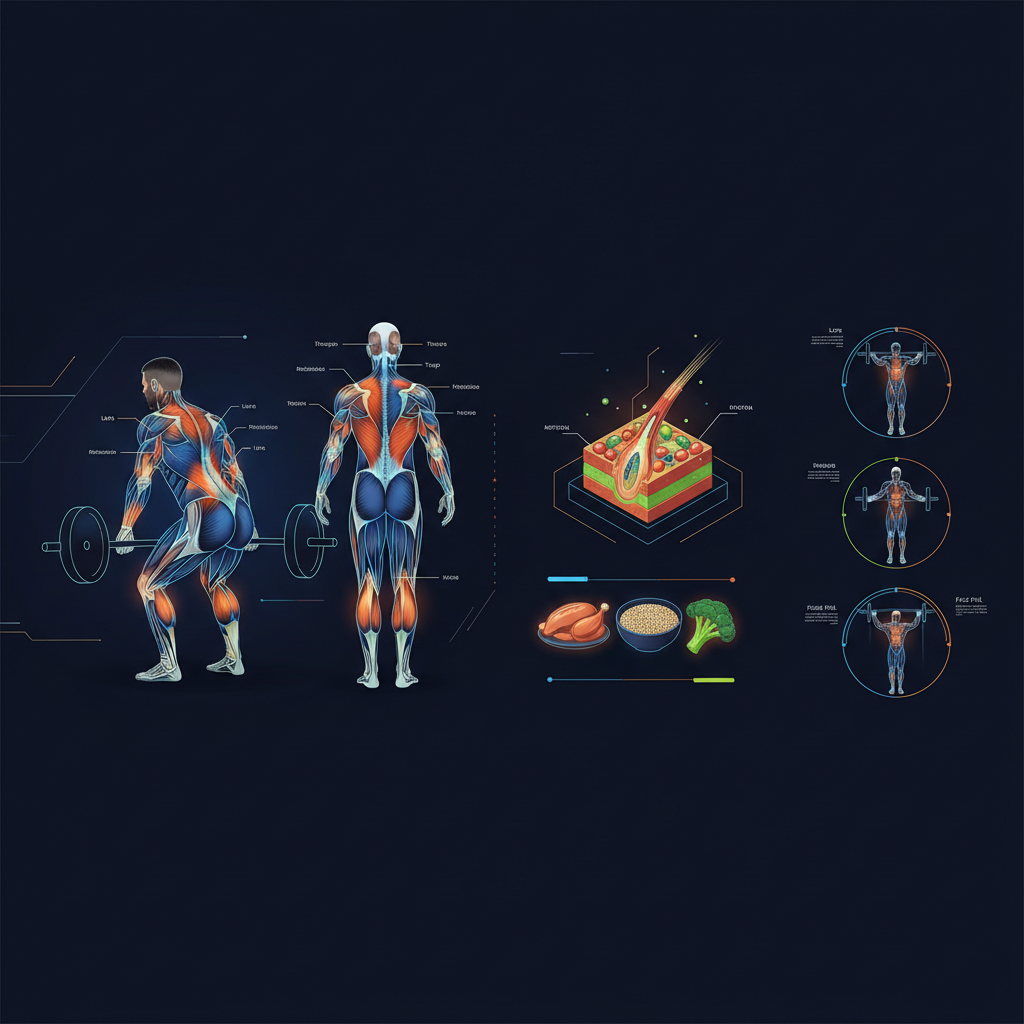
Build a Powerful Back: Your Ultimate Guide to Back Training
A strong back is more than just aesthetics; it's foundational to good posture, athletic performance, and injury prevention. Whether you're a seasoned gym-goer or just starting, understanding how to effectively train your back muscles is crucial. This guide, rooted in NASM-certified personal training principles and Precision Nutrition's evidence-based approach, will equip you with the knowledge to build a powerful, resilient back.
Why is Back Training So Important?
Your back is a complex network of muscles, including the latissimus dorsi (lats), rhomboids, trapezius (traps), erector spinae, and more. Together, these muscles:
- Support the Spine: Essential for maintaining an upright posture and preventing lower back pain.
- Improve Athletic Performance: Powering movements in sports ranging from weightlifting to swimming.
- Enhance Shoulder Health: Proper back engagement balances shoulder movement and reduces injury risk.
- Boost Metabolism: Larger muscle groups like those in the back burn more calories.
Understanding the NASM OPT Model for Back Training
The NASM Optimum Performance Training (OPT) model provides a structured approach to program design, applicable to back training. The key phases:
Phase 1: Stabilization Endurance
Focuses on improving muscular endurance and neuromuscular control. Exercises often involve lighter weights and higher repetitions, emphasizing proper form and core engagement.
- Example Exercises:
- Bird Dog: Enhances core stability and proprioception.
- Plank Variations: Strengthens the entire core complex, including the erector spinae.
- Supermans: Targets the erector spinae and glutes.
Phase 2: Strength Endurance
Builds upon stabilization by incorporating more challenging loads and movement patterns, aiming to increase the body's ability to handle heavier loads for longer durations.
- Example Exercises:
- Bent-Over Rows (Dumbbell or Barbell): A foundational compound movement for the lats and rhomboids. Focus on squeezing the shoulder blades together.
- Seated Cable Rows: Allows for controlled movement and consistent tension on the mid-back.
- Lat Pulldowns: Mimics a pull-up motion, targeting the lats effectively.
Phase 3: Hypertrophy
The primary goal here is muscle growth. This phase typically involves moderate-to-heavy loads, moderate repetitions (6-12), and sufficient rest periods to maximize muscle protein synthesis.
- Example Exercises:
- Pull-Ups/Assisted Pull-Ups: An excellent bodyweight exercise for overall back width.
- T-Bar Rows: Provides a different angle for targeting the upper and mid-back.
- Face Pulls: Crucial for rear deltoid and upper back health, counteracting rounded shoulders.
Phase 4 & 5: Power Endurance & Maximal Strength
These phases focus on increasing the rate of force production and maximum strength, respectively. While important, they build upon a solid foundation of the earlier phases.
Mastering Key Back Exercises: Technique is King
Regardless of the phase, proper technique is paramount to maximize effectiveness and minimize injury risk.
1. The Deadlift (Conventional & Romanian)
- Why: The king of posterior chain exercises, engaging the entire back, glutes, and hamstrings.
- How (Conventional):
- Stance: Hip-width apart, feet under the barbell.
- Grip: Just outside your shins.
- Hinge at hips, bend knees to lower yourself until shins are vertical.
- Maintain a neutral spine – chest up, shoulders back.
- Drive through your heels, extending hips and knees simultaneously.
- Lock out hips and shoulders at the top. Lower with control by reversing the motion.
- How (Romanian - RDL): Focuses more on hamstrings and lower back. Start standing, slight knee bend. Hinge at the hips, keeping the bar close to your legs, lowering until a stretch is felt in the hamstrings. Maintain a neutral spine. Return to start by driving hips forward.
2. Barbell Rows
- Why: Develops thickness in the mid-back (rhomboids, mid-traps) and lats.
- How:
- Grip slightly wider than shoulder-width, overhand or underhand.
- Hinge at hips, maintaining a flat back, until torso is near parallel to the floor.
- Pull the barbell towards your lower chest/upper abdomen, squeezing your shoulder blades together.
- Lower with control.
3. Pull-Ups & Chin-Ups
Get your free Day 1 workout — no card required.
Meet Andy — get your free Day 1 workout- Why: The ultimate exercise for back width (lats). Chin-ups (underhand grip) involve more biceps.
- How:
- Grip: Overhand (pull-up) or underhand (chin-up), hands shoulder-width apart or slightly wider.
- Hang from the bar, arms fully extended.
- Initiate the pull by engaging your back muscles, driving elbows down and back.
- Pull until your chin is over the bar.
- Lower with control. If you can't do full pull-ups, use assist bands or a machine.
4. Lat Pulldowns
- Why: A great alternative or supplement to pull-ups, allowing adjustable weight.
- How:
- Sit at the machine, securing knees under the pads.
- Grip the bar wider than shoulder-width, palms facing away.
- Lean back slightly, maintaining a stable torso.
- Pull the bar down towards your upper chest, squeezing your lats. Imagine pulling your elbows down.
- Return to the starting position with control.
5. Seated Cable Rows
- Why: Targets the mid-back (rhomboids, traps) and lats, promoting postural improvements.
- How:
- Sit at the machine with feet braced, knees slightly bent.
- Grip the handle (V-bar is common).
- Pull the handle towards your abdomen, squeezing your shoulder blades together. Keep your chest up and maintain a neutral spine.
- Extend your arms forward, controlling the weight back to the start without letting your torso round.
Progressive Overload: The Key to Continuous Progress
To keep building strength and muscle, you must consistently challenge your body. This is progressive overload. Apply it by:
- Increasing Weight: Gradually lift heavier loads.
- Increasing Reps/Sets: Do more repetitions or sets with the same weight.
- Improving Form: Enhancing technique allows for better muscle activation.
- Decreasing Rest Time: Reducing rest between sets increases metabolic stress.
- Increasing Frequency: Training the muscle group more often (within recovery limits).
Nutrition for Muscle Growth & Recovery (Precision Nutrition Approach)
Training breaks down muscle; nutrition builds it back stronger. Precision Nutrition emphasizes a sustainable, habit-based approach.
The Hand-Portion Method
A simple way to gauge macronutrient intake without strict calorie counting for balanced meals:
- Protein: Aim for one palm-sized portion per meal. Lean meats, fish, poultry, eggs, legumes, tofu. This is crucial for muscle repair and growth.
- Vegetables: Fill at least one cupped-hand portion (or two flat hands) with non-starchy vegetables. Loaded with vitamins, minerals, and fiber.
- Carbohydrates: Use one cupped-hand portion for starchy carbs (rice, potatoes, quinoa, oats) or fruits. Fuel for workouts and recovery.
- Fats: Use your thumb from the first knuckle up as a guide for healthy fats (oils, nuts, seeds, avocado). Essential for hormone function and overall health.
Example Meal:
- Protein: Grilled chicken breast (1 palm size)
- Vegetables: Steamed broccoli and mixed greens (2 hand sizes)
- Carbs: Brown rice (1 cupped hand size)
- Fats: A sprinkle of almonds or a drizzle of olive oil (1 thumb size)
Remember hydration is key! Drink water consistently throughout the day.
Putting It All Together: Sample Routine Structure
This is a template – adjust based on your experience and recovery.
Frequency: 1-2 times per week, with adequate rest days.
Workout:
- Warm-up: 5-10 minutes light cardio, dynamic stretching (arm circles, torso twists).
- Primary Compound Lift: Choose one heavy compound movement (e.g., Deadlifts or Barbell Rows).
- Sets: 3-4
- Reps: 5-8 (Focus on strength/hypertrophy)
- Secondary Compound Lift: Choose another compound movement targeting a different area (e.g., Pull-ups or Lat Pulldowns).
- Sets: 3-4
- Reps: 8-12 (Focus on hypertrophy/endurance)
- Accessory Movements: Include 1-2 isolation or smaller muscle group exercises (e.g., Seated Cable Rows, Face Pulls, Dumbbell Rows).
- Sets: 2-3
- Reps: 10-15 (Focus on hypertrophy/endurance)
- Core Work: Finish with 1-2 core stability exercises (Plank, Bird Dog).
- Sets: 2-3
- Reps: Hold for time or 15-20 reps
Cool-down: 5-10 minutes static stretching focusing on back, chest, and shoulders.
Ready to Forge Your Strongest Self?
Building a strong back requires consistency, proper technique, and a smart approach to training and nutrition. By applying these NASM and Precision Nutrition principles, you're well on your way to achieving your goals.
Unlock your potential with FitForge AI! Sign up for the FREE trial today and get personalized training and nutrition plans designed to help you conquer your fitness journey.
Frequently Asked Questions
What are the most effective exercises for building a strong back?
For comprehensive back development, compound exercises such as pull-ups, bent-over rows, and deadlifts are highly effective. Incorporating variations in grip and stance can target different muscle groups within the back for balanced strength.
How often should I train my back muscles for optimal growth?
For most individuals, training back muscles 2-3 times per week with adequate rest days in between sessions is optimal for growth and recovery. This allows for sufficient muscle stimulus without overtraining, aligning with progressive overload principles.
What role does nutrition play in developing powerful back muscles?
Nutrition is paramount for muscle development, including the back. A diet rich in lean protein, complex carbohydrates, and healthy fats provides the necessary building blocks and energy for muscle repair and growth, especially when combined with effective training.
How can I prevent back injuries while lifting weights?
Preventing back injuries requires prioritizing proper form, maintaining core engagement, and progressively increasing load. It is crucial to warm up adequately, listen to your body, and execute movements with control rather than momentum, ensuring spinal integrity.
Get your free Day 1 workout — no card required.
Meet Andy — get your free Day 1 workout