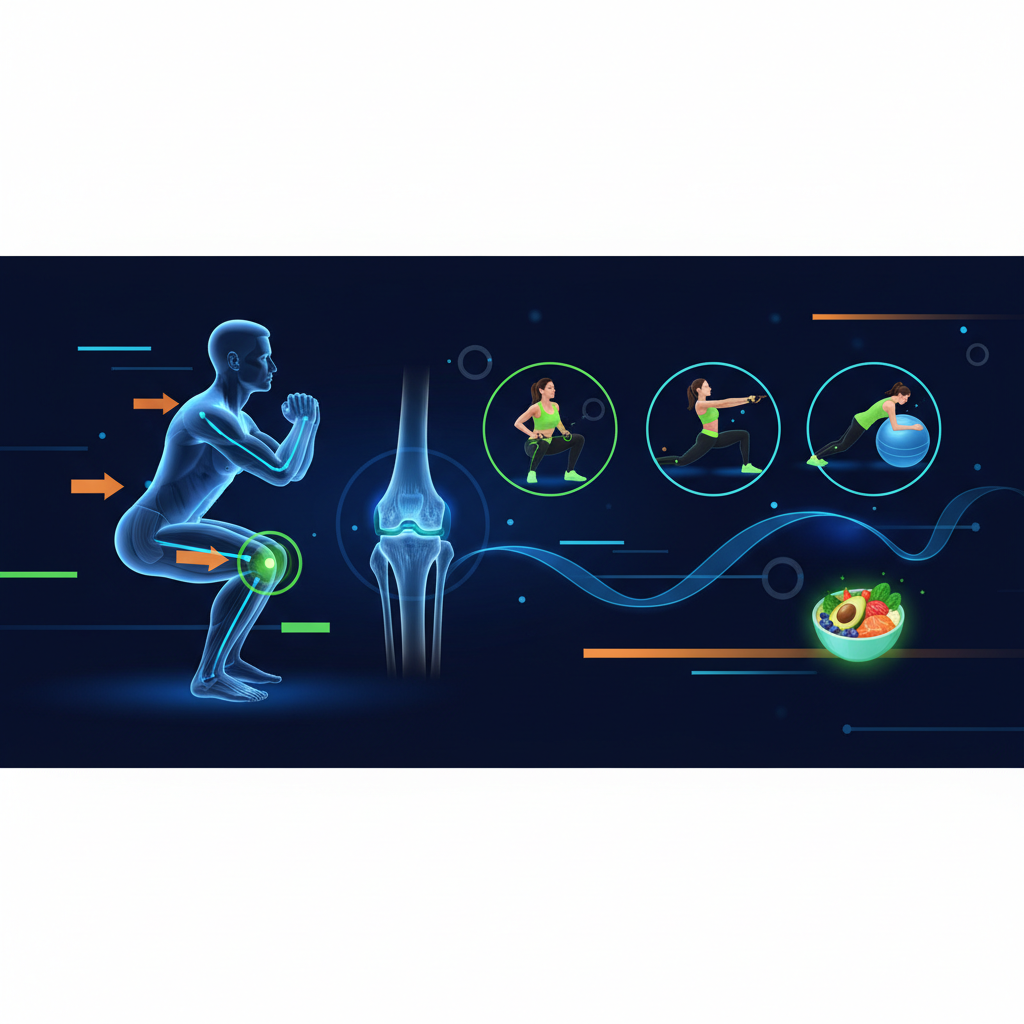
Workout with Bad Knees: 10 Safe & Effective Exercises for 2024
Knee pain. It’s a common complaint that, for many, becomes a frustrating barrier to consistent exercise. You might fear further injury, or simply find movement too uncomfortable. Coach Voris — a NASM-certified personal trainer and Precision Nutrition coach — will tell you: knee pain doesn't have to sideline your fitness goals. In fact, strategic, targeted exercise is often the best way to manage and even improve knee discomfort.
Movement is lotion for your joints. The sedentary lifestyle often exacerbates knee issues by weakening supporting musculature and reducing joint lubrication. The goal isn't to avoid movement, but to engage in smart movement. This article will guide you through safe, effective exercises designed to protect your joints, build strength, and get you back on track for 2024.
Before diving in, a critical disclaimer: If you're experiencing acute, severe knee pain, swelling, or instability, consult a medical professional (physician, physical therapist) before starting any new exercise program. This guide is for individuals with chronic, mild-to-moderate knee pain or those seeking preventive measures. Always listen to your body. Pain is your body's alarm system – don't ignore it.
Understanding Knee Pain & Exercise
The knee joint is a complex structure involving bones, ligaments, tendons, and cartilage. Pain can stem from various sources: osteoarthritis, patellofemoral pain syndrome (runner's knee), tendonitis, meniscal tears, or simply muscular imbalances. Regardless of the specific diagnosis, the principles of strengthening your supporting muscles and improving movement mechanics remain central.
The focus is on:
- Low-impact activities: Reducing direct stress on the knee joint.
- Strengthening surrounding musculature: Particularly the quadriceps, hamstrings, glutes, and core. Stronger muscles act as shock absorbers and stabilizers.
- Improving flexibility and mobility: To ensure proper joint tracking and reduce stiffness.
- Proprioception and balance: Enhancing your body's awareness in space to prevent falls and improve stability.
The Science Behind Safe Knee Workouts
Current guidelines from organizations like the American College of Sports Medicine (ACSM) emphasize the benefits of exercise for individuals with knee osteoarthritis and other chronic knee conditions. They recommend a combination of aerobic, strength, and flexibility training. The key is progressive overload – gradually increasing intensity and volume – without exacerbating symptoms. These evidence-based principles get applied throughout.
10 Safe & Effective Exercises for Bad Knees
Here are 10 exercises that prioritize knee health while building functional strength. Remember to perform a gentle warm-up before starting and cool down afterward. Focus on quality over quantity.
1. Wall Sits
- Why it's great: Isometrically strengthens the quadriceps without dynamic joint movement.
- How to do it: Stand with your back against a wall, feet shoulder-width apart, about 1-2 feet from the wall. Slowly slide down until your knees are bent at approximately a 90-degree angle (or as far as is comfortable, aiming for parallel thighs). Hold for 20-60 seconds.
- Coach's Tip: Keep your core engaged and your back flat against the wall. If 90 degrees is too much, don't go as low. Progress by increasing hold time.
2. Glute Bridges
- Why it's great: Strengthens the glutes and hamstrings, crucial for hip stability and knee support.
- How to do it: Lie on your back with knees bent, feet flat on the floor close to your glutes. Arms at your sides, palms down. Drive through your heels, lift your hips off the floor until your body forms a straight line from shoulders to knees. Squeeze glutes at the top. Lower slowly.
- Coach's Tip: Avoid arching your lower back. Focus on the glutes initiating the movement. For added difficulty, try single-leg glute bridges.
3. Clamshells
- Why it's great: Targets the gluteus medius, a key hip abductor that stabilizes the pelvis and knee.
- How to do it: Lie on your side with hips and knees bent, feet stacked. Keep your feet together as you raise your top knee towards the ceiling, rotating only at the hip. Don’t let your hips roll back. Lower slowly.
- Coach's Tip: You should feel this in the side of your hip/buttock. Use a resistance band around your knees for increased intensity.
4. Straight Leg Raises (Supine & Prone)
- Why it's great: Strengthens quadriceps (supine) and hamstrings/glutes (prone) without any knee flexion.
- How to do it (Supine): Lie on your back, one knee bent, foot flat. Keep the other leg straight and slowly lift it 6-12 inches off the floor, engaging your quad. Hold briefly, then lower slowly.
- How to do it (Prone): Lie face down, one leg straight. Slowly lift it 6-12 inches off the floor, engaging your glute and hamstring. Hold briefly, then lower slowly.
- Coach's Tip: Maintain a neutral spine throughout. Focus on controlled movement, not height.
5. Hamstring Curls (Stability Ball or Machine)
Get your free Day 1 workout — no card required.
Meet Andy — get your free Day 1 workout- Why it's great: Strengthens hamstrings, which protect the knee by countering quadriceps pull.
- How to do it (Stability Ball): Lie on your back with heels on a stability ball, hips lifted slightly. Pull the ball towards your glutes by bending your knees, then extend back out.
- How to do it (Machine): Use a seated or lying hamstring curl machine, adjusting weight to a comfortable level. Focus on controlled contractions.
- Coach's Tip: Avoid hyperextending your lower back. If using a machine, prioritize smooth movement over heavy weight.
6. Bodyweight Squats to a Chair
- Why it's great: Builds functional leg strength with a controlled range of motion, ensuring you don't go deeper than comfortable.
- How to do it: Stand in front of a sturdy chair, feet shoulder-width apart. Hinge at your hips and push your Glutes back as if to sit, keeping your chest up. Lightly tap the chair with your glutes, then stand back up, driving through your heels.
- Coach's Tip: Keep your knees tracking over your toes, not collapsing inward. Adjust chair height if needed – a higher chair is easier.
7. Step-Ups (Low Box)
- Why it's great: Mimics everyday movements, strengthens quads, glutes, and improves balance.
- How to do it: Stand in front of a low, stable box or step (6-12 inches). Step up with one foot, driving through that heel to raise your body. Fully extend the hip and knee at the top. Step down controlling the movement. Alternate legs or complete all reps on one side before switching.
- Coach's Tip: Ensure the box is low enough that your knee doesn't feel stressed. Focus on controlled movement, both up and down. Avoid jumping.
8. Leg Press (Machine)
- Why it's great: Allows for seated, controlled leg strengthening with support, often more comfortable than squats for some.
- How to do it: Adjust the machine for proper range of motion. Place feet shoulder-width apart on the platform. Press the weight away, extending your knees without locking them out. Slowly return to the starting position.
- Coach's Tip: Keep your lower back pressed against the backrest. Don't go so deep that your lower back rounds off the pad or your knees track inside your toes.
9. Cycling (Stationary Bike)
- Why it's great: Excellent low-impact cardiovascular exercise that strengthens quadriceps and hamstrings.
- How to do it: Use a stationary bike (recumbent or upright). Adjust the seat height so your knee has a slight bend at the bottom of the pedal stroke. Begin with light resistance and increase gradually.
- Coach's Tip: Maintain a consistent, comfortable pace. Listen to your body and back off if you feel any knee discomfort. High-cadence, low-resistance cycling is often best for knee health.
10. Water Aerobics/Swimming
- Why it's great: The buoyancy of water reduces gravity's impact, making movements virtually pain-free while still providing resistance.
- How to do it: Participate in a water aerobics class or perform swimming strokes that are comfortable for your knees (e.g., front crawl, backstroke, avoiding breaststroke kick if it causes pain).
- Coach's Tip: Even walking in water provides excellent resistance and support. This is often an ideal starting point for those with significant knee pain.
Building Your Low-Impact Routine
Frequency: Aim for 2-3 strength training sessions per week, with at least one day of rest or active recovery (like walking or gentle cycling) between sessions. Integrate some of the cardio options on non-strength days.
Sets & Reps: Start with 2-3 sets of 10-15 repetitions for each exercise. For isometric holds (like wall sits), aim for 20-60 seconds.
Progression: As you get stronger, you can gradually increase repetitions, sets, duration, or resistance (e.g., adding a resistance band, using a heavier weight on a machine). The National Strength and Conditioning Association (NSCA) recommends a progressive approach, ensuring foundational strength before advancing.
Listen to Your Body: This is non-negotiable. Some soreness is normal, but sharp pain is a red light. If an exercise causes pain, stop immediately and modify it or try a different exercise.
Frequently Asked Questions (FAQ)
Q1: Can I still run with bad knees?
A1: It depends on the severity and cause of your knee pain. For many, high-impact activities like running can exacerbate symptoms. It's often recommended to build significant foundational strength and cross-train with low-impact options (swimming, cycling, elliptical) first. If you choose to run, start with short distances, focus on proper form, and consider softer surfaces. Consult a physical therapist for a personalized assessment.
Q2: Should I wear a knee brace during exercise?
A2: For some, a knee brace can provide temporary support and proprioceptive feedback, which might help with confidence and reduce discomfort during exercise. However, relying on a brace long-term can sometimes hinder the development of your own stabilizing muscles. Use it strategically, perhaps for specific activities, and focus on building natural strength. Always prioritize strengthening over external support.
Q3: What's the best way to warm up and cool down for knee-friendly workouts?
A3: A 5-10 minute light cardio warm-up (e.g., walking, slow cycling) is excellent to increase blood flow. Follow with dynamic stretches like leg swings (front-to-back and side-to-side) and hip circles. For your cool-down, focus on static stretches, holding each for 20-30 seconds. Target hamstrings, quads, hip flexors, and glutes. Foam rolling for these areas can also be beneficial.
Q4: Are there any exercises I should absolutely avoid if I have bad knees?
A4: Generally, high-impact plyometric exercises (box jumps, extensive jumping), deep lunges or squats that cause pain, and leg extension machines (if they exacerbate patellofemoral pain) should be approached with extreme caution or avoided until your knee health significantly improves. Any exercise that causes sharp, shooting, or increasing pain should be immediately stopped.
Don't Let Knee Pain Define Your Fitness Journey
Working out with bad knees requires a strategic, patient, and informed approach. By focusing on low-impact movements, strengthening supporting musculature, and listening intently to your body, you can not only manage knee pain but also significantly improve your overall fitness and quality of life. Remember, consistency and proper form are your greatest allies.
Ready to build a stronger, more resilient body? FitForge AI can help you create personalized, knee-friendly workout plans tailored to your specific needs and progress. The intelligent platform adapts as you get stronger, ensuring you continue to challenge yourself safely and effectively.
Start your free trial today and forge your fit future, pain-free!
Get your free Day 1 workout — no card required.
Meet Andy — get your free Day 1 workout