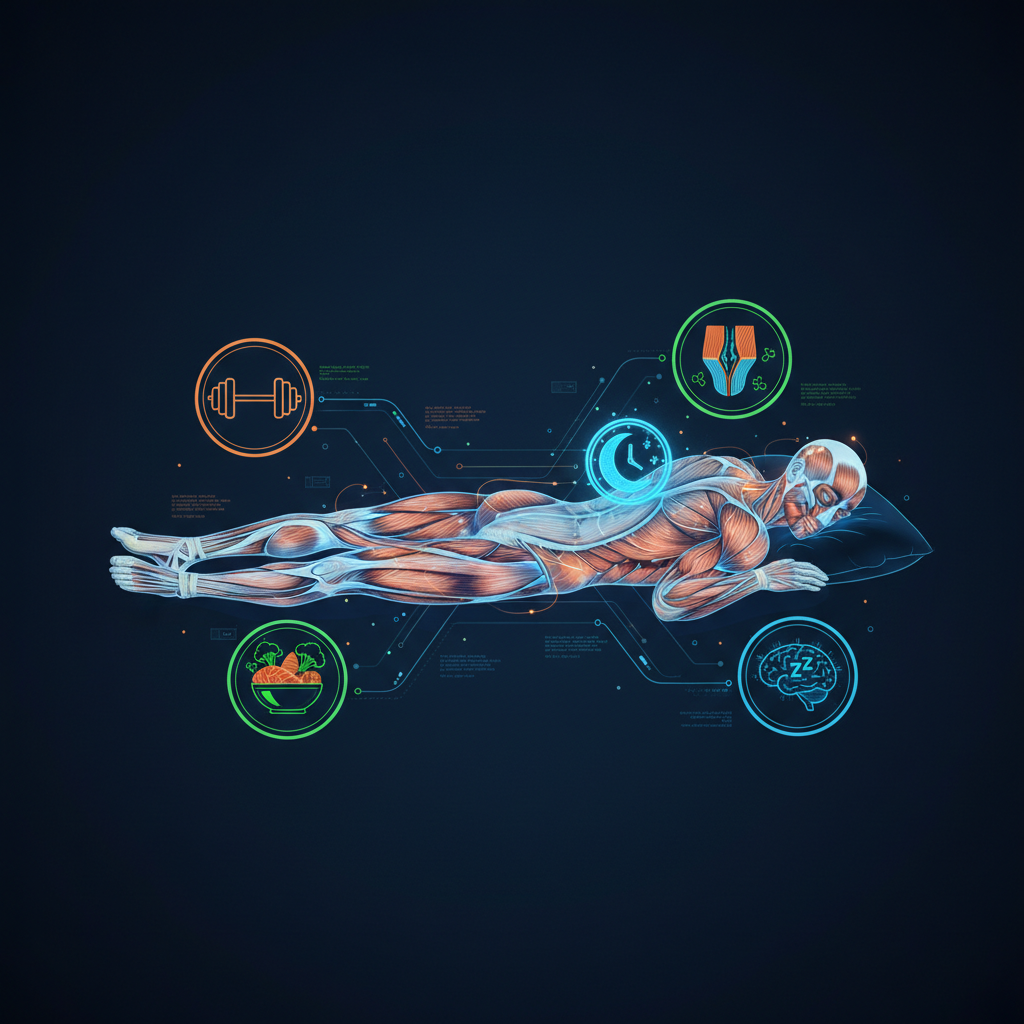
The Science of Sleep and Muscle Growth
You think training builds muscle? Think again. Training provides the stimulus; sleep and nutrition are where the actual rebuilding and growth happen. During deep sleep, specifically non-rapid eye movement (NREM) stages 3 and 4 (slow-wave sleep), your body orchestrates a symphony of anabolic processes.
Growth Hormone Release (GH)
This is the big one. The vast majority of your daily Human Growth Hormone (HGH) is released during deep sleep. HGH is crucial for protein synthesis, muscle repair, fat metabolism, and bone density. Without adequate deep sleep, your HGH production tanks, directly impacting your ability to recover and grow.
Testosterone Production
Testosterone, the primary male sex hormone, is vital for muscle growth in both men and women. Studies, like those published in the Journal of the American Medical Association, have shown that sleep restriction significantly lowers testosterone levels. Less testosterone means less muscle protein synthesis and a harder time building strength.
Cortisol Regulation
Cortisol is your body's primary stress hormone. While essential in acute situations, chronically elevated cortisol is catabolic – meaning it breaks down muscle tissue. Sleep deprivation elevates cortisol levels, creating an unfavorable hormonal environment for muscle growth. Adequate sleep helps keep cortisol in check, maintaining an anabolic state.
Glycogen Replenishment
After a hard workout, your muscle glycogen stores are depleted. Glycogen is your muscles' primary fuel source. During sleep, your body efficiently replenishes these stores, ensuring you're ready for your next training session. Inadequate sleep can leave you feeling sluggish and under-recovered, hindering performance.
Protein Synthesis and Repair
Sleep is when your body focuses intensely on repairing damaged muscle fibers and synthesizing new proteins. This process of muscle protein synthesis (MPS) is what leads to hypertrophy (muscle growth). Disturbed sleep patterns disrupt these repair mechanisms, slowing down your recovery and adaptation.
Practical Strategies for Optimal Sleep
Knowing the "why" isn't enough. You need the "how." Here are actionable, evidence-based strategies from a NASM CPT's playbook to optimize your sleep for superior gains.
1. Prioritize 7-9 Hours of Quality Sleep
This is non-negotiable. The American Academy of Sleep Medicine and the Sleep Research Society recommend 7-9 hours for most adults. For individuals engaged in intense resistance training, often closer to 8-9 hours is ideal to maximize recovery. Don't brag about how little sleep you get; it's actively sabotaging your efforts.
2. Establish a Consistent Sleep Schedule
Your body thrives on routine. Go to bed and wake up at roughly the same time every day, even on weekends. This regulates your circadian rhythm, your body's internal clock, which dictates hormone release, metabolism, and sleep-wake cycles. Consistency is key for deep, restorative sleep.
3. Optimize Your Sleep Environment
Your bedroom should be a sanctuary for sleep.
- Dark: Eliminate all light sources. Even small amounts of light can disrupt melatonin production. Blackout curtains are your best friend.
- Quiet: Block out noise with earplugs, a white noise machine, or a fan.
- Cool: The optimal temperature for sleep is typically between 60-67°F (15-19°C). A cooler environment helps initiate and maintain sleep.
- Comfortable: Invest in a quality mattress and pillows that support your body.
4. Create a Relaxing Pre-Sleep Routine
Signal to your body that it's time to wind down. About 60-90 minutes before bed:
- Dim the Lights: Lower ambient lighting to encourage melatonin production.
- Avoid Screens: The blue light emitted by phones, tablets, and computers suppresses melatonin. Power down all devices at least an hour before bed.
- Engage in Relaxing Activities: Read a physical book, listen to calming music, stretch, meditate, or take a warm bath. Avoid anything stimulating.
5. Mind Your Nutrition and Hydration
What and when you eat and drink significantly impacts sleep.
Get your free Day 1 workout — no card required.
Meet Andy — get your free Day 1 workout- Limit Caffeine and Alcohol: No caffeine within 6-8 hours of bedtime. Alcohol might make you feel drowsy, but it disrupts sleep architecture, preventing deep, restorative stages.
- Avoid Heavy Meals Late: Eating a large, heavy meal close to bedtime can lead to indigestion and discomfort, disturbing sleep.
- Strategic Carbohydrates: A small, easily digestible carb source (e.g., a banana, a small bowl of oatmeal) a couple of hours before bed can sometimes aid sleep by promoting serotonin production.
- Stay Hydrated, But Not Too Much: Drink plenty of water throughout the day, but limit fluids in the 1-2 hours before bed to avoid middle-of-the-night bathroom trips.
6. Incorporate Regular Physical Activity (But Time It Right)
We know exercise is vital for overall health and recovery. However, intense workouts too close to bedtime can elevate core body temperature and stimulate the nervous system, making it harder to fall asleep. Aim to finish strenuous exercise at least 3-4 hours before you plan to go to sleep. Morning or early afternoon workouts are often ideal.
7. Manage Stress
Chronic stress is a sleep killer. High stress levels elevate cortisol, making it difficult to relax and fall asleep. Incorporate stress-management techniques into your daily routine, such as:
- Mindfulness and meditation
- Deep breathing exercises
- Journaling
- Spending time in nature
- Yoga
The Consequences of Sleep Deprivation for Lifters
If you're still not convinced, consider the direct negative impacts of poor sleep on your lifting performance and goals:
- Decreased Strength and Power: Studies show even one night of poor sleep can significantly reduce muscular strength and power output.
- Impaired Recovery: Slower muscle repair, increased muscle soreness, and longer recovery times between sessions.
- Reduced Anabolic Hormones: Lower growth hormone and testosterone, higher cortisol.
- Increased Risk of Injury: Fatigue impairs reaction time, coordination, and judgment, making you more susceptible to errors in form and accidents.
- Decreased Motivation and Focus: You’ll be less likely to train effectively, if at all.
- Impaired Fat Loss: Sleep deprivation disrupts hormones like ghrelin and leptin, increasing appetite and making fat loss harder.
FAQs About Sleep and Muscle Growth
Q1: Can I Catch Up on Sleep on Weekends?
While better than nothing, "catching up" on sleep, often called "sleep banking," is not as effective as consistent sleep. Your body's circadian rhythm prefers regularity. Chronic sleep debt can't simply be erased; prioritize consistent sleep every night.
Q2: What About Naps? Are They Beneficial for Muscle Growth?
Strategic naps can be highly beneficial, especially for athletes with demanding training schedules. A 20-30 minute "power nap" in the early afternoon can improve alertness, cognitive function, and even reduce fatigue. Avoid long naps (over 30 minutes) too close to bedtime, as they can interfere with nighttime sleep.
Q3: Should I Take Supplements to Help with Sleep?
Always consult with a healthcare professional before taking any supplements. Some common supplements people consider for sleep include:
- Magnesium: Involved in muscle function and nerve transmission, can promote relaxation.
- Melatonin: A hormone that regulates sleep-wake cycles. Best used for short-term issues like jet lag, not as a long-term solution for chronic insomnia.
- ZMA (Zinc, Magnesium, Vitamin B6): Often marketed for athletes, with claims of enhancing sleep and testosterone, though evidence is mixed. Focus on optimizing your sleep hygiene first. Supplements are secondary.
Q4: My Schedule Is Crazy, I Can't Get 8 Hours. What's the Minimum?
While 7-9 hours is ideal, if your schedule legitimately prohibits it, aim for the highest quality 6-7 hours you can get. This means being even more diligent with your sleep environment, routine, and stress management. Understand that consistently less than 7 hours will likely mean slower progress and impaired recovery. It's about damage control and maximizing what you can do.
Q5: How Long Until I See the Benefits of Better Sleep on My Training?
You might notice improvements in energy and focus within a few days. Significant improvements in recovery, strength, and overall gains will likely become apparent over weeks and months of consistent, high-quality sleep. It's a foundational change, not a quick fix.
The Bottom Line
Sleep isn't a luxury; it's a performance enhancer. If you're serious about building lean muscle, increasing strength, and optimizing your fitness, you cannot overlook sleep. Treat your sleep routine with the same discipline and focus you apply to your training and nutrition. Every rep, every meal, every supplement – it all comes back to how well you recover.
Start optimizing your sleep tonight. Your muscles will thank you.
Ready to take your training and recovery to the next level? FitForge AI can help you craft personalized workouts that align with your goals and support optimal recovery. Start your free trial today and forge a stronger you!
Get your free Day 1 workout — no card required.
Meet Andy — get your free Day 1 workout