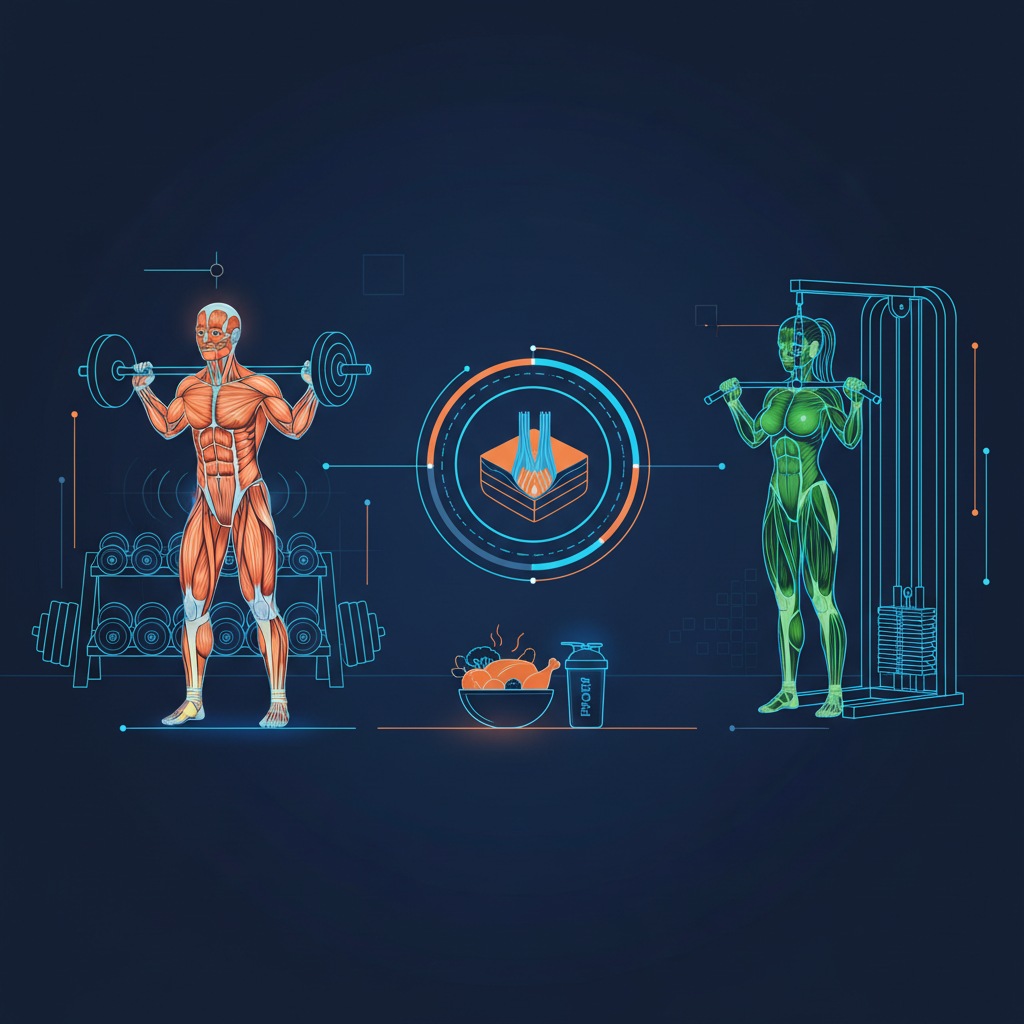
Free Weights vs. Machines: Which is Right for Your Workout?
In the quest for a stronger, leaner, and healthier body, understanding the tools at your disposal is crucial. Two fundamental pillars of resistance training are free weights and machines. But when it comes to achieving your fitness goals, which reigns supreme? FitForge AI believes in empowering you with knowledge to make informed decisions. This comprehensive guide delves into the world of free weights vs. machines, exploring their unique benefits, drawbacks, and optimal applications based on NASM-certified training principles.
The Case for Free Weights
Free weights, encompassing dumbbells, barbells, kettlebells, and medicine balls, demand more of your body than their machine counterparts. They inherently require greater stabilization, engaging a wider range of smaller, often neglected, accessory muscles.
Benefits of Free Weights:
- Enhanced Core and Stabilization: Lifting and controlling free weights forces your core muscles (abdominals, obliques, lower back) and stabilizers (rotator cuff, glute medius, etc.) to work overtime. This translates to improved overall strength, better posture, and a reduced risk of injury. NASM's proprioceptive development principles highlight the importance of these stabilizing muscles.
- Greater Range of Motion and Functional Strength: Free weights allow for a more natural, multi-planar movement pattern, mimicking real-life activities. This promotes the development of functional strength, which is the strength you use in everyday tasks, from carrying groceries to picking up your children.
- Increased Caloric Expenditure: The demand on stabilizer muscles during free weight exercises leads to a higher overall energy expenditure, potentially boosting metabolism and aiding in fat loss.
- Improved Coordination and Proprioception: Free weights challenge your neuromuscular coordination and proprioception (your body's awareness of its position in space). This can lead to better athletic performance and reduced injury risk.
- Versatility and Adaptability: A single set of dumbbells or a barbell can be used for a vast array of exercises, targeting virtually every muscle group. This makes them incredibly versatile for home gyms or when space is limited.
NASM's Perspective on Free Weights:
NASM emphasizes the importance of integrated training, which free weights facilitate exceptionally well. By training the body as a cohesive unit, we build resilience and functional capacity. Exercises like squats, deadlifts, and overhead presses with free weights are foundational movements that build a solid athletic base. However, proper form is paramount. Without it, the risk of injury elevates significantly. This is where understanding proper technique and perhaps starting with lighter weights or seeking guidance becomes critical. Explore the free workout plans which incorporate these principles.
The Appeal of Weight Machines
Weight machines offer a more guided and controlled environment for resistance training. Each machine typically isolates a specific muscle or muscle group, providing a fixed path of motion.
Benefits of Weight Machines:
- Muscle Isolation and Targeted Growth: Machines excel at isolating specific muscles, making them ideal for bodybuilding goals or rehabilitating an injured area under the guidance of a physical therapist or certified trainer.
- Safety and Reduced Risk: The fixed path of motion and built-in safety features of most machines reduce the risk of ego lifting and making risky movements, making them a safer option for beginners or those returning from injury.
- Ease of Use and Learning Curve: Machines generally have a lower learning curve compared to free weights. A new gym-goer can often figure out how to use a leg press or chest press machine relatively quickly.
- Progressive Overload is Straightforward: Increasing the weight on a machine is usually as simple as moving a pin or selecting a different number, making progressive overload easy to implement.
- Focus on Muscle Contraction: Because the machine provides stability, users can often focus more intently on the mind-muscle connection and the actual contraction of the target muscle.
NASM's Perspective on Machines:
While machines can be beneficial, NASM cautions against relying solely on them. Over-reliance can lead to underdeveloped stabilizing muscles and a lack of functional strength. However, machines have their place, particularly in phases of training where specific muscle hypertrophy is the primary goal, or when an individual needs a safer way to achieve resistance. They can also be useful for supersets or circuit training where minimizing rest and keeping the workout flowing is key.
Free Weights vs. Machines: Head-to-Head Comparison
Get your free Day 1 workout — no card required.
Meet Andy — get your free Day 1 workout| Feature | Free Weights | Weight Machines |
|---|---|---|
| Muscle Activation | Full body, core, stabilizers engaged | Primarily target muscle isolation |
| Functional Strength | High | Lower |
| Coordination | Requires significant coordination | Minimal coordination required |
| Safety (Form) | Higher risk with poor form | Generally safer, controlled movement |
| Learning Curve | Steeper, requires technique guidance | Lower, typically intuitive |
| Versatility | High, many exercises possible | Limited to machine's designed movement |
| Caloric Burn | Higher due to greater muscle activation | Moderate |
| Best For | Functional strength, athletic performance, overall conditioning | Muscle isolation, beginners, specific hypertrophy |
Integrating Both for Optimal Results
The optimal approach for most individuals, aligning with evidence-based training principles and NASM protocols, is to incorporate both free weights and machines into their training regimen. This hybrid approach capitalizes on the strengths of each modality while mitigating their weaknesses.
Beginner Trainees: Start with machines to learn proper movement patterns and build a foundational strength base. Gradually introduce free weights with lighter loads and focus on mastering form. The Beginner Workout Guide can help you get started safely.
Intermediate/Advanced Trainees: Prioritize compound free weight movements (squats, deadlifts, presses, rows) as the cornerstone of your program. Supplement with machines to target specific muscle groups for hypertrophy or to add volume without excessive systemic fatigue. Utilize machines for isolation exercises or to provide a safer intensity for certain movements.
Specific Goal Considerations:
- Powerlifting/Olympic Lifting: Predominantly free weights, with machines used sparingly for accessory work.
- Bodybuilding: A balanced mix, often starting with compound free weight lifts and followed by machine isolation exercises.
- General Fitness/Weight Loss: A blend focusing on compound free weight movements for maximum calorie burn and functional strength, supplemented by machines for variety and hitting neglected areas.
- Rehabilitation: Often starts with machines under professional guidance before progressing to modified free weight exercises.
Practical Application & NASM Best Practices
- Assess Your Current Fitness Level and Goals: Are you a complete beginner, an experienced athlete, or somewhere in between? What are you trying to achieve – muscle gain, fat loss, improved athletic performance, or general health? Take the Fitness Assessment Quiz to get personalized recommendations.
- Prioritize Compound Movements: Whether using free weights or machines, always prioritize exercises that work multiple muscle groups simultaneously (e.g., squats, bench presses, rows, lunges).
- Master Form Before Adding Load: This cannot be stressed enough. Incorrect form is a recipe for injury. Use mirrors, record yourself, or work with a qualified trainer. Even with machines, ensure you maintain control throughout the entire range of motion.
- Incorporate Variety: Regularly switch up your exercises, equipment, and training styles to prevent plateaus and keep your body adapting.
- Listen to Your Body: Pay attention to fatigue, pain, and recovery. Adjust your training as needed.
- Progressive Overload: Consistently challenge your muscles by gradually increasing the weight, reps, sets, or decreasing rest time.
Conclusion: The Best of Both Worlds
Ultimately, the "free weights vs. machines" debate is less about choosing one over the other and more about understanding how to strategically integrate both into a well-rounded fitness program. Free weights offer unparalleled benefits for functional strength, core engagement, and overall athleticism. Machines provide valuable tools for muscle isolation, safety, and targeted development.
By applying NASM-certified principles and evidence-based training, you can create a dynamic and effective workout routine that leverages the unique advantages of both free weights and machines. This intelligent approach will help you achieve your fitness goals faster, safer, and more sustainably.
Ready to unlock your potential? Visit FitForge AI today and start your free 7-day trial to access personalized plans and cutting-edge AI-driven fitness guidance!
Start Your Free 7-Day Trial Now!
","meta_description":"Free weights vs machines: Which is best for your goals? Discover the pros, cons, and how to combine them for maximum results, following NASM CPT principles.","slug":"free-weights-vs-machines","tags":[
Frequently Asked Questions
Are free weights better than machines for building muscle?
Free weights generally recruit more stabilizing muscles and allow for a greater range of motion, which can lead to enhanced overall muscle development and functional strength compared to isolated machine movements. However, machines can be beneficial for targeting specific muscles with high intensity.
When should I use weight machines instead of free weights?
Weight machines are ideal for beginners due to their guided movement patterns, making them safer for learning proper form. They are also excellent for isolating specific muscle groups, working around injuries, or for individuals who require greater stability during their lifts.
Can I combine free weights and machines in a single workout program?
Absolutely. A well-designed workout program often incorporates both free weights and machines to leverage the unique benefits of each. Free weights can build foundational strength and stability, while machines can help refine muscle definition and target weak points.
Do free weights burn more calories than machines?
Free weight exercises, especially compound movements like squats and deadlifts, tend to engage more muscle groups simultaneously and demand greater energy expenditure, often leading to a higher caloric burn per exercise than comparable machine exercises. However, total calorie burn depends on intensity and duration.
Get your free Day 1 workout — no card required.
Meet Andy — get your free Day 1 workout