Boost Muscle Growth: The IGF-1 Exercise Connection Revealed
Unlock your muscle-building potential by optimizing IGF-1 through exercise. Discover proven resistance training techniques to maximize hypertrophy and strength. Star
By Coach Voris, NASM-CPT · Training Science · IGF-1, muscle growth, exercise science, hypertrophy, resistance training
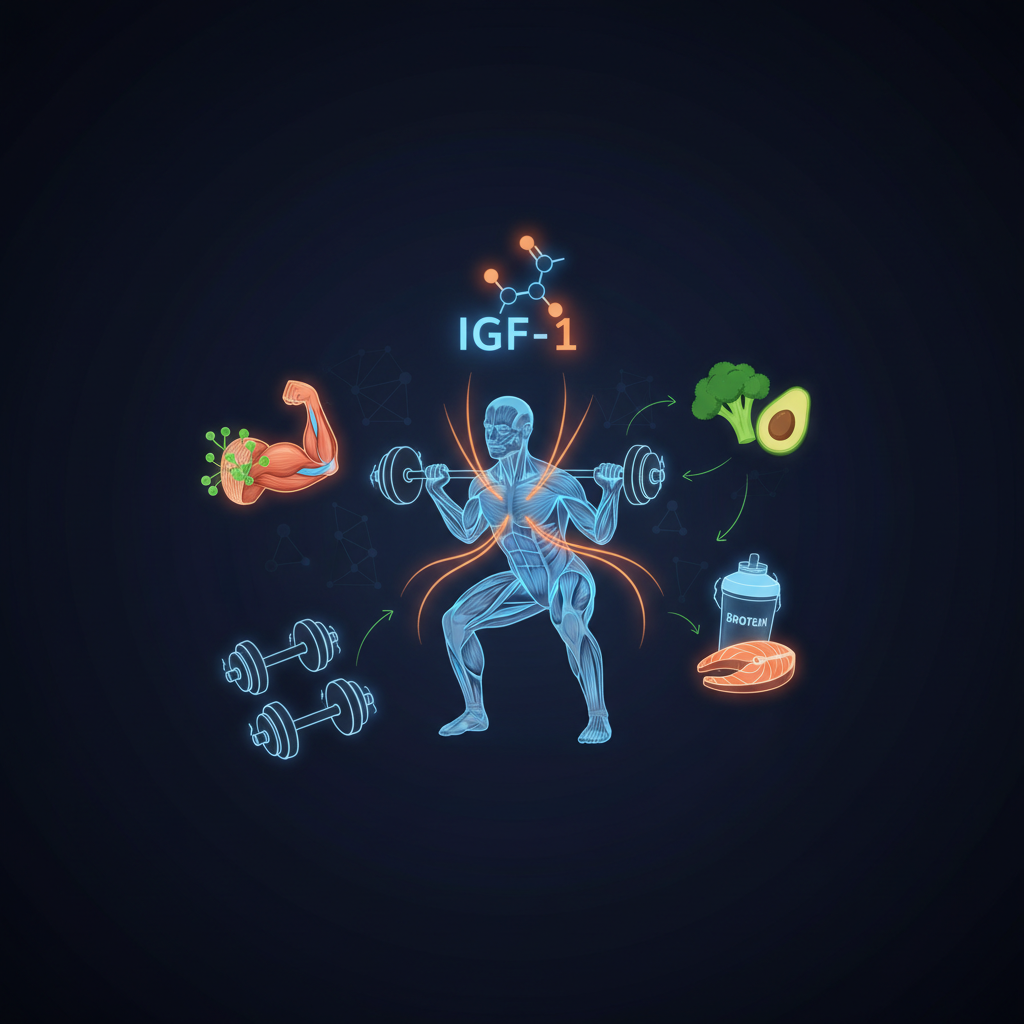
IGF-1's Role: IGF-1 is a potent anabolic hormone crucial for muscle repair and growth. Exercise Stimulus: Resistance training, especially with moderate to high intensity and volume, upregulates IGF-1 production and signaling pathways in muscle tissue. Growth Hormone Link: Exercise stimulates growth hormone (GH) release, which in turn prompts the liver to produce and release IGF-1. Muscle Hypertrophy: The IGF-1 secreted locally within muscle tissue (as opposed to systemically from the liver) plays a more direct role in stimulating muscle protein synthesis and satellite cell activity, essential for hypertrophy. Training Variables: While acute IGF-1 spikes may be temporary, consistent training that elicits a hypertrophic response is more critical for long-term muscle growth adaptations. Insulin-like Growth Factor 1 (IGF-1) is a hormone structurally similar to insulin. It plays a critical role in childhood growth and development, and in adults, it's essential for tissue repair and muscle growth. The "IGF-1 exercise muscle growth connection" refers to how physical activity, particularly resistance training, influences IGF-1 levels and signaling, thereby promoting muscle hypertrophy. Exe…