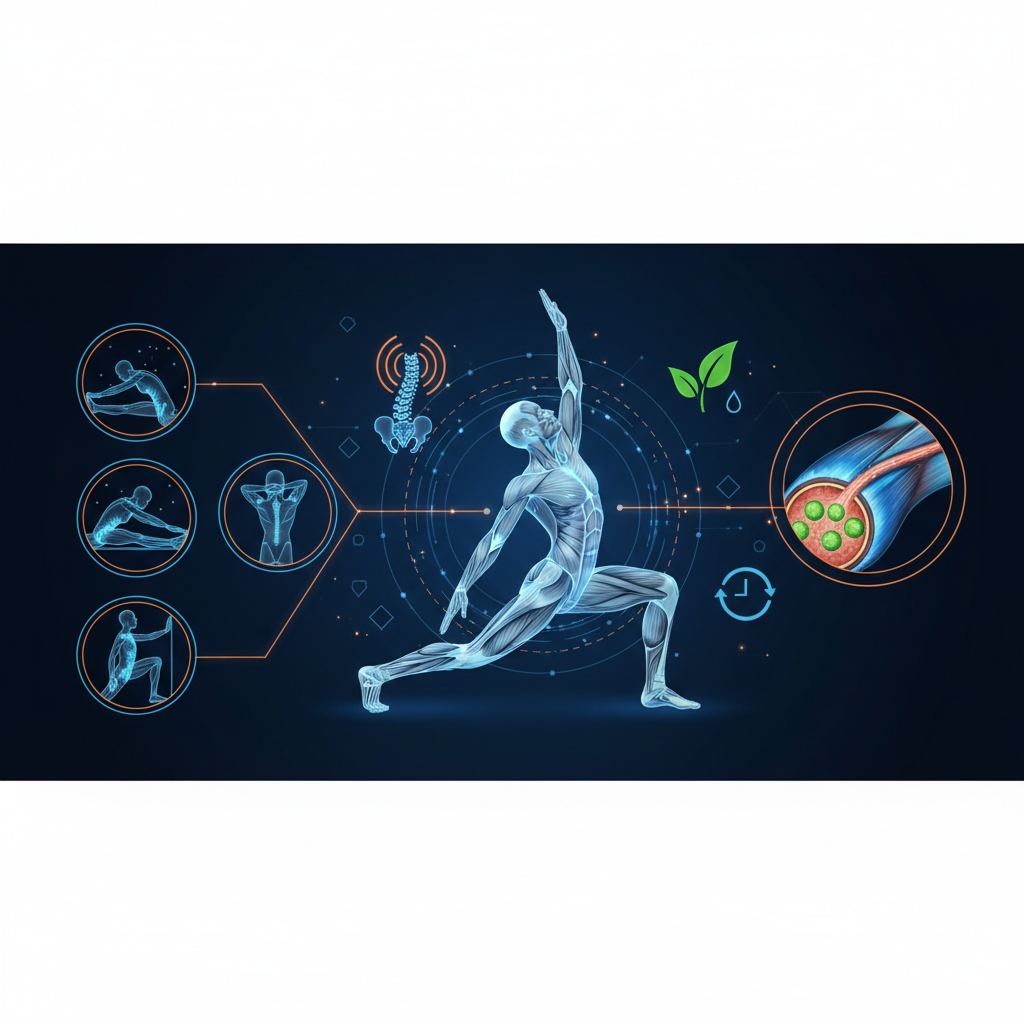
"## Unlock Your Movement Potential: A Beginner's Guide to Flexibility
In today's fast-paced world, our bodies often bear the brunt of prolonged sitting and repetitive movements. This can lead to tight muscles, reduced range of motion, and an increased risk of injury. But what if there was a simple, effective way to combat this? Enter the world of flexibility training.
This post is designed to guide you through creating a foundational flexibility routine, perfectly suited for beginners. Principles from the National Academy of Sports Medicine (NASM) are leveraged to ensure you're moving safely and effectively towards greater mobility. Get ready to feel better, move better, and perform better – both in and out of the gym.
Why is Flexibility So Important, Anyway?
Before diving into the 'how,' the 'why' needs understanding. Flexibility refers to the ability of your muscles and connective tissues to lengthen passively through a range of motion (ROM). Improved flexibility offers a cascade of benefits:
- Enhanced Athletic Performance: Greater ROM allows for more efficient movement patterns, crucial for everything from lifting heavier weights to running faster.
- Reduced Risk of Injury: Flexible muscles are less prone to strains and tears. By improving your flexibility, you create a more resilient body.
- Improved Posture: Tight muscles, especially in the hips and chest, can pull your body out of alignment. Regular stretching can help correct postural imbalances.
- Alleviation of Muscle Soreness: While not a cure-all, gentle stretching can help relieve post-exercise muscle soreness (DOMS) and combat everyday stiffness.
- Increased Body Awareness: Paying attention to your body during flexibility exercises enhances your proprioception – your sense of where your body is in space.
Understanding the NASM Approach to Flexibility
NASM emphasizes a multi-faceted approach to flexibility, recognizing that different types of stretching serve different purposes. For beginners, the focus is on two primary methods:
- Static Stretching: Holding a stretch for a sustained period (typically 15-60 seconds). This is excellent for increasing passive ROM and is best performed after a workout when muscles are warm.
- Dynamic Stretching: Actively moving a joint through its full range of motion. This is ideal as part of a warm-up to prepare the body for exercise.
The primary focus for this routine is static stretching, as it's highly effective for improving resting muscle length. However, incorporating dynamic movements into your warm-up is crucial– check out the dynamic warm-up guide for examples.
Building Your Beginner Flexibility Routine
Get your free Day 1 workout — no card required.
Meet Andy — get your free Day 1 workoutThe key to a successful flexibility routine is consistency and proper technique. Aim to incorporate this routine at least 3-4 times per week, ideally after your workouts when your muscles are most pliable. Remember to listen to your body; you should feel a gentle pull, not sharp pain.
Lower Body Focus
Hamstring Stretch (Standing or Seated):
- How-to: Sit on the floor with one leg extended and the other bent, foot tucked towards your inner thigh. Hinge at your hips, keeping your back straight, and reach towards the toes of your extended leg. Alternatively, stand with feet hip-width apart, place one heel on a slightly elevated surface (like a low step), and hinge at the hips.
- Hold: 30 seconds per leg.
- Why: Targets the muscles at the back of your thigh, often tight from sitting.
Quadriceps Stretch (Standing):
- How-to: Stand tall, using a wall or chair for balance if needed. Grab your ankle and gently pull your heel towards your glutes, keeping your knees aligned and feeling a stretch in the front of your thigh. Avoid arching your lower back.
- Hold: 30 seconds per leg.
- Why: Addresses tightness in the front of the thigh, important for knee health and hip mobility.
Calf Stretch (Wall Push):
- How-to: Stand facing a wall, about arm's length away. Place your hands on the wall. Step one foot back, keeping the heel flat on the floor and the leg straight. Lean forward gently, feeling the stretch in your calf. You can also perform this with a slightly bent knee to target the soleus muscle.
- Hold: 30 seconds per leg (per variation).
- Why: Improves ankle mobility and reduces the risk of shin splints.
Hip Flexor Stretch (Kneeling):
- How-to: Kneel on one knee (use padding if needed), with the other foot flat on the floor in front of you, creating a 90-degree angle at the knee. Gently push your hips forward, keeping your torso upright. You should feel a stretch in the front of the hip of the kneeling leg.
- Hold: 30 seconds per leg.
- Why: Crucial for counteracting the effects of prolonged sitting and improving lower back health.
Glute Stretch (Supine Figure-Four):
- How-to: Lie on your back with your knees bent and feet flat on the floor. Cross one ankle over the opposite knee, creating a
Frequently Asked Questions
How often should a beginner do flexibility training?
For optimal results, beginners should aim for flexibility training at least 2-3 times per week, holding stretches for 20-30 seconds. Consistency is more crucial than intensity, allowing your body to adapt progressively and safely.
What are the primary benefits of a beginner flexibility routine?
A beginner flexibility routine significantly enhances range of motion, alleviates muscle stiffness, and improves postural alignment. These benefits collectively contribute to reduced risk of injury and enhanced daily functional movement, as supported by NASM principles.
Is stretching before a workout beneficial for beginners?
Dynamic stretching, which involves movement through a range of motion, is beneficial as a warm-up before a workout. Static stretching, where a stretch is held for an extended period, is generally more effective post-workout or as a standalone session for beginners to improve flexibility.
How long does it take for a beginner to see improvements in flexibility?
With consistent practice, beginners can typically observe noticeable improvements in flexibility within 4-6 weeks. Adhering to a structured routine and proper technique is key to safely and effectively increasing your range of motion over time.
Get your free Day 1 workout — no card required.
Meet Andy — get your free Day 1 workout