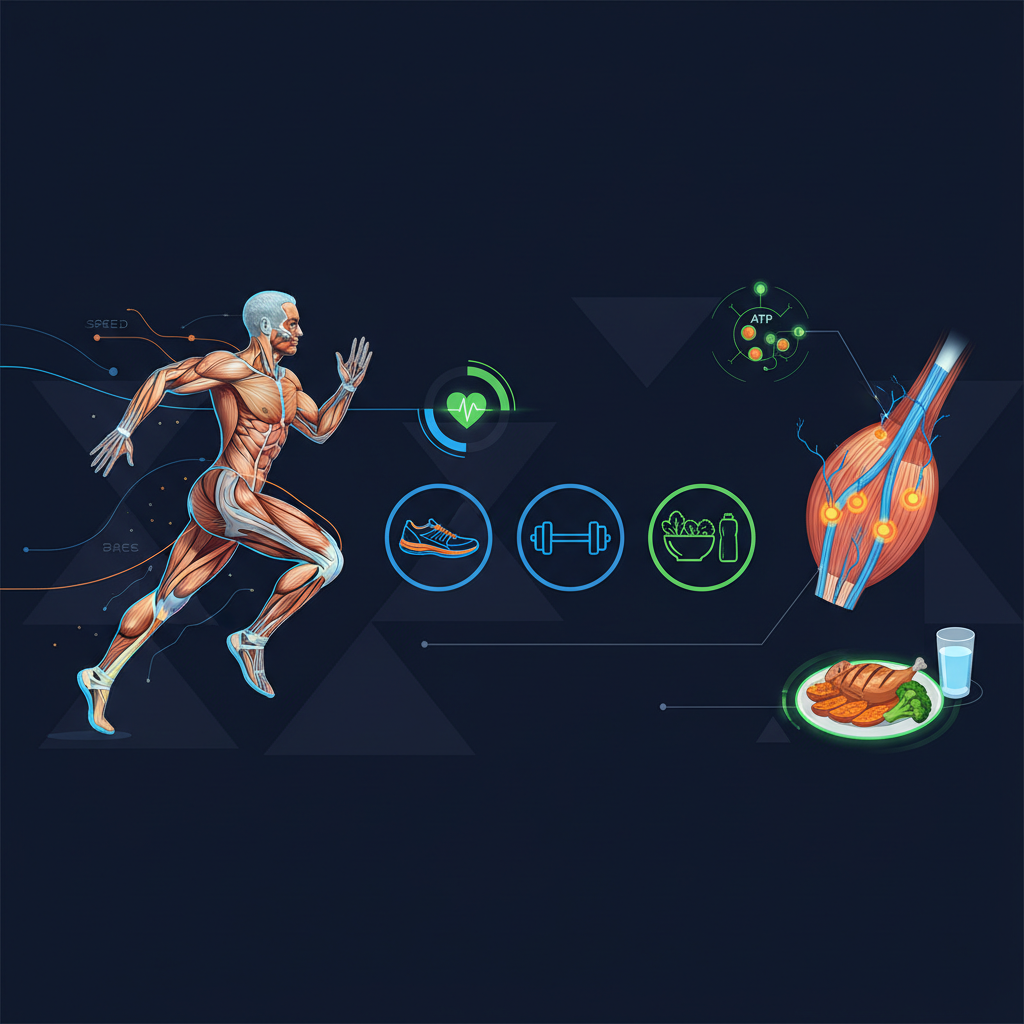
Unlock Your Speed: The Ultimate Run a Faster 5k Training Plan
So, you've conquered the 5k, but now you're eyeing the next level: shaving precious minutes off your time. The "run a faster 5k training plan" isn't just about logging more miles; it's about smart, structured progression. Coach Voris — a NASM-certified personal trainer and Precision Nutrition coach — guides you through a science-backed approach to smashing your personal best.
Deconstructing the 5k: More Than Just Miles
The 5k (3.1 miles) is a demanding distance that requires a blend of aerobic endurance, lactate threshold development, and anaerobic capacity. Simply running the same route at the same pace won't cut it if your goal is speed. Variety and specificity need to be incorporated into your training.
Key Principles for Speed Development
The approach will be grounded in established training principles:
- Progressive Overload: Gradually increasing the demands on your body to stimulate adaptation. This could mean increasing distance, intensity, or frequency.
- Periodization: Structuring your training into distinct phases (e.g., base building, intensity development, peaking) to optimize performance and prevent overtraining.
- Specificity: Training should mimic the demands of the event you're preparing for. In this case, running at or near your target 5k race pace.
- Recovery: Just as crucial as training, adequate rest allows your body to repair and get stronger.
Phase 1: Building Your Aerobic Foundation (Weeks 1-3)
Before diving into speed work, a solid aerobic base is non-negotiable. This phase focuses on building endurance and improving your body's ability to efficiently use oxygen.
NASM CPT Protocols: The emphasis is on consistency and gradually increasing volume. Focus on establishing a sustainable routine.
- Easy Runs: 3-4 times per week. These should feel conversational – you should be able to speak in full sentences. Aim for 30-45 minutes.
- Long Run: 1 time per week. Gradually increase the distance of one run each week, aiming to reach 4-5 miles by the end of this phase. Keep the effort easy.
- Cross-Training: 1-2 times per week. Activities like swimming, cycling, or strength training build overall fitness without the repetitive impact of running. Check out the strength training resources for ideas!
- Rest: 1-2 days per week. Crucial for recovery and preventing burnout.
Get your free Day 1 workout — no card required.
Meet Andy — get your free Day 1 workoutPhase 2: Introducing Speed and Intensity (Weeks 4-7)
Now come workouts designed to improve your speed and efficiency at faster paces. This is where improvements in your lactate threshold and VO2 max are targeted.
NASM CPT Protocols: Introduce interval training cautiously. Ensure proper warm-ups and cool-downs to prevent injury. Listen to your body – intensity should be challenging but controlled.
- Easy Runs: 2-3 times per week. Maintain consistency, but reduce the number slightly to accommodate harder sessions.
- Tempo Runs: 1 time per week. These are runs at a "comfortably hard" pace, typically around your 10k race pace or a pace you could sustain for about an hour. Start with 15-20 minutes of tempo pace within a longer run (e.g., 1 mile warm-up, 20 min tempo, 1 mile cool-down).
- Interval Training: 1 time per week. This is where the focus shifts to improving speed.
- VO2 Max Intervals: Shorter, faster intervals designed to boost your maximum oxygen uptake. Examples:
- 6-8 x 800 meters at 5k race pace or slightly faster, with equal recovery time (jogging or walking).
- 10-12 x 400 meters at 5k race pace or slightly faster, with 1:1 recovery.
- Important: Always include a thorough warm-up (10-15 minutes easy running, dynamic stretching) and cool-down (10-15 minutes easy running, static stretching) for all speed sessions.
- VO2 Max Intervals: Shorter, faster intervals designed to boost your maximum oxygen uptake. Examples:
- Long Run: Continue one long run per week, maintaining or slightly increasing distance (up to 5-6 miles).
- Cross-Training/Strength Training: 1 time per week. Focus on exercises that support running, like squats, lunges, and core work. Explore the workout library.
- Rest: 1-2 days per week.
Phase 3: Sharpening and Peaking (Weeks 8-10)
This final phase sharpens your speed and ensures you hit your peak on race day.
Frequently Asked Questions
How can I improve my 5k time efficiently?
To efficiently improve your 5k time, integrate a variety of training modalities including interval training, tempo runs, and long runs. This multifaceted approach develops both aerobic capacity and speed endurance, crucial for significant progress.
What is the most important type of workout for a faster 5k?
While all components are vital, interval training and tempo runs are particularly important for improving your 5k time. Intervals enhance speed and VO2 max, while tempo runs improve your lactate threshold, allowing you to sustain a faster pace for longer.
How long does it typically take to see significant improvement in 5k speed?
With consistent and structured training, individuals can typically see significant improvements in their 5k speed within 8-12 weeks. Adherence to a well-designed program, coupled with proper recovery and nutrition, accelerates progress.
Do I need special equipment to train for a faster 5k?
While not strictly necessary, quality running shoes appropriate for your foot strike and a GPS watch to track pace and distance can be highly beneficial. These tools support effective training and help monitor your progress accurately.
Get your free Day 1 workout — no card required.
Meet Andy — get your free Day 1 workout