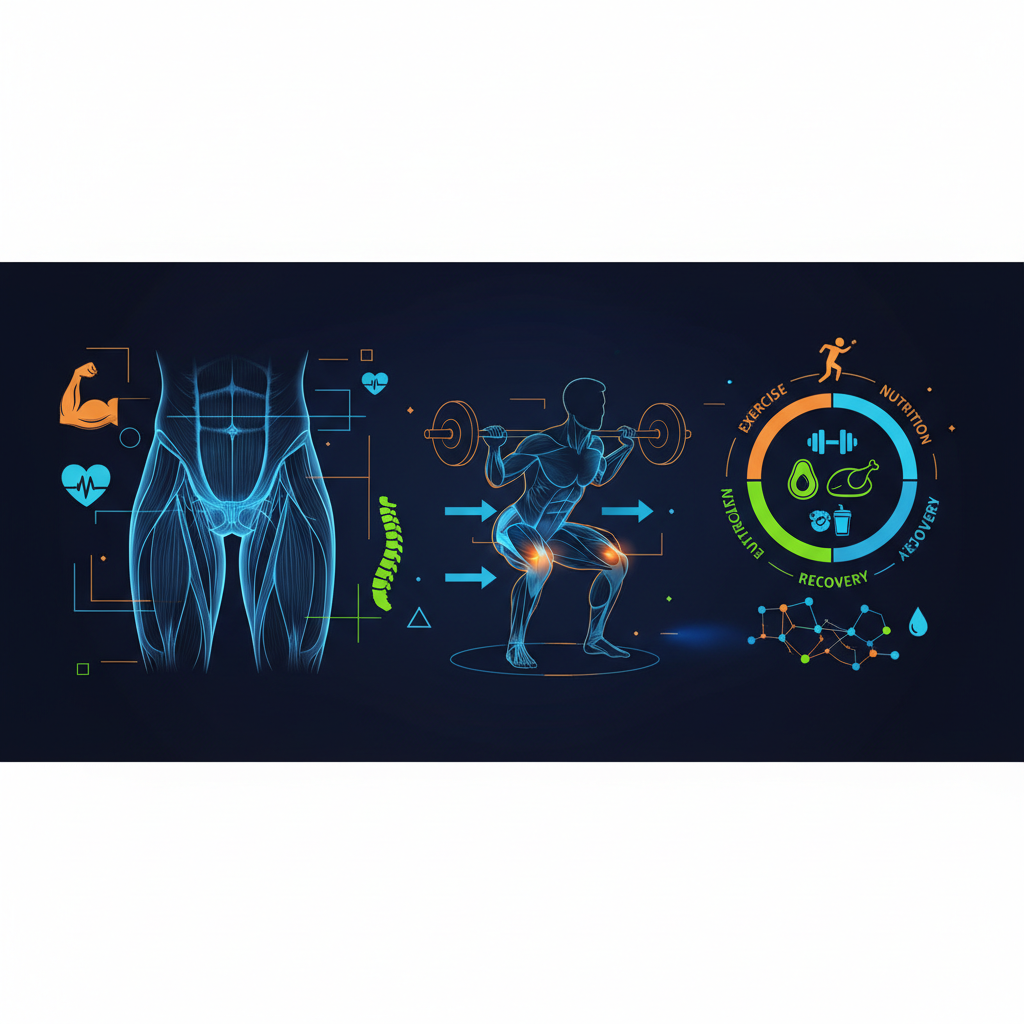
Building a Better Posterior: Your Ultimate Glute Guide
Welcome, aspiring fitness enthusiasts, to FitForge AI's comprehensive guide to building stronger, more powerful glutes! Coach Voris — a NASM-certified personal trainer and Precision Nutrition coach — equips you with the knowledge and strategies to sculpt your glutes effectively and safely. Forget the trends; the focus is science-backed principles to ensure your efforts yield real, sustainable results.
Why Glutes Matter (Beyond Aesthetics)
Your gluteal muscles (gluteus maximus, medius, and minimus) are powerhouses. They're crucial for:
- Athletic Performance: Generating force for running, jumping, and lifting.
- Injury Prevention: Stabilizing the hips and pelvis, reducing the risk of lower back and knee pain.
- Daily Function: Essential for standing up, walking, and maintaining good posture.
Neglecting your glutes can lead to imbalances, pain, and limitations in your training and daily life.
Understanding Glute Anatomy: Know Your Muscles
To train effectively, a brief look at the anatomy helps:
Gluteus Maximus
The largest of the gluteal muscles, responsible for hip extension (pushing your hips forward), external rotation, and upper rotations. Think squats, deadlifts, and hip thrusts.
Gluteus Medius
Located on the side of your hip, it's vital for hip abduction (moving your leg away from the body), stabilization during single-leg activities (like walking or running), and internal/external rotation. Lunges, side-lying leg raises, and single-leg exercises target this muscle.
Gluteus Minimus
The smallest of the three, lying beneath the gluteus medius. It assists the medius in abduction and internal rotation, playing a crucial role in pelvic stability.
The Foundation of Glute Training: NASM Principles
The approach at FitForge AI is rooted in the National Academy of Sports Medicine (NASM) Optimum Performance Training (OPT) model. This evidence-based system emphasizes a phased approach to training, ensuring a solid foundation before progressing.
Phase 1: Stabilization Endurance
Before diving into heavy lifting, the focus is on improving muscular endurance and stability. This phase addresses muscle imbalances and prepares your body for more demanding exercises.
- Focus: High repetitions (12-20) with lighter loads and shorter rest periods (30-60 seconds).
- Key Exercises: Glute bridges, quadruped hip extensions, standing hip abductions (bodyweight or band resistance).
Example Workout Snippet (Stabilization Endurance):
- Glute Bridges: 2 sets of 15 reps
- Quadruped Hip Extensions: 2 sets of 12 reps per leg
- Standing Banded Abductions: 2 sets of 15 reps per leg
- Rest: 30-45 seconds between sets
Phase 2: Strength Endurance
This phase builds upon the stabilization foundation, increasing the load and slightly decreasing repetitions.
- Focus: Moderate repetitions (10-15) with moderate loads and slightly longer rest periods (60-75 seconds).
- Key Exercises: Add variations like single-leg glute bridges, lunges (forward and reverse), and stability ball hamstring curls.
Example Workout Snippet (Strength Endurance):
- Walking Lunges: 3 sets of 12 reps per leg
- Stability Ball Hamstring Curls: 3 sets of 15 reps
- Reverse Crunches: 3 sets of 15 reps
- Rest: 60 seconds between sets
Phase 3: Hypertrophy (Muscle Growth)
This is where the focus shifts to increasing muscle size.
- Focus: Moderate to heavy loads with moderate repetitions (8-12) and moderate rest periods (60-90 seconds).
- Key Exercises: Compound lifts like barbell squats, deadlifts, hip thrusts, and Romanian deadlifts become central. Isolation exercises like glute kickbacks and cable pull-throughs are also effective.
Example Workout Snippet (Hypertrophy):
- Barbell Hip Thrusts: 3 sets of 10 reps
- Romanian Deadlifts (RDLs): 3 sets of 10 reps
- Bulgarian Split Squats: 3 sets of 8 reps per leg
- Rest: 90 seconds between sets
Phase 4: Maximum Strength
This phase focuses on increasing the maximal force your muscles can produce.
- Focus: Heavy loads with low repetitions (1-6) and longer rest periods (2-5 minutes).
- Key Exercises: Primarily compound lifts like heavy squats, deadlifts, and heavy hip thrusts. This phase is typically for more advanced individuals.
Progressive Overload: The Key to Continuous Improvement
Regardless of the phase, the principle of progressive overload is paramount. This means gradually increasing the demands placed on your muscles over time. You can achieve this by:
- Increasing weight/resistance.
- Increasing repetitions or sets.
- Decreasing rest periods.
- Improving form and range of motion.
- Increasing training frequency.
Listen to your body and implement changes gradually to avoid injury.
Essential Glute-Building Exercises
Here are some must-have exercises:
1. Squats (Barbell Back Squat, Goblet Squat)
- Why: Compound movement targeting quads, hamstrings, and glutes.
- Focus: Drive through your heels, keep your chest up, and aim for depth while maintaining a neutral spine.
- NASM Tip: Ensure proper ankle mobility; consider elevating heels slightly if needed.
2. Deadlifts (Conventional, Romanian Deadlift - RDL)
Get your free Day 1 workout — no card required.
Meet Andy — get your free Day 1 workout- Why: Fantastic for posterior chain development (glutes, hamstrings, back). RDLs specifically emphasize the glutes and hamstrings.
- Focus (RDLs): Hinge at the hips, keeping a slight bend in the knees and a flat back. Lower the weight until you feel a stretch in your hamstrings, then drive your hips forward to return to the starting position.
- NASM Tip: Maintain a neutral spine throughout. Don't let your lower back round.
3. Hip Thrusts (Barbell, Banded)
- Why: Arguably the king of direct glute activation, especially for the gluteus maximus.
- Focus: Drive through your heels, squeeze your glutes at the top, and maintain a slight pelvic tuck. Avoid hyperextending your lower back.
- NASM Tip: A full range of motion is key. Ensure your shoulder blades are supported on a bench.
4. Lunges (Walking, Reverse, Static)
- Why: Excellent for unilateral (single-leg) strength, balance, and targeting the gluteus medius.
- Focus: Maintain an upright torso and drive through the heel of the front foot. Ensure your front knee tracks over your ankle.
- NASM Tip: Reverse lunges often allow for better glute focus and less knee stress for beginners.
5. Glute Bridges (Single-Leg, Banded)
- Why: Accessible exercise for activating and strengthening the glutes, especially the gluteus maximus. Single-leg variations increase the challenge and focus on stability.
- Focus: Squeeze glutes at the top, avoid arching the lower back.
- NASM Tip: Place a resistance band around your thighs (just above the knees) for added glute medius activation.
6. Kickbacks & Banded Abductions
- Why: Great isolation exercises for targeting specific glute muscles, particularly helpful for mind-muscle connection.
- Focus: Control the movement, focus on squeezing the glute, and avoid using momentum.
- NASM Tip: For kickbacks, keep your core tight and leg slightly bent. For abductions, focus on leading with your glute medius.
Nutrition for Glute Growth: Fueling Your Gains
Training is only half the battle. Proper nutrition is essential for muscle repair, growth, and overall energy levels. Precision Nutrition emphasizes a sustainable, habit-based approach.
The Hand-Portion Method: A Simple Guide
Use your hand as a portion-control guide:
- Protein (1-2 palms): Crucial for muscle repair. Include sources like chicken, fish, lean beef, eggs, Greek yogurt, tofu, and legumes. Aim for protein at most meals.
- Vegetables (1-2 fists): Packed with vitamins, minerals, and fiber. Fill half your plate with a variety of colorful veggies.
- Carbohydrates (1 cupped palm): Provide energy for your workouts. Choose complex carbs like oats, brown rice, quinoa, sweet potatoes, and fruits. Adjust portions based on activity levels.
- Fats (1-2 thumbs): Important for hormone production and satiety. Include sources like avocados, nuts, seeds, olive oil, and fatty fish.
Example Meal:
- Breakfast: Oatmeal (1 palm) with berries (1 palm), a scoop of protein powder (1 palm), and a sprinkle of almonds (1 thumb).
- Lunch: Grilled chicken breast (1.5 palms), large mixed green salad with vinaigrette (2 fists), and a side of quinoa (1 palm).
- Dinner: Salmon (1.5 palms), roasted sweet potatoes (1 palm), and steamed broccoli (2 fists).
Hydration: Drink plenty of water throughout the day. Aim for at least 8 glasses, adjusting based on activity and climate.
Putting It All Together: Sample Weekly Split
This is a sample; adjust based on your recovery and experience level.
- Day 1: Lower Body (Glute Focus - Hypertrophy)
- Barbell Hip Thrusts: 4 sets of 8-12 reps
- Romanian Deadlifts: 3 sets of 10-12 reps
- Walking Lunges: 3 sets of 10-12 reps per leg
- Glute Kickbacks: 3 sets of 12-15 reps per leg
- Banded Side Walks: 3 sets of 15 steps per direction
- Day 2: Upper Body & Core
- Day 3: Rest or Active Recovery (light walk, stretching)
- Day 4: Lower Body (Strength/Compound Focus)
- Barbell Squats: 4 sets of 6-10 reps
- Deadlifts (Conventional or RDL): 3 sets of 5-8 reps
- Bulgarian Split Squats: 3 sets of 8-10 reps per leg
- Glute Bridges: 3 sets of 15-20 reps
- Day 5: Upper Body & Core
- Day 6 & 7: Rest or Active Recovery
Important Considerations:
- Warm-up: Always start with 5-10 minutes of light cardio and dynamic stretching (leg swings, hip circles).
- Cool-down: Finish with static stretching, holding stretches for 30 seconds (hamstring stretch, quad stretch, glute stretch).
- Listen to your body: Rest is crucial for muscle repair and growth. Don't push through sharp pain.
- Consistency: Sustainable results come from consistent effort over time.
Ready to Forge Your Strongest Self?
Building strong glutes is a journey, not a destination. By applying these NASM- CPT principles and Precision Nutrition strategies, you're well on your way to unlocking your potential.
Ready to take the next step? Explore personalized training plans and tools at FitForge AI. Sign up for the free trial and discover how FitForge AI can help you achieve your fitness goals faster and more effectively. Don't forget to check out the free calculator at /tools to kickstart your journey!
Frequently Asked Questions
What are the best glute exercises for beginners?
For beginners, foundational exercises like glute bridges, squats (bodyweight or goblet), lunges, and clam shells are excellent. These movements effectively target all three gluteal muscles (maximus, medius, and minimus) and help establish proper form before progressing to more complex movements.
How often should a beginner train glutes?
Beginners should aim to train their glutes 2-3 times per week, allowing for 48-72 hours of recovery between sessions. This frequency provides adequate stimulus for muscle growth and strength adaptation without overtraining, which is crucial for sustainable progress.
Do I need weights to build glutes as a beginner?
While weights can enhance glute development, they are not strictly necessary for beginners. Effective glute activation and strength can be built using bodyweight exercises, resistance bands, and proper form. Gradually incorporating light weights can then accelerate progress.
How long does it take for a beginner to see glute results?
With consistent effort in training, proper nutrition, and adequate recovery, beginners can typically start to notice improvements in glute strength and definition within 4-8 weeks. Significant visible changes in shape and size often become apparent after 3-6 months of dedicated training.
Get your free Day 1 workout — no card required.
Meet Andy — get your free Day 1 workout