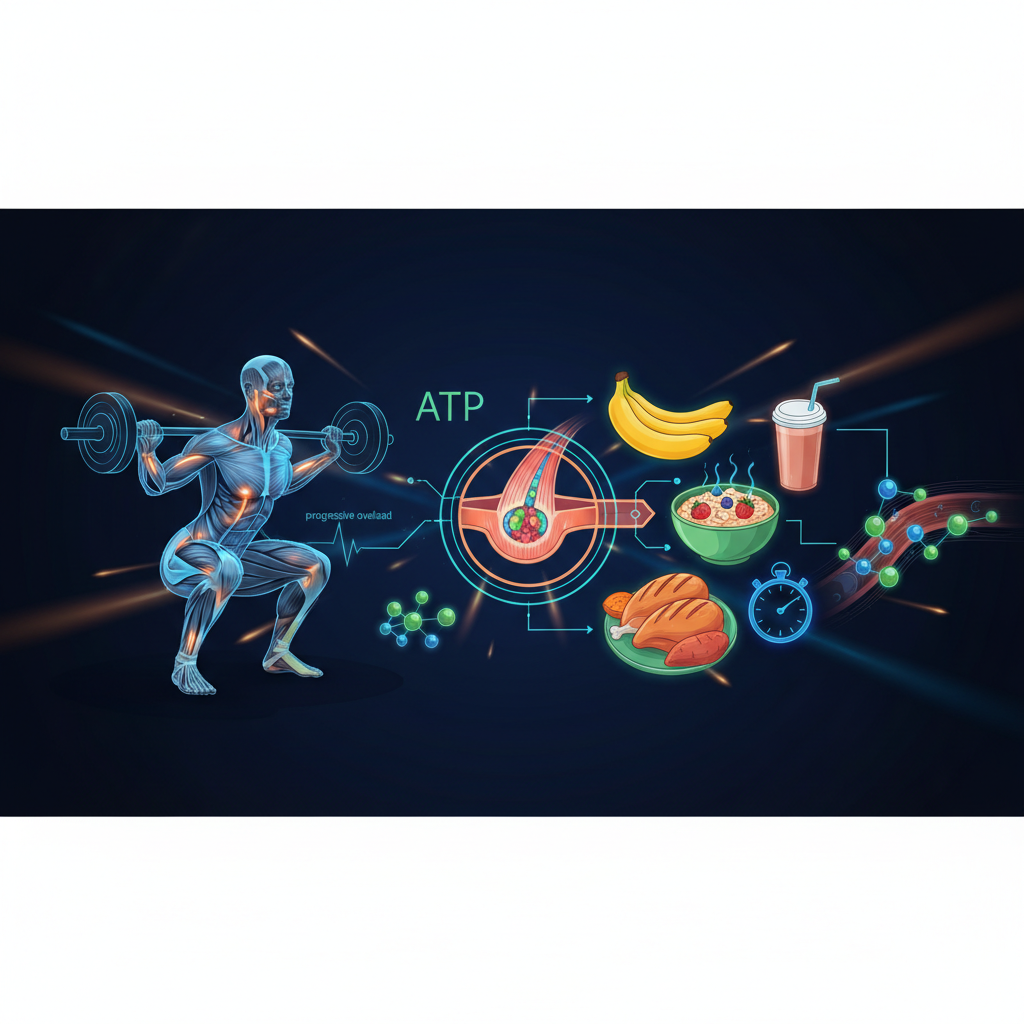
Understanding Progressive Overload
Before diving into nutrition, a quick recap of progressive overload. It's the foundational principle of all effective training programs. The idea is simple: to continually challenge your body by gradually increasing the stress placed upon it. This means lifting heavier weights, doing more reps or sets, reducing rest times, or improving exercise form over time.
The Opt model from NASM aligns perfectly with this, emphasizing periodization and planned progression to avoid plateaus and injuries.
Why Pre-Workout Nutrition Matters for Progressive Overload
Think of your body like a high-performance car. You wouldn't put low-grade fuel in a race car and expect it to win, right? The same applies to your training. What you eat before a workout directly impacts:
- Energy Levels: Providing the fuel (glucose) your muscles need to perform at their best.
- Muscle Protein Synthesis: Supplying amino acids to kickstart muscle repair and growth.
- Focus and Concentration: Ensuring you can concentrate on your form and lifting technique.
- Endurance: Allowing you to push through challenging sets and reps.
Skipping pre-workout nutrition or choosing the wrong foods can lead to fatigue, decreased performance, and even an increased risk of injury.
What to Eat Before Progressive Overload: The Macronutrient Breakdown
To effectively fuel your workouts, consider the core macronutrients: carbohydrates, protein, and fats.
1. Carbohydrates: Your Primary Energy Source
Carbohydrates are your body's preferred source of immediate energy. Before a strenuous workout focused on progressive overload, you need readily available glucose to power your muscles.
- Timing: Aim to consume your pre-workout meal or snack 1-3 hours before training. If you're closer to your workout (30-60 minutes), opt for easily digestible carbs.
- Types: Choose complex carbohydrates for sustained energy if eating 2-3 hours out, and simpler carbs closer to your workout.
- Examples:
- 2-3 hours before: Oats, brown rice, quinoa, sweet potatoes, whole-wheat pasta, fruits.
- 30-60 minutes before: Banana, apple, a small handful of dried fruit, rice cakes, a sports drink (if needed).
2. Protein: Building Blocks for Muscle Repair
While carbs provide energy, protein is crucial for muscle repair and growth, processes that are heightened during progressive overload training. Consuming protein before your workout ensures that amino acids are available to kickstart the recovery process.
- Timing: Include a moderate amount of protein in your pre-workout meal or snack.
- Amount: Aim for roughly 20-30 grams of protein.
- Examples:
- Chicken breast, turkey, lean beef
- Fish (salmon, tuna)
- Eggs
- Greek yogurt
- Tofu or tempeh
- Protein powder (whey, casein, or plant-based)
3. Fats: Use Sparingly Pre-Workout
Fats are essential for overall health but are digested more slowly. Consuming large amounts of fat immediately before a workout can slow down digestion, potentially causing discomfort and hindering performance.
- Timing: It's best to limit high-fat foods in your pre-workout meal, especially if it's close to your training session. If you're eating 2-3 hours prior, a small amount of healthy fats is acceptable.
- Examples (in moderation if eating further out): Avocado, nuts, seeds, olive oil.
Get your free Day 1 workout — no card required.
Meet Andy — get your free Day 1 workoutPractical Pre-Workout Meal & Snack Ideas
Here are some fueling strategies tailored for different timeframes:
1-3 Hours Before Training: The Balanced Meal
This is the ideal window for a substantial, nutrient-dense meal that combines complex carbs and lean protein.
- Option 1: Grilled chicken breast with a generous serving of quinoa and steamed broccoli.
- Option 2: Salmon fillet with roasted sweet potatoes and a side salad with light vinaigrette.
- Option 3: Lean ground turkey stir-fry with brown rice and mixed vegetables.
- Option 4 (Vegetarian/Vegan): Lentil shepherd's pie with a side of steamed green beans.
30-60 Minutes Before Training: The Easily Digestible Snack
If your pre-workout meal was hours ago, or you prefer a lighter option, focus on easily digestible carbohydrates with a small amount of protein.
- Option 1: Banana with a tablespoon of almond butter.
- Option 2: A small bowl of oatmeal with berries.
- Option 3: Greek yogurt with a drizzle of honey.
- Option 4: Rice cakes topped with a thin layer of jam.
Hydration: The Often-Overlooked Key
Don't forget water! Proper hydration is critical for performance, temperature regulation, and nutrient transport. Sip water consistently throughout the day, and ensure you're well-hydrated before, during, and after your workout.
Precision Nutrition Hand-Portion Method for Pre-Workout Fuel
For a simple, visual guide, especially if you're unsure about portion sizes, the Precision Nutrition hand-portion method can be incredibly useful:
- Protein: Aim for a portion about the size of your palm (roughly 3-4 oz).
- Carbohydrates: Aim for a portion about the size of your cupped hand (roughly ½-1 cup cooked).
- Fats: Aim for a portion about the size of your thumb (roughly 1 tbsp).
- Vegetables: Aim for a portion about the size of your two cupped hands stacked (fill the rest of your plate).
Adjust these based on your individual needs, workout intensity, and goals.
Putting It All Together: Fueling for Your Next Progressive Overload Session
- Assess: When will your workout be? How long has it been since your last meal?
- Choose: Select foods you tolerate well and enjoy.
- Time: Consume your pre-workout fuel 1-3 hours before, or a smaller snack 30-60 minutes prior.
- Hydrate: Drink water consistently.
- Listen: Pay attention to your body's signals. Adjust your intake based on how you feel during your workout.
By strategically fueling your body before your progressive overload sessions, you're not just preparing for a workout; you're setting the stage for consistent progress, strength gains, and achieving your fitness goals faster.
Ready to Elevate Your Training and Nutrition?
Stop guessing and start seeing results. FitForge AI offers personalized training and nutrition plans designed to help you conquer your fitness goals, including mastering progressive overload.
Sign up for your FREE trial today and experience the FitForge AI difference!
Frequently Asked Questions
What is the best type of carbohydrate to eat before progressive overload training?
For progressive overload, opt for complex carbohydrates like oats, whole-wheat toast, or fruit 1-3 hours before your workout. These provide sustained energy by slowly releasing glucose into your bloodstream, preventing energy crashes during intense lifting sessions.
How much protein should I consume before a progressive overload workout?
Consuming 20-40 grams of lean protein, such as chicken breast, Greek yogurt, or a protein shake, 1-3 hours pre-workout is ideal. This supplies amino acids to your muscles, initiating muscle protein synthesis and preparing them for repair and growth during the progressive overload stimulus.
Are there any foods I should avoid before attempting progressive overload?
Prior to progressive overload, avoid high-fat foods, overly fibrous vegetables, and excessive sugar. These can slow digestion, potentially causing gastrointestinal discomfort or energy sluggishness, hindering your performance and ability to lift heavier.
How far in advance should I eat my pre-workout meal for progressive overload?
For optimal digestion and energy availability during progressive overload, consume a balanced meal 2-3 hours beforehand. If time is limited, a smaller, easily digestible snack 30-60 minutes prior, like a banana or rice cakes, can still provide a quick energy boost.
Get your free Day 1 workout — no card required.
Meet Andy — get your free Day 1 workout