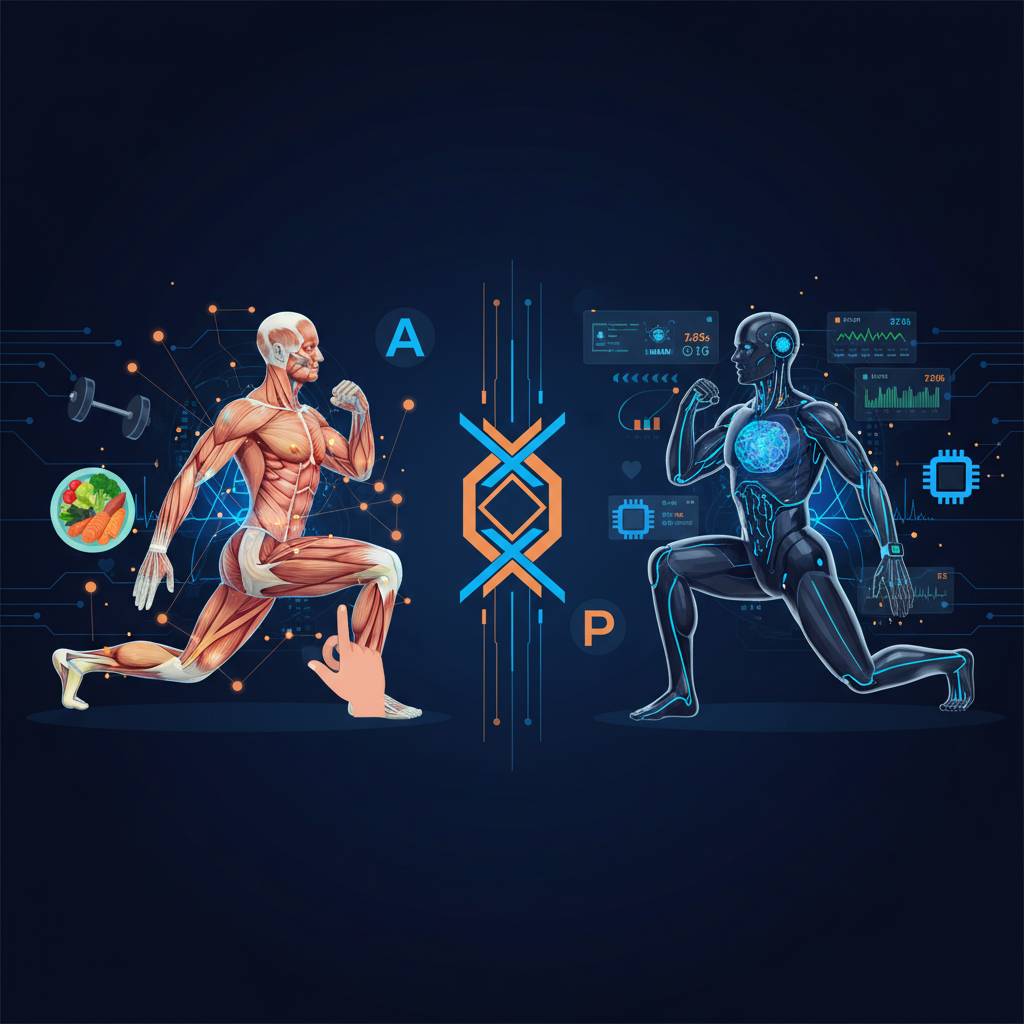
In today's rapidly evolving fitness landscape, the question of how to best achieve your health and wellness goals is more complex than ever. Gone are the days when a traditional gym and a good dumbbell set were your only options. Now, you're faced with a pivotal decision:Should you invest in a human personal trainer, or embrace the burgeoning realm of AI coaching?
FitForge AI understands this dilemma. As a NASM-certified personal training platform and Precision Nutrition coach-led service, FitForge AI aims to leverage the best of both worlds. But for now, here is the breakdown of the personal trainer vs. AI coach debate to help you make an informed choice.
For a man over 40, the right choice depends on experience, budget, and the support that keeps training consistent. A human trainer can observe form and adjust a session to fatigue or stress. An AI coach offers 24/7 access, lower cost, and progress tracking. Choose hands-on guidance when learning technique or managing limitations; choose digital structure when you already know the movements and train independently.
What do a personal trainer and an AI coach each do?
Before diving into the pros and cons, here is what each entails.
The Human Personal Trainer
A human personal trainer is a certified professional who provides individualized exercise guidance, motivation, and accountability. They assess your current fitness level, understand your goals, and design customized workout plans. NASM (National Academy of Sports Medicine) is a leading certification body, ensuring trainers have a solid foundation in exercise science, program design, and client assessment.
Key Responsibilities:
- In-person or virtual sessions: Direct guidance during workouts.
- Customized program design: Tailoring plans to your specific needs, limitations, and goals.
- Form correction: Crucial for preventing injuries and maximizing exercise effectiveness.
- Motivation and accountability: Providing that human connection and encouragement.
- Lifestyle and nutrition guidance: Often extending beyond just exercise.
The AI Coach
An AI coach is a software-based program powered by artificial intelligence that offers fitness guidance, often through an app or online platform. It uses algorithms and data analysis to provide workout recommendations, track progress, and sometimes offer nutritional advice.
Key Responsibilities:
- Data-driven recommendations: Using the data you provide (and sometimes data from wearables) to suggest workouts.
- 24/7 accessibility: Available anytime, anywhere.
- Scalability: Can often serve many users simultaneously at a lower cost.
- Progress tracking: Automated logging of workouts, PBs, and other metrics.
- Personalized, but algorithmic: Tailors plans based on programmed logic and user input.
What are the advantages of a human personal trainer?
Human trainers bring a unique set of advantages to the table, particularly for certain individuals and fitness goals.
1. Nuanced Understanding and Adaptability
A good personal trainer, especially one with NASM CPT credentials, excels at understanding the subtle nuances of your body and your life. They can:
- Read your body language: Notice if you're fatigued, in pain, or struggling with a particular movement, even if you don't explicitly say so.
- Adapt on the fly: If you had a poor night's sleep or are feeling stressed, a trainer can modify your workout in real-time to ensure it's effective yet safe. This level of dynamic adjustment is difficult for AI to replicate.
- Consider the whole picture: They'll factor in your job, family life, stress levels, and even your mood when designing and implementing your training plan.
2. Unparalleled Form Correction and Injury Prevention
This is arguably where human trainers shine brightest. Proper form is paramount to prevent injuries and achieve optimal results.
- Visual feedback: A trainer can see exactly where your form breaks down and provide immediate, tactile, and verbal cues to correct it. This is critical for complex movements like squats, deadlifts, and overhead presses.
- NASM principles: Certified trainers are well-versed in the OPT (Optimal Performance Training) model, focusing on stabilization, strength, power, and endurance in a progressive manner, always prioritizing safe movement patterns.
- Addressing limitations: They can identify and work around existing injuries or physical limitations, ensuring your training is safe and effective.
3. Motivation, Accountability, and Connection
The psychological aspect of fitness is significant. A human trainer provides:
- Emotional support: They offer encouragement, celebrate your wins, and help you push through tough moments.
- Direct accountability: Knowing someone is waiting for you can be a powerful motivator to show up.
- Building rapport: A strong trainer-client relationship fosters trust and makes the journey more enjoyable.
4. Holistic Lifestyle Integration
Many personal trainers go beyond just workouts, offering integrated advice on nutrition, sleep, stress management, and recovery – crucial components of overall health.
What are the advantages of an AI coach?
AI coaching offers distinct advantages, particularly in terms of accessibility, cost, and data integration.
1. Accessibility and Convenience
AI coaches are available 24/7, fitting seamlessly into any schedule.
Get your free Day 1 workout — no card required.
Meet Andy — get your free Day 1 workout- Workout anytime, anywhere: Whether you're at home, traveling, or in a crowded gym, your AI coach is ready.
- On-demand guidance: Get a workout suggestion or progress update whenever you need it.
2. Cost-Effectiveness
Generally, AI coaching services are significantly more affordable than hiring a personal trainer. This makes personalized guidance accessible to a broader audience.
3. Data-Driven Insights and Tracking
AI thrives on data.
- Precise tracking: Automatically logs workouts, reps, weights, and progress metrics.
- Wearable integration: Seamlessly syncs with devices like Apple Watch, Fitbit, etc., to incorporate heart rate, sleep, and calorie data into recommendations.
- Identifying trends: Can highlight patterns in your performance that might be missed manually.
4. Objective Recommendations
AI coaches are not swayed by emotions or personal biases. They provide recommendations based purely on the algorithms and the data provided.
How do a personal trainer and an AI coach compare directly?
| Feature | Human Personal Trainer | AI Coach |
|---|---|---|
| Cost | Higher | Lower |
| Accessibility | Limited by schedule/location | 24/7, anywhere |
| Form Check | Excellent (visual, tactile feedback) | Limited (relies on user self-reporting or video analysis) |
| Adaptability | High (real-time adjustments based on user feedback) | Moderate (adjusts based on pre-set algorithms and data) |
| Motivation | High (human connection, accountability) | Moderate (often relies on gamification, notifications) |
| Holistic View | High (can integrate life factors) | Moderate (primarily focuses on workout data) |
| Data Analysis | Manual/assisted | Automated, often integrates wearables |
| Relationship | Strong personal connection | Digital interaction |
Who Should Choose Which?
Choose a Human Personal Trainer if:
- You are new to exercise and need hands-on guidance for proper form.
- You have specific injuries or physical limitations that require careful management.
- You thrive on personal connection, accountability, and direct motivation.
- You prefer a holistic approach that integrates various aspects of your lifestyle.
- Your budget allows for the investment.
Choose an AI Coach if:
- You are on a tighter budget.
- You have a good understanding of exercise form and technique.
- You are self-motivated and primarily need structure and tracking.
- You value convenience and 24/7 accessibility above all else.
- You are comfortable with a data-driven, primarily digital fitness experience.
- You want to track metrics extensively and integrate data from wearables.
Does a hybrid approach offer the best of both worlds?
FitForge AI believes the future of fitness lies in a hybrid model, blending the personalized touch of human expertise with the efficiency and accessibility of AI. The platform is designed by NASM-certified professionals and guided by Precision Nutrition principles, offering:
- AI-powered workout generation: Tailored plans based on your goals, progress, and feedback – intelligently adapting over time.
- Human oversight and expertise: Direct access to certified coaches for form checks (via video submission), Q&A, and deeper nutritional guidance.
- Advanced progress tracking: Leveraging technology to monitor your journey meticulously.
This approach ensures you benefit from the data-driven capabilities of AI while retaining the crucial element of expert human guidance and accountability.
Practical Application: NASM Guidelines in Practice
Whether you opt for a human trainer, an AI coach, or a hybrid model, adherence to evidence-based training principles is key. NASM's OPT model emphasizes:
- Stabilization Endurance: Building a solid foundation with controlled movements.
- Strength Endurance: Increasing the number of repetitions while maintaining good form.
- Hypertrophy: Focusing on muscle growth (if applicable) through targeted volume and intensity.
- Maximal Strength: Lifting heavier weights for fewer repetitions.
- Power: Developing explosive strength and speed.
AI algorithms can be programmed to follow these principles, but a human trainer can ensure you are executing each phase correctly and progressing safely.
How should you decide between a personal trainer and an AI coach?
The "personal trainer vs. AI coach" debate doesn't have a single right answer. It depends entirely on your individual needs, preferences, budget, and goals.
- For beginners or those with specific needs: A good human trainer is often invaluable.
- For the budget-conscious, tech-savvy individual: An AI coach can be a powerful tool.
- For those seeking the ultimate personalized, adaptable, and efficient solution: Consider a hybrid model like the one offered at FitForge AI.
Ready to experience the future of personalized fitness?
Explore the tools for deeper insights, and check out the diverse workouts library.
Start your journey with FitForge AI today and claim your FREE 7-day trial!
FAQ
When might a human trainer be the better choice?
A human trainer may suit someone new to exercise who needs hands-on form guidance. The article also recommends considering one for specific injuries or limitations, or when personal accountability and connection matter.
What can an AI coach help with?
An AI coach can suggest workouts, track progress, and offer access anytime, anywhere. It can use the data you provide to make recommendations and identify patterns in performance.
Can an AI coach correct exercise form like a trainer?
A human trainer can see form breakdowns and give immediate visual, tactile, and verbal cues. AI form checks are limited, relying on self-reporting or video analysis.
Who might prefer an AI coach?
An AI coach may suit someone who is self-motivated, understands exercise form, and primarily needs structure and tracking. Lower cost and 24/7 accessibility can also matter when choosing support.
Get your free Day 1 workout — no card required.
Meet Andy — get your free Day 1 workout