Compound Exercises: Your Blueprint for Total-Body Strength
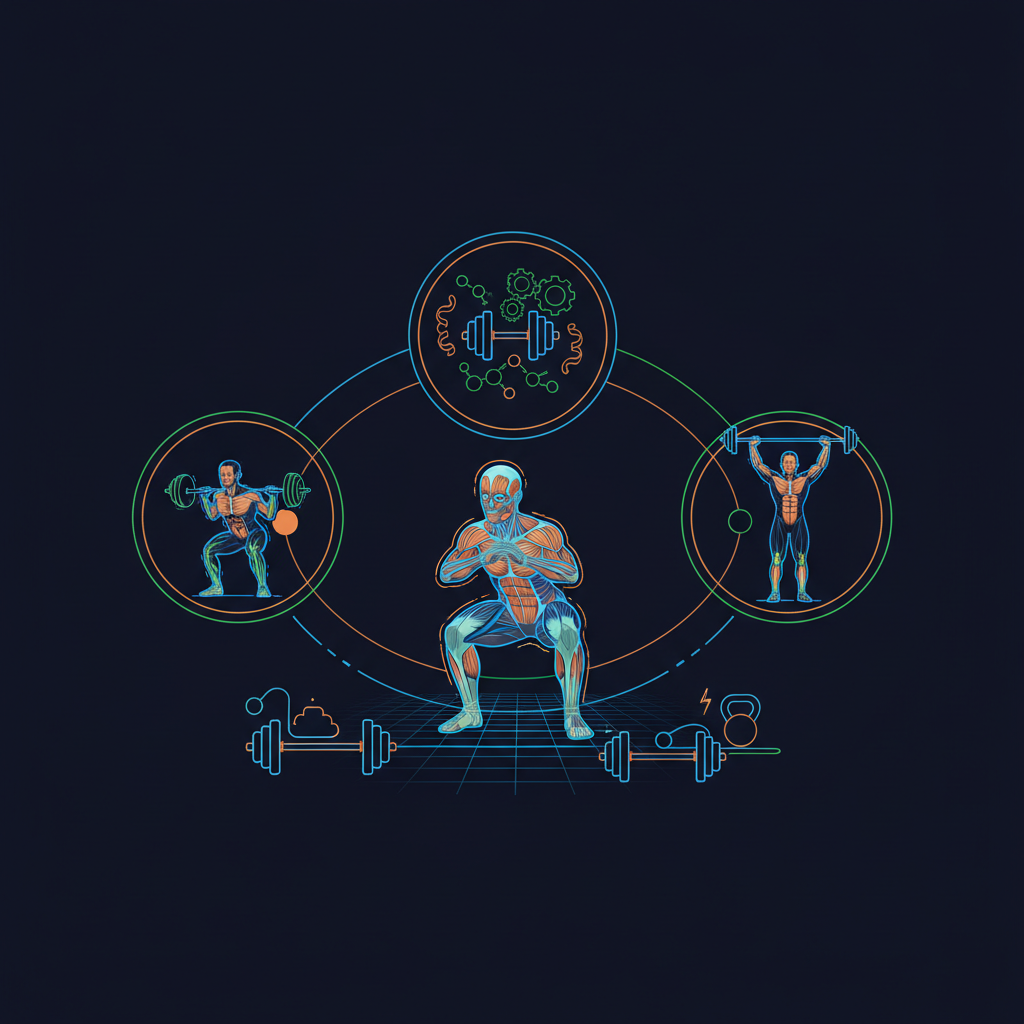
Forget isolation movements. If you want to build serious strength, raw power, and a functionally fit physique, compound exercises are your non-negotiable foundation. These multi-joint movements engage several muscle groups simultaneously, forcing your body to work as a cohesive unit. This leads to greater muscle activation, increased calorie expenditure, and unparalleled strength gains.
FitForge AI preaches efficiency and effectiveness. Compound exercises deliver both in spades. They stress your central nervous system, boost hormone production, and build real-world strength that translates far beyond the gym. Cut to the chase — here are the essential compound lifts that belong in every serious strength program.
The Core Four: Your Strength Foundation
These four exercises form the bedrock of any effective strength training regimen. Master them, and you'll unlock a new level of power.
1. Barbell Back Squat
The King of All Exercises. The squat works nearly every muscle in your lower body – quads, hamstrings, glutes – and heavily engages your core. It's a fundamental human movement pattern that builds incredible lower-body strength and overall resilience.
- Execution:
- Unrack the barbell with it resting on your upper traps. Feet shoulder-width apart, toes slightly out.
- Brace your core, take a deep breath, and descend by pushing your hips back and bending your knees.
- Keep your chest up and back straight. Aim for at least parallel depth (hip crease below knee).
- Drive through your heels to return to the starting position, squeezing your glutes at the top.
- Sets & Reps: 3-5 sets of 5-8 reps for strength and hypertrophy.
- Beginner Modification: Goblet Squat. Hold a dumbbell or kettlebell against your chest. This helps maintain an upright torso and teaches proper depth.
2. Barbell Deadlift
The Ultimate Measure of Raw Strength. The deadlift is a full-body movement that targets your posterior chain (hamstrings, glutes, lower back), lats, traps, and forearms. It teaches you to lift heavy loads safely off the floor.
- Execution:
- Stand with your mid-foot under the bar. Hips low, chest up, shoulders pulled back.
- Grip the bar just outside your shins, hands shoulder-width apart, overhand or mixed grip.
- Initiate the lift by driving through your heels, pulling the bar off the floor. Keep the bar close to your body.
- Extend your hips and knees simultaneously. Finish by squeezing your glutes, do not hyperextend your back.
- Lower the bar with control, reversing the movement.
- Sets & Reps: 3-4 sets of 3-6 reps for pure strength.
- Beginner Modification: Romanian Deadlift (RDL) with dumbbells or Kettlebell Deadlift. Focus on hip hinge mechanics before adding heavy weight from the floor.
3. Barbell Bench Press
The Upper Body Powerhouse. Essential for developing chest, shoulders, and triceps strength. It's a hallmark of upper-body pushing power.
- Execution:
- Lie on a flat bench with your eyes under the bar. Grip the bar slightly wider than shoulder-width, thumbs wrapped.
- Arch your lower back slightly, tuck your shoulder blades, and drive your feet into the floor.
- Unrack the bar. Lower it with control to your mid-chest, keeping elbows at a 45-degree angle to your body.
- Drive the bar back up explosively, extending your arms without locking elbows.
- Sets & Reps: 3-5 sets of 5-10 reps for strength and muscle growth.
- Beginner Modification: Dumbbell Bench Press. Allows for a more natural range of motion and helps identify strength imbalances.
Get your free Day 1 workout — no card required.
Meet Andy — get your free Day 1 workout4. Barbell Overhead Press (Strict Press)
Shoulder Strength and Stability. This exercise builds immense shoulder and triceps strength, along with core stability. It's a true test of upper-body pressing power.
- Execution:
- Stand tall, feet hip-width apart, core braced. Barbell racked at your front deltoids, hands just outside shoulders.
- Press the bar straight overhead, keeping your core tight and avoiding excessive back arch.
- As the bar clears your head, push your head through slightly, finishing with the bar directly over your mid-foot.
- Lower the bar with control back to the starting position.
- Sets & Reps: 3-5 sets of 5-8 reps.
- Beginner Modification: Dumbbell Overhead Press (seated or standing). Helps isolate each shoulder and improve stability.
Supporting Compound Lifts
Don't stop at the core four. Incorporate these to round out your total-body strength.
5. Barbell Bent-Over Row
Back Thickness and Pulling Power. This move targets your lats, rhomboids, traps, and biceps, building a thick, powerful back and improving your pulling strength.
- Execution:
- Hinge at your hips with a slight bend in your knees, back straight, almost parallel to the floor.
- Grip the bar slightly wider than shoulder-width. Let the bar hang towards the floor.
- Pull the bar towards your lower chest/upper abdomen, squeezing your shoulder blades together.
- Lower the bar with control, extending your arms fully.
- Sets & Reps: 3-4 sets of 6-10 reps.
- Beginner Modification: Dumbbell Rows (single-arm or two-arm). Offers more flexibility in body positioning and range of motion.
Programming Your Compound Lifts
Focus on progressive overload: consistently increasing the weight, reps, or sets over time. Start with lighter weights to master form. Consistency is paramount. Aim for 2-4 full-body strength sessions per week, allowing for adequate recovery.
Example Weekly Split (Full Body):
- Workout A: Squats, Bench Press, Bent-Over Rows
- Workout B: Deadlifts, Overhead Press, Lunges (another excellent compound movement)
Alternate A and B, taking rest days between workouts.
The FitForge AI Advantage
FitForge AI eliminates the guesswork. The platform leverages advanced algorithms to create personalized training programs centered around these powerful compound movements. FitForge AI adapts to your progress, ensuring optimal overload and recovery, so you can focus on execution and consistent gains without plateaus.
Ready to transform your strength and build a formidable physique? Discover your custom strength blueprint.
Take the free FitForge AI fitness quiz today and forge your strongest self!
Frequently Asked Questions
What exactly are compound exercises?
Compound exercises are multi-joint movements that engage several muscle groups simultaneously, forcing your body to work as a cohesive unit. Examples include squats, deadlifts, and bench presses, which are fundamental for developing overall strength and functional fitness.
Why are compound exercises better than isolation exercises?
Compound exercises are superior for overall strength and muscle gain due to their efficiency and greater metabolic demand. They recruit more muscle fibers, boost hormone production, and build real-world strength more effectively than single-joint isolation movements.
How often should I include compound exercises in my routine?
For optimal results, incorporate compound exercises into your strength training routine 2-4 times per week, focusing on major movement patterns. Ensure adequate rest and recovery between sessions to allow for muscle repair and growth.
What are the most effective compound exercises for beginners?
Beginners should focus on foundational compound movements such as bodyweight squats, assisted pull-ups, push-ups, and dumbbell rows. As strength progresses, introduce barbell squats, deadlifts, and overhead presses with proper form and appropriate loads.
Get your free Day 1 workout — no card required.
Meet Andy — get your free Day 1 workout