Boost Recovery by 30%: The Science of Optimizing Your Rest Days
Unlock faster gains & prevent overtraining! Discover scientifically-backed methods to optimize muscle recovery and maximize your performance. Get expert.
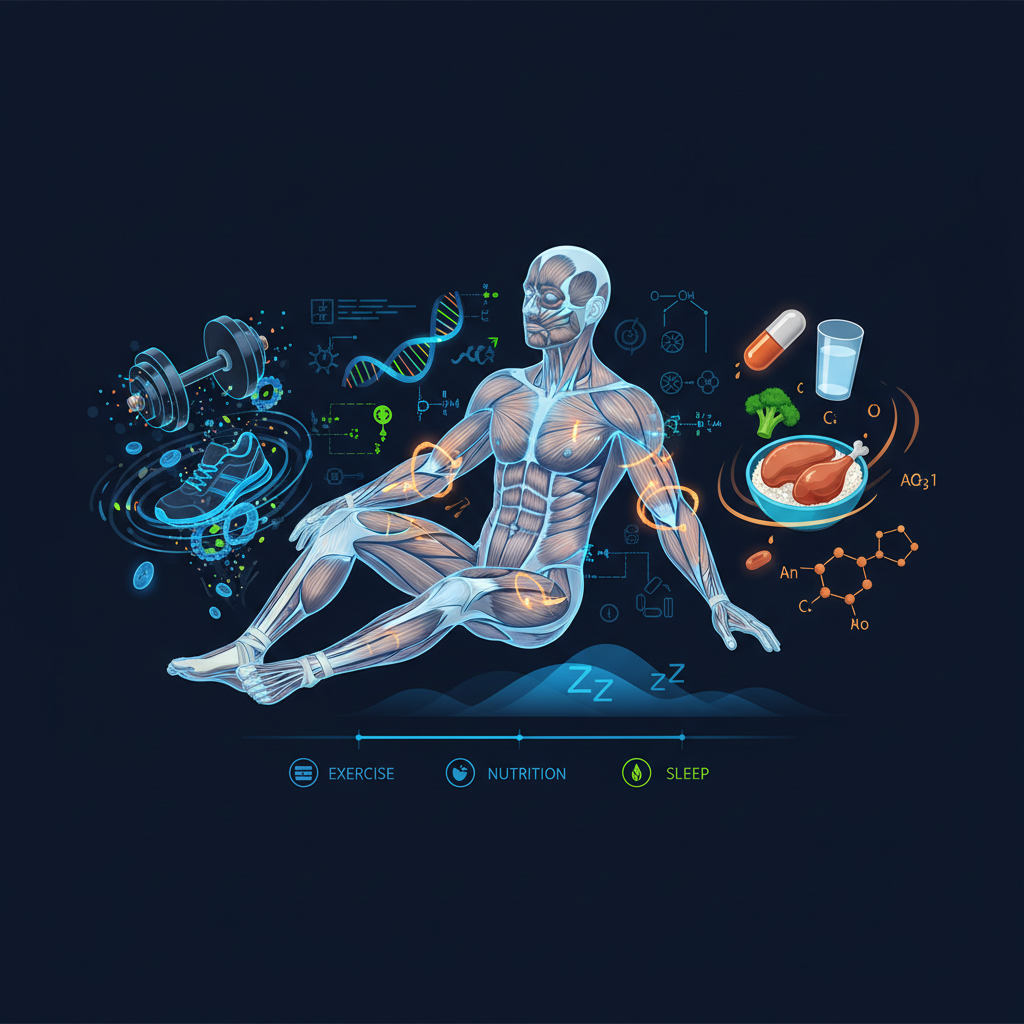
When you train, particularly [resistance training](https://fitforgeai.net/blog/how-to-start-resistance-bands), you're not building muscle; you're breaking it down. Specifically, you're causing microscopic tears in muscle fibers, a process known as Exercise-Induced Muscle Damage (EIMD). This isn't a bad thing; it's the necessary stimulus for adaptation. Your body, a remarkable machine, responds to this stress by repairing and rebuilding those damaged fibers – stronger and often larger than before. This process is called muscle protein synthesis (MPS). It's driven by a complex interplay of hormones, nutrients, and rest, and it's what leads to hypertrophy ([muscle growth](https://fitforgeai.net/blog/sleep-optimization-for-muscle-growth)) and increased strength. During recovery, several key physiological processes occur: - Muscle Fiber Repair: As mentioned, your body repairs micro-tears, laying down new protein strands. - Glycogen Replenishment: Intense exercise depletes glycogen (stored carbohydrates) in your muscles and liver. Recovery allows your body to restock these energy reserves, preparing you for the next session. - Hormonal Regulation: Training elevates stress hormones like c…