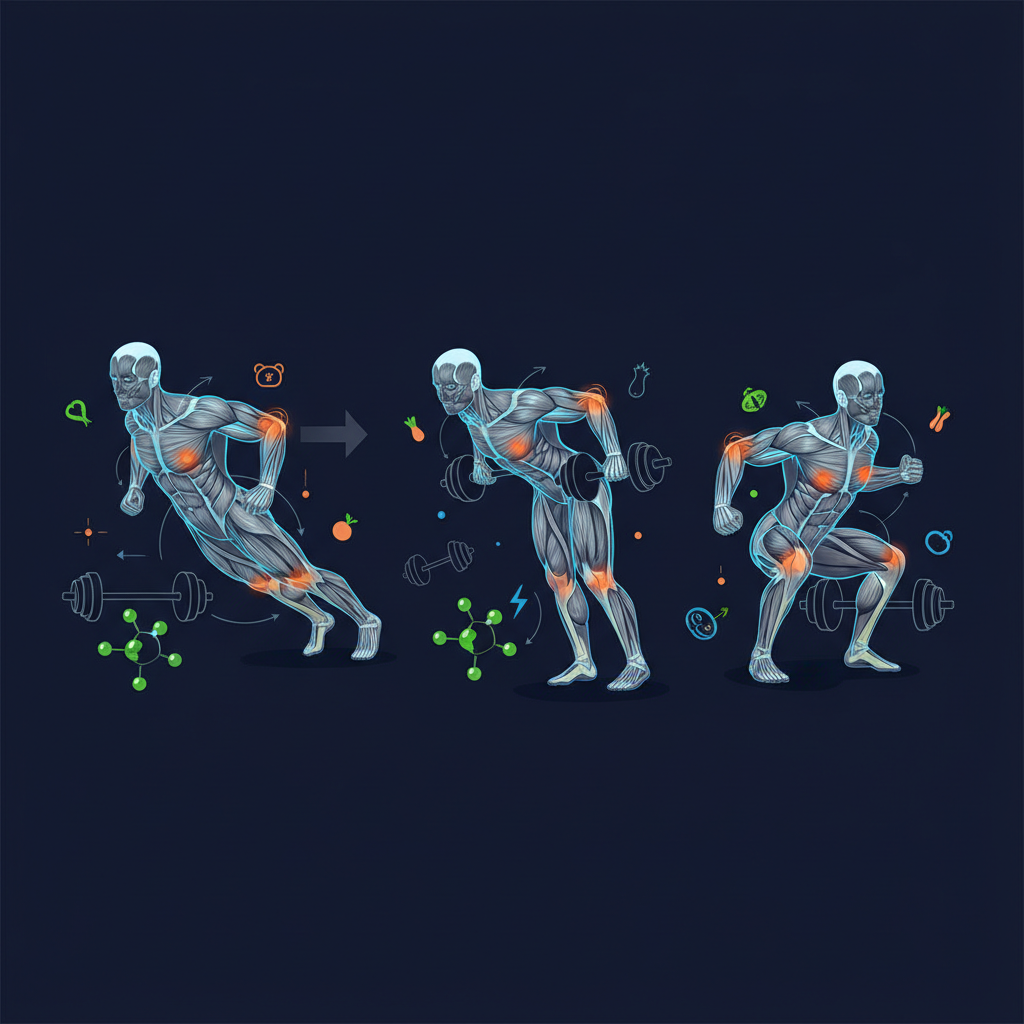
Why PPL Works: The Science Behind the Split
The PPL split organizes your training days by movement pattern: pushing exercises, pulling exercises, and leg exercises. This logical grouping offers several key advantages:
- Optimized Recovery: By targeting specific muscle groups on different days, you allow ample time for recovery and repair before hitting those muscles again. This reduces overtraining risk and enhances growth.
- Increased Frequency: Compared to traditional body part splits, PPL allows you to hit each major muscle group more frequently (typically twice a week). Higher training frequency is a proven driver of hypertrophy.
- Enhanced Volume Management: Concentrating similar movement patterns on a single day enables you to accumulate significant volume for those muscle groups without excessive fatigue in unrelated areas.
- Reduced Training Time Per Session: While you train more often, individual PPL sessions can be more focused and efficient, preventing prolonged gym visits that can lead to burnout.
Structuring Your PPL Split: The Weekly Blueprint
The most common and effective PPL schedule involves training six days a week, hitting each category twice. Here's a typical layout:
- Monday: Push (Chest, Shoulders, Triceps)
- Tuesday: Pull (Back, Biceps, Rear Delts)
- Wednesday: Legs (Quads, Hamstrings, Glutes, Calves)
- Thursday: Push (Chest, Shoulders, Triceps)
- Friday: Pull (Back, Biceps, Rear Delts)
- Saturday: Legs (Quads, Hamstrings, Glutes, Calves)
- Sunday: Rest
Alternatively, for those requiring more recovery or opting for a three-day-a-week schedule, you can cycle through the PPL days with a rest day in between, or follow a 3-on, 1-off schedule. However, for maximum growth, the 6-day split is generally preferred.
Exercise Selection: Building Your Arsenal
Your exercise selection should prioritize compound movements followed by isolation exercises. Compound exercises engage multiple joints and muscle groups simultaneously, allowing you to lift heavier and stimulate greater overall growth. Isolation exercises then target specific muscles for further development and symmetry.
Push Day Exercises:
Focus on movements that involve pushing weight away from your body.
- Chest:
- Compound: Barbell Bench Press (flat, incline), Dumbbell Press (flat, incline), Dips
- Isolation: Dumbbell Flyes, Cable Crossovers
- Shoulders:
- Compound: Overhead Press (barbell or dumbbell), Arnold Press
- Isolation: Lateral Raises, Front Raises
- Triceps:
- Compound: Close-Grip Bench Press, Dips (triceps focus)
- Isolation: Triceps Pushdowns (rope, bar), Overhead Dumbbell Extension, Skullcrushers
Pull Day Exercises:
Concentrate on exercises that involve pulling weight towards your body.
- Back:
- Compound: Deadlifts (conventional, sumo), Barbell Rows, Pull-ups/Lat Pulldowns, Seated Cable Rows
- Isolation: Face Pulls, Straight-Arm Pulldowns
- Biceps:
- Compound: Chin-ups (supinated grip)
- Isolation: Barbell Curls, Dumbbell Curls (standing, incline), Hammer Curls, Preacher Curls
- Rear Delts:
- Isolation: Reverse Pec Deck Flyes, Bent-Over Dumbbell Lateral Raises
Leg Day Exercises:
Dedicated to developing your lower body strength and mass.
- Quads:
- Compound: Barbell Squats (back, front), Leg Press, Lunges (barbell, dumbbell)
- Isolation: Leg Extensions
- Hamstrings:
- Compound: Romanian Deadlifts (RDLs), Glute-Ham Raises
- Isolation: Leg Curls (lying, seated, standing)
- Glutes:
- Compound: Hip Thrusts, Glute Bridges
- Calves:
- Isolation: Standing Calf Raises, Seated Calf Raises
Reps, Sets, and Progressive Overload
For hypertrophy (muscle growth), aim for the 6-12 rep range for most exercises. Compound lifts can sometimes be performed in slightly lower rep ranges (4-6) for strength emphasis, which indirectly contributes to hypertrophy. Isolation exercises can often benefit from slightly higher rep ranges (10-15) for a stronger mind-muscle connection.
Get your free Day 1 workout — no card required.
Meet Andy — get your free Day 1 workoutSets: Typically 3-4 working sets per exercise are sufficient, adjusting based on your training experience and recovery capacity.
Progressive Overload is the cornerstone of muscle growth. To continually build muscle, you must consistently challenge your body. This means progressively increasing:
- Weight lifted: The most common form of overload.
- Reps per set: Performing more reps with the same weight.
- Sets per workout: Adding more sets for a given exercise or muscle group.
- Frequency: Training a muscle group more often (as PPL inherently does).
- Time under tension: Slowing down the eccentric (lowering) phase of a lift.
Track your workouts rigorously. Aim to either lift slightly heavier or perform an extra rep or two with the same weight each week. This consistent effort signals to your body that it needs to adapt and grow stronger.
Nutrition and Recovery: The Growth Catalysts
Even the most perfectly executed PPL split will yield minimal results without adequate nutrition and recovery.
- Protein Intake: Consume 1.6-2.2 grams of protein per kilogram of body weight daily to support muscle repair and growth.
- Caloric Surplus: To build muscle, you generally need to be in a slight caloric surplus, consuming more calories than you burn. Focus on whole, unprocessed foods.
- Carbohydrates and Fats: Don't neglect these macronutrients. Carbs fuel your workouts and aid recovery, while healthy fats are crucial for hormone production and overall health.
- Sleep: Aim for 7-9 hours of quality sleep per night. This is when your body does the majority of its repair and growth.
- Hydration: Drink plenty of water throughout the day to optimize performance and recovery.
Common PPL Mistakes to Avoid
- Neglecting Warm-ups and Cool-downs: Essential for injury prevention and improving flexibility.
- Ego Lifting: Prioritizing heavy weight over proper form. Form is paramount for stimulating the target muscles and staying injury-free.
- Skipping Leg Day: Don't do it. Your legs are the foundation of your physique and overall strength.
- Inconsistent Training: Adherence is key. Stick to your schedule as much as possible.
- Ignoring Recovery: Overtraining will derail your progress faster than anything else.
Conclusion: Build Your Best Physique with PPL
The Push-Pull-Legs split is a powerful, efficient, and highly effective training methodology for anyone serious about building muscle and strength. By understanding its principles, structuring your routine intelligently, and committing to progressive overload, proper nutrition, and adequate recovery, you'll be well on your way to achieving your fitness goals.
Ready to elevate your training and precisely tailor a plan to your unique body and goals? Take the free fitness quiz and discover how FitForge AI can personalize your path to maximum muscle growth.
Frequently Asked Questions
What exactly is the Push-Pull-Legs (PPL) split?
The PPL split is a training methodology that divides your workouts into three distinct categories based on movement patterns: 'push' exercises (chest, shoulders, triceps), 'pull' exercises (back, biceps), and 'legs' exercises (quads, hamstrings, glutes, calves). This systematic approach allows for concentrated effort on specific muscle groups while optimizing recovery for others.
How often should I train with a PPL split for optimal muscle growth?
For optimal muscle growth, it's generally recommended to train each muscle group twice per week. A common and effective PPL schedule involves performing the full cycle (Push, Pull, Legs) twice, leading to 6 training days per week with one rest day, such as PPLRPPLR (where R is rest).
Is the PPL split suitable for beginners or only advanced lifters?
The PPL split is highly versatile and effective for lifters of all experience levels, from beginners to advanced. Its logical structure helps beginners learn movement patterns efficiently, while experienced lifters can manipulate volume, intensity, and exercise selection for continued progress and hypertrophy.
What are the main benefits of using a Push-Pull-Legs routine?
The primary benefits of a PPL routine include enhanced muscle recovery between sessions for opposing muscle groups, efficient workout structuring by grouping synergistic movements, and the high frequency with which muscle groups can be trained, which is crucial for maximizing hypertrophy and strength gains.
Get your free Day 1 workout — no card required.
Meet Andy — get your free Day 1 workout