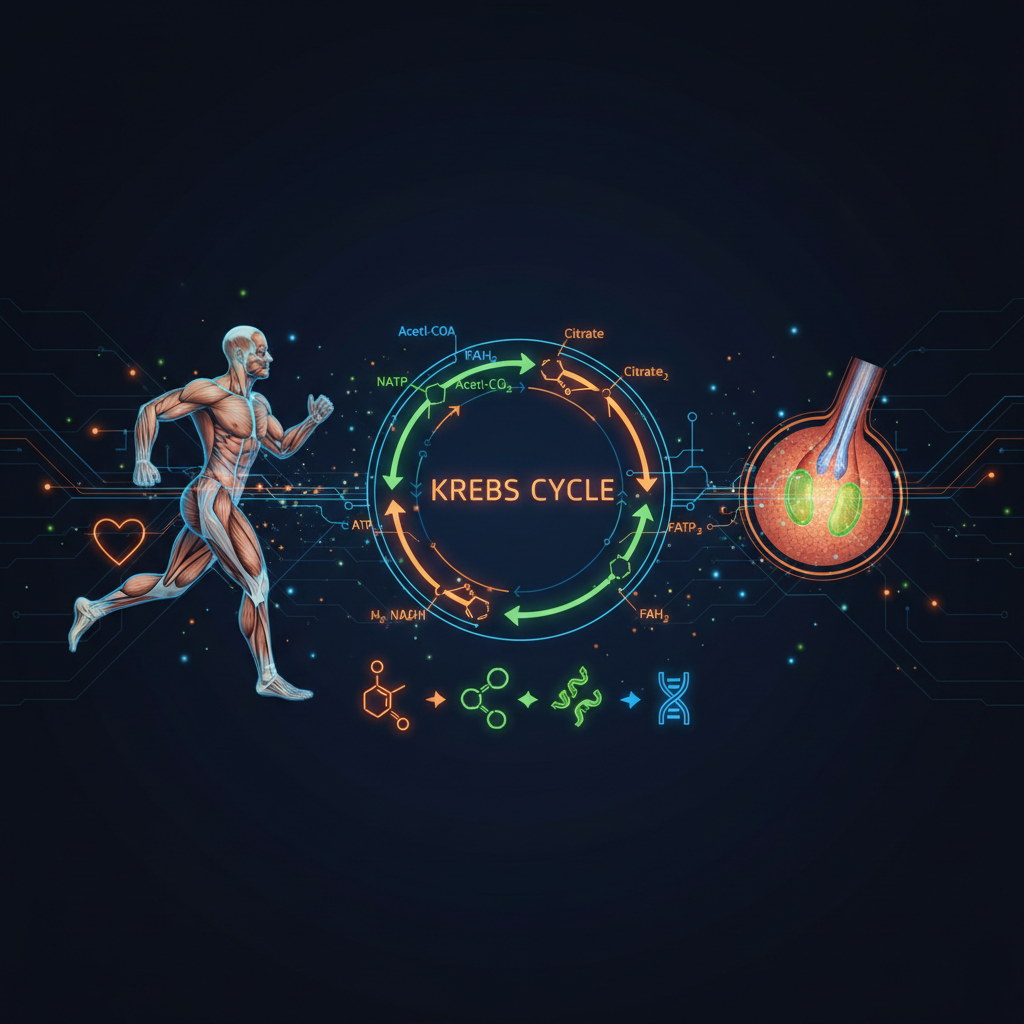
The Krebs Cycle and Citric Acid Cycle: Fueling Your Fitness Performance
The Krebs cycle, also known as the citric acid cycle, is a fundamental metabolic pathway that generates energy for cellular function. In the context of fitness, understanding this cycle helps explain how your body produces ATP, the primary energy currency, during exercise, particularly during sustained and moderate-intensity activities. Research shows that efficient functioning of the Krebs cycle is crucial for endurance and overall athletic performance.
Quick Answer: Krebs Cycle & Fitness
The Krebs cycle (citric acid cycle) is a series of chemical reactions used by all aerobic organisms to generate energy through the oxidation of acetyl-CoA derived from carbohydrates, fats, and proteins. For fitness, it's key for producing ATP during submaximal exercise, influencing endurance and recovery.
What is the Krebs Cycle (Citric Acid Cycle)?
The Krebs cycle, or citric acid cycle (TCA cycle), is the central hub of aerobic respiration. It's a series of enzyme-catalyzed reactions that take place in the mitochondrial matrix of cells. Its primary role is to oxidize acetyl-CoA, a molecule derived from the breakdown of glucose, fatty acids, and amino acids, to produce high-energy electron carriers (NADH and FADH2) and a small amount of ATP (or GTP). These electron carriers then fuel the electron transport chain, which generates the vast majority of ATP.
How the Krebs Cycle Connects to Exercise Physiology
During exercise, your body breaks down macronutrients to supply energy.
- Glycolysis: Glucose is broken down into pyruvate, which is then converted to acetyl-CoA.
- Fatty Acid Oxidation (Beta-Oxidation): Fatty acids are broken down into acetyl-CoA.
- Amino Acid Metabolism: Certain amino acids can also be converted into intermediates of the Krebs cycle or acetyl-CoA.
Acetyl-CoA then enters the Krebs cycle. The cycle's efficiency directly impacts how much ATP can be generated to meet the demands of working muscles. Research indicates that individuals with better-conditioned aerobic systems often have a more robust Krebs cycle and enhanced capacity at the electron transport chain, leading to superior endurance.
H2: The Role of Krebs Cycle in Energy Production During Exercise
The Krebs cycle is primarily active during aerobic (with oxygen) exercise. This includes activities like:
- Long-distance running
- Cycling
- Swimming
- Brisk walking
- Moderate-intensity strength training sessions
During these activities, oxygen supply is sufficient to support the continuous operation of the Krebs cycle and the subsequent electron transport chain. The cycle produces approximately 2 ATP (or GTP) molecules per turn, along with 3 NADH and 1 FADH2. These molecules carry electrons that are crucial for producing a much larger ATP yield in the electron transport chain.
Krebs Cycle vs. Anaerobic Systems
It's important to distinguish the Krebs cycle's role from anaerobic energy systems (like the phosphagen system and anaerobic glycolysis).
- Anaerobic Systems: These provide rapid bursts of energy for high-intensity, short-duration activities (e.g., sprinting, heavy lifting, jumping). They do not require oxygen but produce ATP much less efficiently and lead to quicker fatigue due to byproduct accumulation (like lactate).
- Aerobic System (including Krebs Cycle): This system produces ATP more slowly but is far more sustainable and efficient, ideal for endurance. The Krebs cycle is a cornerstone of this aerobic ATP production.
Comparison: The phosphagen system is ideal for <10 seconds of maximal effort, while anaerobic glycolysis supports efforts up to 1-2 minutes. The Krebs cycle and aerobic metabolism are essential for activities lasting longer than a few minutes and are the primary energy source for endurance athletes.
H2: Optimizing Krebs Cycle Function for Fitness
While you can't directly "train" the Krebs cycle like a muscle, you can enhance its efficiency and capacity through consistent training and proper nutrition.
Aerobic Training Adaptations
Regular cardiovascular exercise leads to significant adaptations that improve the Krebs cycle's function:
- Mitochondrial Biogenesis: Aerobic training stimulates the creation of more mitochondria within muscle cells. More mitochondria mean more potential sites for the Krebs cycle to operate. Research published in the Journal of Applied Physiology highlights that endurance training can increase mitochondrial density by up to 40%.
- Increased Enzyme Activity: Endurance training has been shown to upregulate the activity of key enzymes involved in the Krebs cycle and the electron transport chain. This means metabolic reactions can proceed faster. ACSM guidelines consistently recommend progressing aerobic exercise to enhance these cellular adaptations.
- Improved Oxygen Delivery: Enhanced cardiovascular function (stronger heart, increased blood volume) improves the delivery of oxygen to working muscles, ensuring the Krebs cycle has the necessary substrate to operate continuously.
Actionable Advice: Aim for at least 150 minutes of moderate-intensity aerobic activity or 75 minutes of vigorous-intensity aerobic activity per week, as recommended by the Physical Activity Guidelines for Americans. Examples include jogging, cycling, swimming, or using an elliptical trainer.
Strength Training's Indirect Role
While not the primary driver, strength training also plays a role:
- Muscle Mass: Increased muscle mass boosts overall metabolic rate, supporting energy demands.
- Improved Glucose Uptake: Strength training enhances insulin sensitivity, improving how muscles utilize glucose, a precursor to acetyl-CoA.
- Recovery: Well-conditioned muscles recover faster, allowing for more frequent and intense training sessions that drive aerobic adaptations.
Get your free Day 1 workout — no card required.
Meet Andy — get your free Day 1 workoutActionable Advice: Incorporate 2-3 days of full-body strength training per week, focusing on compound exercises like squats, deadlifts, presses, and rows. NASM CPT protocols emphasize progressive overload for continuous improvement.
H2: Nutrition for Krebs Cycle Support
Nutrition is paramount for fueling the Krebs cycle and overall energy metabolism.
Macronutrient Balance
- Carbohydrates: The primary fuel for the Krebs cycle. Complex carbohydrates (whole grains, fruits, vegetables) provide sustained energy release. Research indicates that carbohydrate availability is often a limiting factor in prolonged high-intensity exercise.
- Fats: An efficient energy source, especially for lower-intensity, longer-duration activities. Fatty acids are broken down into acetyl-CoA.
- Proteins: Primarily used for muscle repair and synthesis, but can be catabolized for energy if needed, contributing intermediates to the Krebs cycle. A sufficient protein intake (e.g., 1.6-2.2 g/kg body weight for active individuals) is essential.
Actionable Advice: Ensure your diet includes a balanced mix of all macronutrients. For endurance activities, pre- and during-exercise carbohydrate intake is critical. Visit the Tools Page for a Body Fat Calculator to help estimate your nutritional needs.
Micronutrients and Cellular Health
Certain vitamins and minerals are cofactors for enzymes involved in the Krebs cycle and related metabolic pathways:
- B Vitamins (Thiamin, Riboflavin, Niacin, Pantothenic Acid, B6, B12, Folate): Crucial for energy metabolism, including the conversion of pyruvate to acetyl-CoA and the reactions within the Krebs cycle itself.
- Iron: A component of cytochromes in the electron transport chain, essential for aerobic respiration. Iron deficiency anemia can severely impair exercise capacity.
- Magnesium: Involved in numerous enzymatic reactions, including ATP production and utilization.
Actionable Advice: Consume a varied diet rich in whole foods. Leafy greens, lean meats, whole grains, nuts, and seeds are excellent sources of these essential micronutrients.
H2: Practical Application: Training Intensity and Duration
The intensity and duration of your workout significantly influence which energy systems dominate.
- Low to Moderate Intensity (e.g., 60-75% Max Heart Rate): Primarily relies on the aerobic system, with the Krebs cycle playing a major role in sustained ATP production. These workouts are excellent for building aerobic base and improving fat utilization.
- Moderate to High Intensity (e.g., 75-85% Max Heart Rate): A mix of aerobic and anaerobic systems. The Krebs cycle is still active, but anaerobic glycolysis contributes more significantly.
- Very High Intensity (e.g., >85% Max Heart Rate): Primarily relies on anaerobic systems. While the Krebs cycle might still be turning over due to residual oxygen, its contribution to immediate ATP production is limited.
Internal Link Example: For structuring your week, check out the different Workouts designed for various energy system development.
H2: Frequently Asked Questions (FAQ)
Q1: Is the Krebs cycle the main energy source for weightlifting?
A: No, the Krebs cycle is primarily for aerobic, sustained energy. Weightlifting, especially heavy sets, relies more heavily on the rapid, anaerobic phosphagen system and anaerobic glycolysis for short bursts of power.
Q2: How quickly can the Krebs cycle adapt to training?
A: Aerobic adaptations, including potential increases in mitochondrial density and enzyme activity related to the Krebs cycle, occur gradually over weeks and months of consistent training. Significant changes typically require at least 4-6 weeks of regular aerobic exercise.
Q3: Can creatine supplements improve Krebs cycle function?
A: Creatine primarily supports the phosphagen system for short, intense efforts. It doesn't directly enhance Krebs cycle function but can help maintain intensity during anaerobic phases, indirectly allowing aerobic systems to recover and function optimally.
Q4: What happens if I don't get enough oxygen during exercise?
A: If oxygen delivery cannot meet demand, the body shifts towards anaerobic metabolism (anaerobic glycolysis). This produces ATP faster but is less efficient and leads to quicker fatigue and lactate accumulation.
Q5: Does the Krebs cycle directly burn fat for energy?
A: Yes, indirectly. Fatty acids are broken down into acetyl-CoA, which then enters the Krebs cycle to be oxidized for energy. Therefore, the Krebs cycle is crucial for utilizing fat as a fuel source during aerobic exercise.
Q6: How does caffeine affect energy production related to the Krebs cycle?
A: Caffeine can enhance fat mobilization, providing more fatty acids (and thus acetyl-CoA) for the Krebs cycle. It can also increase the perception of effort, allowing individuals to train at higher intensities for longer, further stimulating aerobic adaptations.
Conclusion: Harnessing Cellular Energy for Peak Performance
The Krebs cycle, or citric acid cycle, is a vital component of your body's energy production machinery, particularly underpinning aerobic fitness and endurance. By understanding its role and optimizing your training and nutrition strategies, you can enhance your body's capacity to generate ATP efficiently. Consistent aerobic exercise, balanced nutrition rich in carbohydrates and micronutrients, and adequate recovery are key to maximizing the benefits of this fundamental metabolic pathway. Ready to take control of your fitness journey?
Unlock your potential with personalized training plans! Sign up for FitForge AI's free 7-day trial today and experience the future of fitness coaching.
Written by Coach Voris, NASM-CPT — Certified Personal Trainer and founder of FitForge AI. Coach Voris combines evidence-based training with AI to deliver personalized coaching at scale.
Frequently Asked Questions
What is the primary function of the Krebs cycle in fitness?
The Krebs cycle, or citric acid cycle, is crucial in fitness as it's the central metabolic pathway that fully oxidizes carbohydrates, fats, and proteins to generate ATP, the body's main energy currency, especially during sustained, moderate-intensity exercise.
How does the Krebs cycle contribute to athletic endurance?
The Krebs cycle significantly contributes to athletic endurance by efficiently producing a large amount of ATP through aerobic respiration. This sustained energy supply allows muscles to continue contracting over longer periods, delaying fatigue during prolonged physical activity.
Can diet and training influence the efficiency of the Krebs cycle?
Absolutely. A balanced intake of macronutrients (carbohydrates, fats, proteins) provides the necessary substrates for the Krebs cycle. Additionally, consistent aerobic training adaptations can increase enzyme activity and mitochondrial density, enhancing the cycle's efficiency and overall energy production.
What role do B vitamins play in the Krebs cycle for energy production?
B vitamins, particularly B1 (thiamine), B2 (riboflavin), B3 (niacin), and B5 (pantothenic acid), act as crucial coenzymes in various reactions of the Krebs cycle. They are essential for the conversion of substrates and energy transfer, directly impacting the cycle's ability to produce ATP.
Get your free Day 1 workout — no card required.
Meet Andy — get your free Day 1 workout