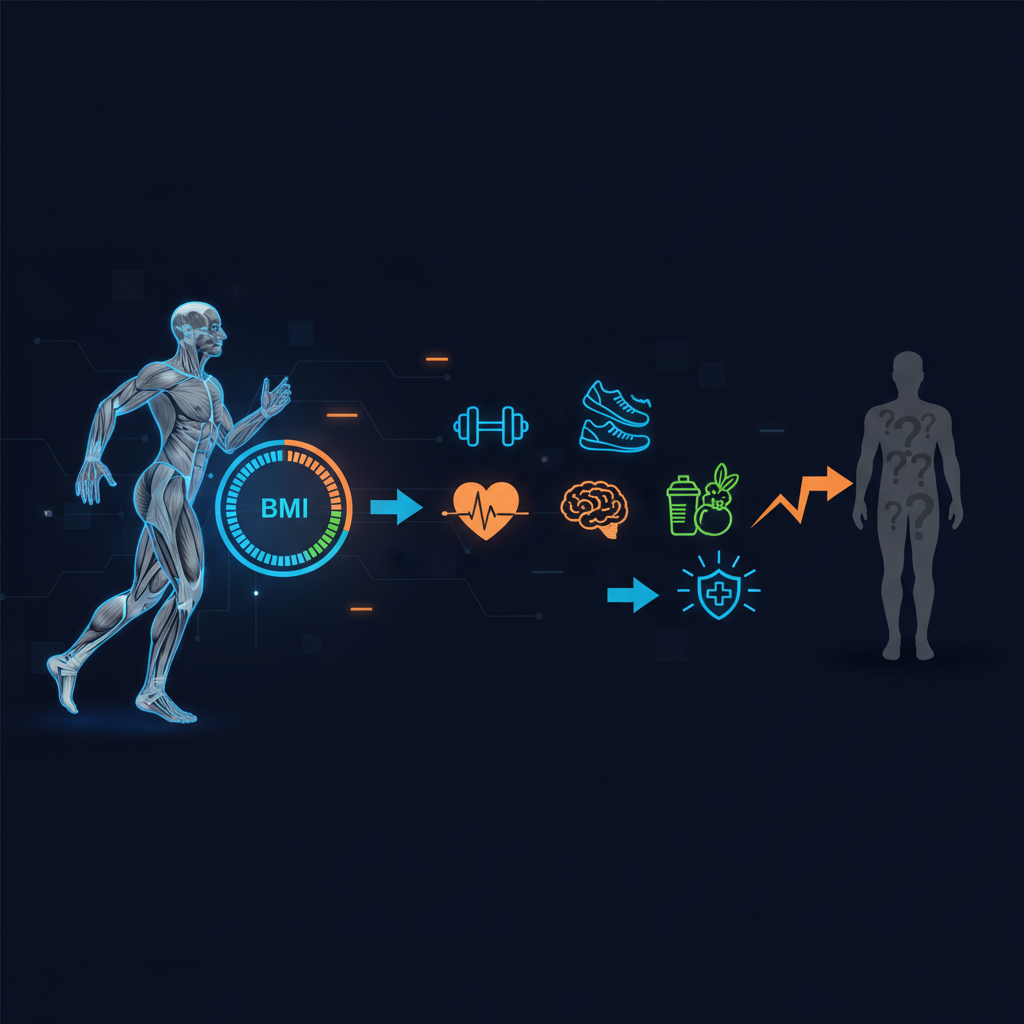
BMI Calculator: What It Tells You (And What It Doesn't)
Body Mass Index (BMI) is a widely used metric, often the first point of reference for understanding weight relative to height. But what does that number really mean, especially for athletes? FitForge AI believes in empowering you with knowledge. This guide will break down the BMI calculator, its implications, its significant limitations (particularly for athletic populations), and how to interpret it alongside other health markers.
What is BMI?
BMI is a simple calculation: weight in kilograms divided by height in meters squared (kg/m²). In imperial units, it's weight in pounds times 703, divided by height in inches squared (lb/in²). It categorizes individuals into ranges:
- Underweight: < 18.5
- Normal weight: 18.5 – 24.9
- Overweight: 25 – 29.9
- Obese: 30+
Why is it used?
BMI was developed as a quick, inexpensive screening tool to identify potential weight categories that may be associated with increased health risks. It's useful for large-scale population studies and as a general starting point for conversations about health.
The BMI Calculation Explained
Say an individual weighs 70kg and is 1.75m tall. BMI = 70 / (1.75 * 1.75) = 70 / 3.0625 = 22.86
This falls into the "Normal weight" category.
Now consider an athlete: An athlete weighs 90kg and is 1.80m tall. BMI = 90 / (1.80 * 1.80) = 90 / 3.24 = 27.78
This BMI falls into the "Overweight" category. This is where the limitations become apparent.
Limitations of BMI, Especially for Athletes
This is where the nuance is crucial. BMI fails to distinguish between fat mass and lean body mass (muscle). Athletes, particularly those involved in strength training, power sports, or bodybuilding, often have a higher muscle mass. Muscle is denser than fat, meaning an athlete can have a high BMI and still possess a very low body fat percentage and be exceptionally healthy.
Key Limitations:
- Muscle vs. Fat: As seen above, a muscular individual can easily register as "overweight" or even "obese" by BMI standards, despite having optimal body composition for performance and health.
- Body Composition: BMI doesn't account for where fat is distributed on the body. Visceral fat (around the organs) is more dangerous than subcutaneous fat (under the skin). BMI offers no insight into this.
- Frame Size: Bone density and skeletal frame size can influence weight, and BMI doesn't differentiate this.
- Age and Sex: Metabolic rates and body composition can vary significantly with age and sex, factors BMI doesn't directly address.
- Ethnicity: Certain ethnic groups may have different risk profiles at similar BMIs, a factor BMI overlooks.
Beyond BMI: A Holistic Approach to Health and Performance
Coach Voris — a NASM-certified professional — emphasizes a comprehensive assessment that goes far beyond a single number. Here’s how to look at your health and fitness more effectively:
1. Body Composition Analysis
- Body Fat Percentage: This is a far more accurate indicator of health risk and athletic potential than BMI. Methods include:
- Skinfold Calipers: A practical, cost-effective method when performed by a trained professional. Based on NASM CPT protocols, measurements are taken at specific sites to estimate body fat.
- Bioelectrical Impedance Analysis (BIA): Scales or handheld devices that send a weak electrical current through the body. Accuracy can vary based on hydration levels.
- DEXA Scan: Considered the gold standard, providing detailed information on bone density, fat mass, and lean mass.
- Waist Circumference: A simple yet effective measure of abdominal fat. High waist circumference is linked to increased risk of cardiovascular disease and type 2 diabetes.
- Recommended Guidelines: For men, < 40 inches (< 102 cm). For women, < 35 inches (< 88 cm).
2. Performance Metrics
Get your free Day 1 workout — no card required.
Meet Andy — get your free Day 1 workout- Strength Gains: Are you getting stronger? Track your lifts using principles like progressive overload – gradually increasing the demands on your musculoskeletal system. This could mean adding weight, reps, or sets over time.
- Endurance Improvements: Is your cardiovascular capacity increasing? Monitor improvements in run times, distance, or heart rate recovery.
- Power Output: For relevant sports, assess improvements in vertical jump height, sprint speed, or throwing velocity.
- Flexibility & Mobility: Regular assessments using ranges of motion tests are key for injury prevention and optimal movement patterns, often guided by the OPT (Optimum Performance Training) model stages focusing on stabilization, strength, power, and endurance.
3. Energy Levels and Well-being
- Subjective Feelings: How do you feel day-to-day? Are you recovering well from workouts? Do you have sustained energy? These subjective markers are invaluable.
- Sleep Quality: Crucial for recovery, hormone regulation, and overall health.
4. Nutrition: Fueling Performance and Health
Precision Nutrition emphasizes a sustainable, evidence-based approach to eating. Forget restrictive diets; focus on building healthy habits.
The Hand-Portion Method: A simple visual guide to portion sizes without needing scales or measuring cups:
- Protein: One palm-sized portion (about 3-4 oz). Think lean meats, fish, poultry, eggs, legumes.
- Vegetables: One to two fist-sized portions. Aim for a variety of colorful vegetables.
- Complex Carbs: One cupped hand or fist-sized portion. Examples include quinoa, brown rice, oats, sweet potatoes.
- Healthy Fats: One to two thumb-sized portions. Examples: nuts, seeds, avocado, olive oil.
- Fruit: One to two cupped hand portions.
Hydration: Essential for performance, recovery, and overall bodily function. Aim for consistent water intake throughout the day.
Nutrient Timing: While less critical than total daily intake for most, consuming protein and carbohydrates around workouts can aid recovery and muscle protein synthesis, particularly important for athletes undergoing intense training.
Interpreting Your BMI Result
If your BMI falls into the "Normal" range: Maintain your healthy habits! Continue focusing on balanced nutrition, regular exercise, and adequate recovery.
If your BMI falls into the "Overweight" or "Obese" categories:
- Don't panic. Remember the limitations discussed.
- Focus on body composition: Get a professional assessment of your body fat percentage and waist circumference.
- Evaluate your lifestyle: Are you incorporating regular physical activity (strength training, cardiovascular exercise, flexibility)? Is your nutrition supporting your goals?
- Consult a professional: A trainer or registered dietitian can help you interpret your results in the context of your individual goals and health status.
If your BMI falls into the "Underweight" category:
- Ensure adequate nutrition: Are you consuming enough calories and nutrients to support your activity level and maintain healthy body composition?
- Consider muscle gain: If your goal is to build muscle, ensure your training program and nutrition plan are optimized for hypertrophy.
Conclusion: BMI is a Starting Point, Not the Finish Line
The BMI calculator is a tool, but like any tool, it has specific uses and limitations. For athletes and highly active individuals, it's often an inaccurate measure of health. Prioritize understanding your body composition, training progress, nutritional adequacy, and overall well-being.
Ready to take control of your fitness journey with personalized insights?
Try FitForge AI's free trial today and access the comprehensive tools, including the advanced body composition calculator! Visit the tools page: /tools.
Tags:
- BMI calculator
- Body mass index
- Fitness for athletes
- Body composition
- Nutrition tips
- NASM
- Precision Nutrition
Frequently Asked Questions
What is the primary limitation of the BMI calculation?
The primary limitation of BMI is its inability to differentiate between muscle mass and fat mass. This means individuals with high muscle density, such as athletes, may be categorized as 'overweight' or 'obese' despite having a healthy body fat percentage.
How is BMI calculated, and what do the ranges mean?
BMI is calculated by dividing an individual's weight in kilograms by the square of their height in meters (kg/m²). The resulting number categorizes individuals into ranges such as underweight, normal weight, overweight, and obese, providing a general population-level indicator of weight status relative to height.
Are there more accurate ways for athletes to assess their body composition?
Yes, for athletes, more accurate body composition assessments include methods like DEXA scans, hydrostatic weighing, or bioelectrical impedance analysis (BIA). These tools provide a more precise breakdown of lean mass versus fat mass, offering a clearer picture of an athlete's physical health and performance potential.
Should individuals disregard their BMI entirely?
While BMI has limitations, especially for athletic populations, it can still serve as a useful initial screening tool for the general public regarding potential weight-related health risks. However, it should always be considered alongside other health markers such as body fat percentage, waist circumference, diet, and activity levels for a comprehensive health assessment.
Get your free Day 1 workout — no card required.
Meet Andy — get your free Day 1 workout