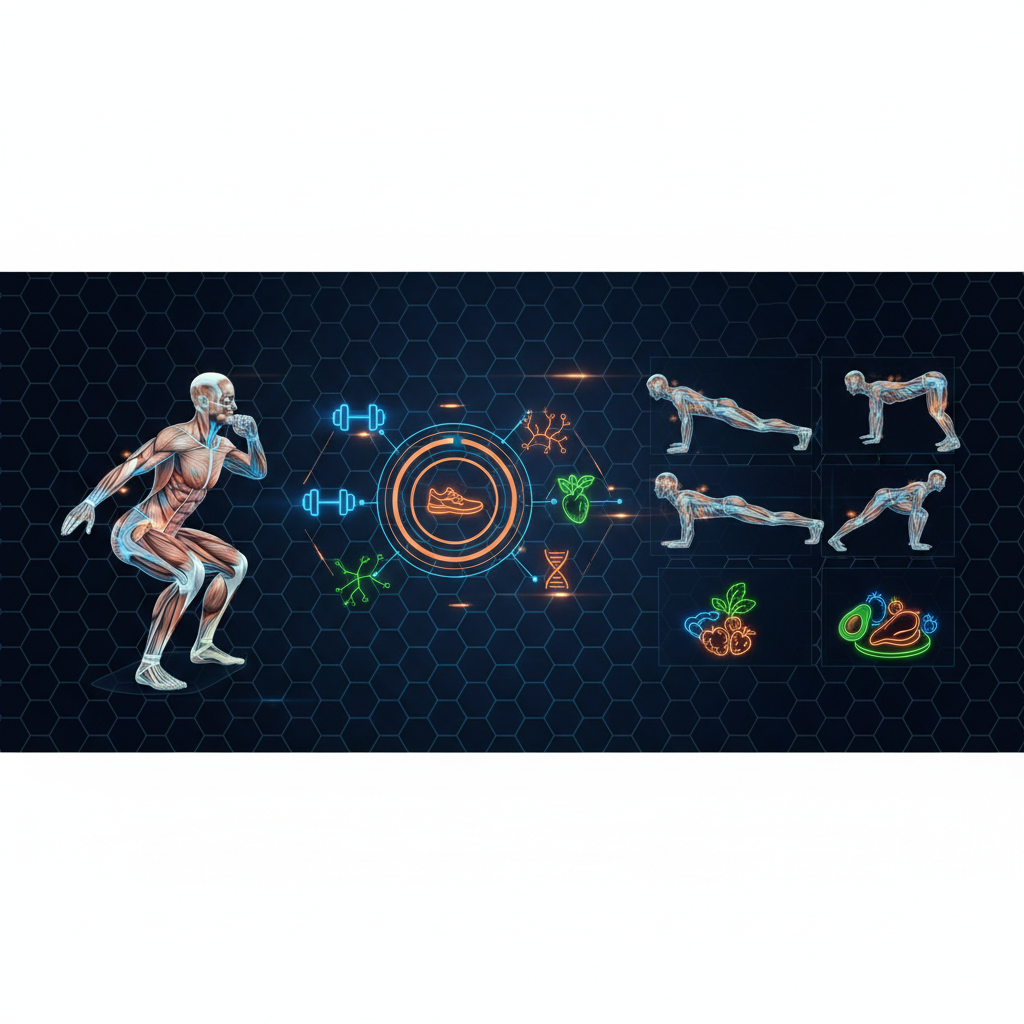
Best Home Workout Plan for Beginners (2026 Guide)
So, you're ready to get fit, but the gym feels intimidating, or your schedule simply doesn't allow for it. Excellent. The good news is, you don’t need a fancy gym or expensive equipment to build a strong, functional body. Coach Voris — a NASM-certified Personal Trainer and Precision Nutrition Coach — has seen countless individuals transform their health right from their living rooms. This 2026 guide is designed to launch your fitness journey with a no-nonsense, evidence-based home workout plan.
Forget excuses. This guide focuses on fundamental movements, progressive overload, and consistency – the cornerstones of any successful fitness program. The aim isn't instant gratification; it's building sustainable habits and a foundation for lifelong health.
For a man over 40 starting at home, this beginner plan centers on three weekly bodyweight workouts using squats, modified push-ups, glute bridges, and core exercises. Most beginner sets leave 2-3 repetitions in reserve rather than reaching failure. Progress is assessed every 2-4 weeks, while rest days, light walking, and 7-9 hours of sleep support recovery.
Why Home Workouts Are Your Best Starting Point
Many beginners falter because they overcomplicate things. Home workouts strip away the complexities.
- Convenience: No commute, no waiting for equipment, no gym fees. Your workout space is always open.
- Privacy: If self-consciousness is a barrier, your home provides a comfortable, judgment-free zone to learn new movements.
- Flexibility: Life happens. A home workout can often be squeezed into a busy schedule more easily than a trip to the gym.
- Cost-Effective: This plan requires zero equipment. Your body is your gym.
However, convenience doesn't mean lack of results. With the right structure and progression, bodyweight training can be incredibly effective for building strength, endurance, and improving body composition. Research consistently shows that bodyweight exercises, when performed with proper intensity and volume, can elicit similar strength gains to traditional weight training in untrained individuals (Journal of Strength & Conditioning Research, 2017).
The Foundation: Understanding Key Principles
Before diving into the exercises, the essential principles that make this plan work come first.
Progressive Overload: Your Growth Engine
This is non-negotiable. To get stronger, your muscles must be challenged beyond what they're accustomed to. For beginners using bodyweight, this means:
- Increasing Repetitions: More reps with the same exercise.
- Increasing Sets: More rounds of a given exercise.
- Decreasing Rest Time: Shorter breaks between sets.
- Improved Form: Performing the same exercise with better control and range of motion.
- Slower Tempo: Extending the time under tension (e.g., taking 3 seconds to lower into a squat).
- Advanced Variations: Moving to a more difficult version of an exercise (e.g., from knee push-ups to full push-ups).
Without progressive overload, you'll plateau. Your body needs a reason to adapt.
Specificity and Consistency
Your body adapts specifically to the demands placed upon it (Specificity Principle, ACSM). If you want to get better at bodyweight squats, you need to do bodyweight squats. Consistency is the glue that holds it all together. Two to three structured workouts per week, performed consistently, will always yield better results than sporadic, intense sessions.
Mind-Muscle Connection
Don't just go through the motions. Focus on the muscle you're working. Contract it deliberately. This enhances recruitment and helps you perform movements with better control and effectiveness.
Your 2026 Beginner Home Workout Plan
This plan is built around fundamental movement patterns that target your entire body. The focus is on pushing, pulling (modified), squatting, hinging, and core stability.
Frequency: 3 days per week (e.g., Monday, Wednesday, Friday) Duration: 20-40 minutes per session (including warm-up and cool-down) Equipment: Your body weight. Optionally, a sturdy chair or bench.
Each workout will follow this structure:
- Dynamic Warm-up (5-7 minutes): Prepare your body for movement.
- Workout (15-30 minutes): Perform prescribed exercises.
- Cool-down/Stretching (5-7 minutes): Aid recovery and flexibility.
The Exercises: Master These First
Before you start, watch videos or use mirrors to ensure good form. Poor form is a shortcut to injury and poor results.
- Squat: Targets glutes, quads, hamstrings. Keep your chest up, heels down, and squat as if sitting into a chair.
- Push-up (Knees or Incline): Targets chest, shoulders, triceps. Maintain a straight line from head to knees/heels.
- Inverted Row (Bodyweight): Targets back, biceps. Use a sturdy table, railing, or low bar. The lower the angle, the harder it is. If no suitable anchor, substitute with a band pull-apart if you have a band, or focus on other exercises.
- Plank: Targets core. Maintain a straight line from head to heels, no sagging hips or piking glutes.
- Glute Bridge: Targets glutes, hamstrings. Drive through your heels, lift hips until body forms a straight line from shoulders to knees.
- Standing Calf Raises: Targets calves. Excellent for ankle stability and lower leg strength.
- Single-Leg Balance/Reach: Targets balance, core, hip stability. Crucial for functional movement.
The Weekly Schedule (Example)
Workout A (Focus: Lower Body & Push)
- Dynamic Warm-up: Arm circles, leg swings, torso twists, cat-cow.
- Workout:
- Bodyweight Squats: 3 sets of 10-15 reps (RIR 2-3)
- Incline Push-ups (against wall or sturdy surface) OR Knee Push-ups: 3 sets of 8-12 reps (RIR 2-3)
- Glute Bridges: 3 sets of 12-18 reps (RIR 2-3)
- Plank: 3 sets, hold for 20-40 seconds
- Standing Calf Raises: 3 sets of 15-20 reps
- Cool-down: Hamstring stretch, quad stretch, chest stretch.
Workout B (Focus: Full Body & Pull)
Get your free Day 1 workout — no card required.
Meet Andy — get your free Day 1 workout- Dynamic Warm-up: Same as Workout A.
- Workout:
- Lunges (Alternating Legs): 3 sets of 8-12 reps per leg (RIR 2-3)
- Inverted Rows (using a sturdy table or railing) OR Bird-Dog: 3 sets of 8-12 reps
- Step-ups (onto a sturdy chair/bench): 3 sets of 10-15 reps per leg (RIR 2-3)
- Side Plank: 3 sets per side, hold for 20-30 seconds
- Single-Leg Balance/Reach: 3 sets of 8-12 reps per leg
- Cool-down: Hip flexor stretch, triceps stretch, shoulder stretch.
Workout C (Focus: Full Body Endurance & Strength)
- Dynamic Warm-up: Same as Workout A.
- Workout:
- Bodyweight Squat to Chair: 3 sets of 12-18 reps (focus on controlled descent)
- Push-ups (Progression as tolerated: wall -> incline -> knee -> full): 3 sets of max reps with good form (RIR 1-2)
- Glute Bridge with 2-second hold at the top: 3 sets of 12-15 reps
- Mountain Climbers: 3 sets of 30-45 seconds
- Supermans: 3 sets of 12-15 reps (focus on back extension)
- Cool-down: Full body dynamic stretching.
RIR (Reps In Reserve): This is a critical concept for progressive overload. RIR 2-3 means you finish the set knowing you could have performed 2-3 more reps with good form. This ensures you're challenging yourself but not going to failure every set, which is too much for beginners. As you get stronger, aim to reduce your RIR.
Progression: Your Path to Continued Gains
Every 2-4 weeks, assess your progress. If you can comfortably complete the target reps and sets with good form and still have 4+ RIR, it's time to progress.
How to progress with bodyweight:
- Increase Reps: If you were doing 10-12 reps, try for 12-15.
- Add a Set: If you were doing 3 sets, try 4 sets.
- Reduce Rest Time: Cut down your rest intervals by 15-30 seconds.
- Slow Down: Take 2-3 seconds for the lowering (eccentric) phase of an exercise.
- Change Leverage: For push-ups, move from wall push-ups to incline push-ups, then knee push-ups, then full push-ups. For inverted rows, lower the height of your anchor or straighten your legs further.
- Unilateral Exercises: Move to single-leg squats (pistol squat progressions) or single-arm push-up progressions once basic bilateral movements are mastered.
Nutrition: Fueling Your Progress
Exercise without proper nutrition is like trying to build a house without bricks. Coach Voris — a Precision Nutrition coach — emphasizes a sustainable approach.
- Prioritize Protein: Aim for 0.7-1.0 gram of protein per pound of body weight to support muscle repair and growth. Lean meats, eggs, dairy, legumes, tofu are excellent sources.
- Eat Your Vegetables: A rainbow of vegetables provides essential vitamins, minerals, and fiber.
- Smart Carbs: Opt for whole grains, fruits, and starchy vegetables for sustained energy.
- Healthy Fats: Avocados, nuts, seeds, and olive oil support hormone function and overall health.
- Hydration: Drink plenty of water throughout the day. Your body is over 60% water, and even mild dehydration can impair performance and recovery.
- Consistency, Not Perfection: Don't aim for a flawless diet from day one. Focus on making small, sustainable changes weekly.
Recovery: The Silent Partner in Gains
Your body doesn't get stronger during the workout; it gets stronger during recovery.
- Sleep: Aim for 7-9 hours of quality sleep per night. This is when your body repairs tissue and consolidates energy.
- Active Recovery: Light walks, gentle stretching, or foam rolling on your "off" days can aid blood flow and reduce soreness.
- Stress Management: Chronic stress can hinder recovery and results. Find healthy ways to manage it, whether it's meditation, hobbies, or spending time in nature.
Additional training questions
Q1: "I'm really sore after my first workout. Is this normal?"
A: Absolutely. Delayed Onset Muscle Soreness (DOMS) is common when starting a new routine or increasing intensity. It usually peaks 24-48 hours after your workout. Keep moving gently, stay hydrated, and ensure good nutrition. It will subside as your body adapts. Don’t confuse soreness with injury.
Q2: "When will I start seeing results?"
A: This varies greatly based on individual starting points, consistency, and nutrition. You’ll likely start feeling better (more energy, better sleep) within 2-4 weeks. Visible changes in body composition and strength can often be noticed within 6-12 weeks of consistent effort. Remember, consistency is key, and results are cumulative.
Q3: "What if I can't do a full push-up or inverted row yet?"
A: This is where regressions come in. Start with wall push-ups, then incline push-ups on a sturdy counter, then knee push-ups. For inverted rows, use a higher anchor point (less body weight lifted) or focus on the Bird-Dog exercise until you can manage the inverted row movement. The goal is to perform the exercise with good form, no matter the modification. Strength is built gradually, step by step.
Q4: "Do I need to track my calories for a home workout plan?"
A: For beginners, focusing on quality nutrition (as outlined above) and being mindful of portion sizes is often sufficient. While calorie tracking can be beneficial for specific goals like aggressive fat loss, it can also be overwhelming initially. Start with eating whole, unprocessed foods and listening to your hunger cues. If you hit a plateau, then consider more precise tracking.
Q5: "Can I do these workouts every day?"
A: No. Your muscles need time to recover and rebuild. For beginners, 3 structured full-body workouts per week with rest days in between is optimal. On your "off" days, focus on light activity like walking, hiking, or gentle stretching. Overtraining can lead to plateaus, burnout, and increased injury risk.
Ready to sculpt your strongest self? Stop overthinking and start doing.
Level Up Your Training with FitForge AI
This guide gives you the blueprint. But what if your workout could adapt with you? What if it knew when to bump up your reps, introduce a new variation, or tweak your rest times, all based on your unique progress?
That's where FitForge AI comes in. The platform takes these foundational principles and supercharges them with artificial intelligence. FitForge AI creates dynamic, personalized home workout plans that progressively challenge you, prevent plateaus, and ensure you're always making forward strides. No more guessing, just intelligent progression.
Ready to experience truly personalized fitness, wherever you are? Start your free trial with FitForge AI today and transform your home into your personal, intelligent gym.
Frequently Asked Questions
Can I really build muscle and get results without gym equipment?
Absolutely. Bodyweight exercises, when performed with proper form and progressive overload, are highly effective for building muscle, improving strength, and enhancing overall fitness. Consistency and challenging variations are key.
How often should a beginner do home workouts?
For optimal results and to allow for recovery, beginners should aim for three to four home workout sessions per week, with at least one rest day between major muscle group workouts. This provides sufficient stimulus for adaptation without overtraining.
What are the most effective bodyweight exercises for beginners?
Key foundational bodyweight exercises for beginners include squats, push-ups (modified as needed), lunges, planks, and glute bridges. These movements target major muscle groups and build a strong base for further progression.
How can I make sure I am progressing with my home workouts?
Progression in home workouts can be achieved through various methods, such as increasing repetitions, adding more sets, decreasing rest times, or advancing to more challenging exercise variations. Tracking your workouts is crucial to monitor and ensure consistent progress.
Get your free Day 1 workout — no card required.
Meet Andy — get your free Day 1 workout