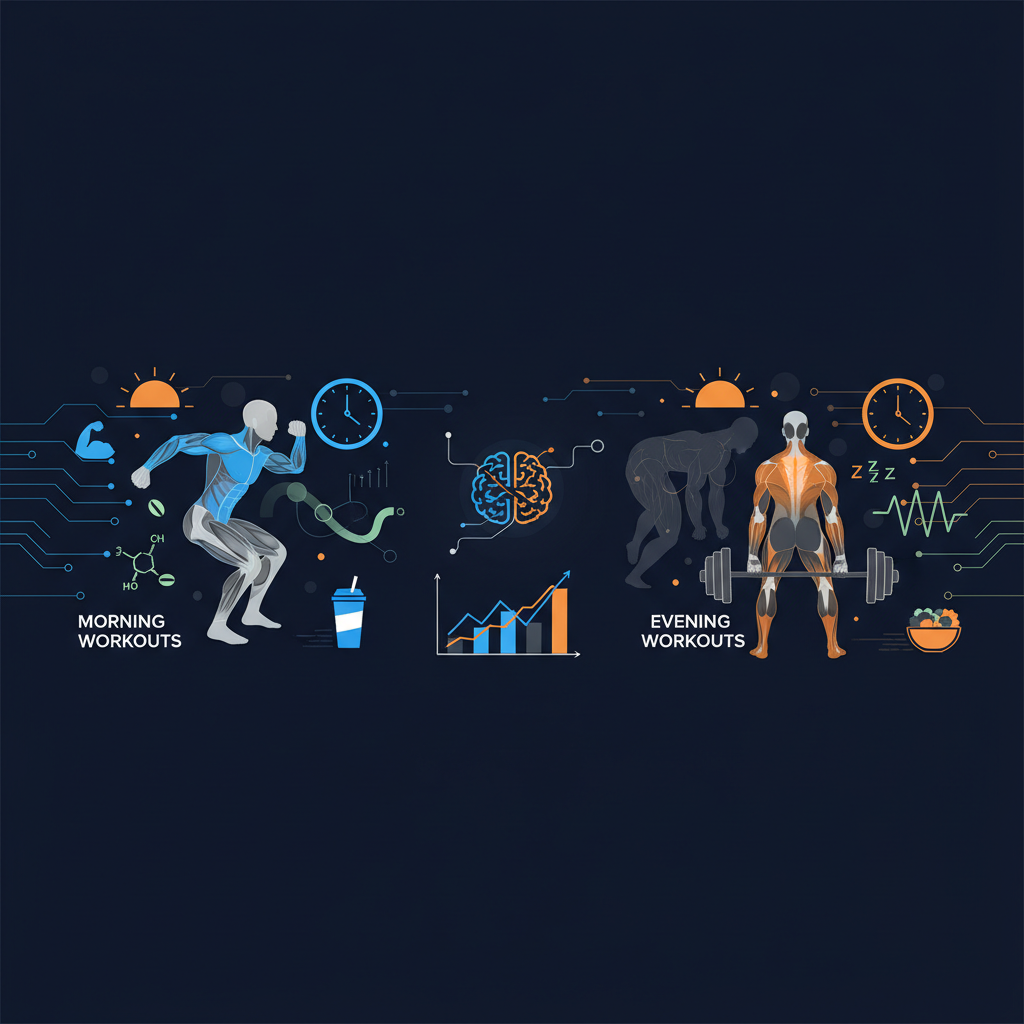
The Morning Workout Warrior: Seize the Dawn
For many, the idea of a morning workout is either invigorating or utterly terrifying. But for those who embrace it, the benefits are clear, strategic, and often profound.
Advantages of Morning Workouts
- Boosted Metabolism and Fat Oxidation: Studies suggest that exercising in a fasted state (before breakfast, given you haven't eaten overnight) can significantly increase fat oxidation. Your body, with lower glycogen stores, turns to stored fat for energy. Research published in the British Journal of Nutrition has shown higher fat burning during fasted cardio compared to fed cardio. This doesn't mean it's the only way to lose fat, but it's a powerful tool in the arsenal.
- Improved Sleep Quality: Consistent morning exercise helps regulate your circadian rhythm. By elevating your core body temperature early in the day and burning off excess energy, you prime yourself for a more restful night's sleep. This is particularly beneficial for individuals who struggle with insomnia, as evening exercise can sometimes be too stimulating.
- Enhanced Mental Clarity and Focus: Starting your day with physical activity floods your brain with endorphins, norepinephrine, and dopamine. This neurochemical cocktail translates to improved mood, reduced stress, and heightened cognitive function throughout the day. It’s like a natural, sustained caffeine hit without the jitters.
- Increased Consistency and Adherence: Life gets in the way. Meetings run late, unexpected errands pop up, fatigue sets in after a long day. By getting your workout done first thing, you minimize the chances of life derailing your fitness plans. It’s a non-negotiable block in your calendar before the day hijacks it.
- Better Blood Sugar Control: For individuals managing blood sugar, morning workouts (especially before breakfast) can help improve insulin sensitivity and glucose regulation throughout the day, as highlighted by organizations like the American Diabetes Association.
Challenges of Morning Workouts
- Less Strength/Power Potential (Initially): Your body temperature is naturally lower in the morning, and muscles can be stiff. This often means you might not feel as strong or powerful initially, requiring a more thorough warm-up. This isn't a long-term limitation, but something to be aware of.
- Time Constraints: Waking up earlier requires discipline and often means sacrificing sleep if not managed correctly. This can be a deal-breaker for those with extremely early work schedules or young children.
- Nutritional Timing: If you're aiming for muscle hypertrophy, ensuring adequate pre- and post-workout nutrition can be tricky. A quick protein shake before or immediately after can help, but a full meal might not be feasible for everyone.
The Evening Workout Dynamo: Finish Strong
For others, the evening gym session is their sanctuary. It's a way to de-stress, unwind, and unleash their physical prowess after a day's work.
Advantages of Evening Workouts
- Optimal Strength and Power Output: Your body temperature typically peaks in the late afternoon or early evening. This natural warmth makes muscles more pliable, increasing elasticity and reducing injury risk. Studies have consistently shown that strength, power, and even endurance performance tends to be higher in the evening compared to the morning. This is supported by research from the Journal of Strength and Conditioning Research.
- Greater Training Volume Potential: With the day's stress winding down, you might have more mental bandwidth and energy reserves to push harder, lift heavier, and complete more sets and reps. Your body has also had ample time to fuel up throughout the day.
- Stress Relief and Unwinding: For many, an evening workout is the ultimate stress-buster. It allows you to vent built-up tension and shift your focus from work to self-care, leaving you refreshed for the evening.
- Flexibility with Scheduling: For those who prefer to ease into their day or have unpredictable morning commitments, an evening workout offers more flexibility. You can adapt it around meetings or late finishes.
- Better Nutrient Timing: Eating a solid pre-workout meal a couple of hours earlier is far easier in the afternoon/evening, allowing for better energy levels and recovery.
Challenges of Evening Workouts
Get your free Day 1 workout — no card required.
Meet Andy — get your free Day 1 workout- Potential for Sleep Disruption: Intense exercise too close to bedtime can elevate your heart rate and core body temperature, making it harder to fall asleep. Aim to finish your workout at least 2-3 hours before you plan to go to bed to allow your body to cool down.
- Risk of Skipping Due to Fatigue/Events: After a long day, motivation can wane. Unexpected social commitments, family obligations, or sheer exhaustion can easily lead to skipping an evening session.
- Gym Crowds: Evening hours, especially between 5 PM and 7 PM, are often peak times for gyms. This can mean waiting for equipment, which might disrupt your flow or extend your workout duration.
The Verdict: Timing for Your Goals and Lifestyle
As a NASM CPT and Precision Nutrition coach, Coach Voris keeps his advice client-centric. There isn't a one-size-fits-all answer.
Consider Your Fitness Goals:
- Fat Loss & Body Composition: Both morning and evening workouts can be effective. If you prefer fasted cardio, mornings might edge it. Ultimately, consistency and caloric deficit are paramount.
- Muscle Growth & Strength (Hypertrophy/Strength): While you can build muscle anytime, the evidence suggests slight advantages in strength and power output in the afternoon/evening due to physiological factors. If you're chasing PRs, this might be your sweet spot.
- Endurance Performance: Similar to strength, research indicates that cardiovascular performance can be slightly better in the late afternoon/early evening due to improved lung function and energy metabolism.
- Stress Reduction & Mental Well-being: Both morning and evening workouts offer significant mental benefits. Choose the time that best allows you to dedicate mindful attention to your exercise without external distractions.
Practical & Actionable Advice:
- Listen to Your Body: This is the golden rule. Pay attention to how you feel, how you recover, and how your performance varies at different times of the day. Keep a training log if necessary.
- Trial and Error: Experiment with both. Try a consistent morning routine for a few weeks, then switch to evenings. Observe the differences in energy, strength, mood, and sleep.
- Optimize Your Environment:
- Morning: Lay out your clothes the night before. Pre-prepare a quick breakfast or grab-and-go snack. Have your gym bag packed.
- Evening: Pack a healthy pre-workout snack to avoid the late-day energy slump. Have a clear transition plan from work to gym.
- Prioritize Consistency: The absolute best time to work out is the time you will consistently adhere to. A "suboptimal" workout done consistently will always yield better results than a "perfectly timed" workout that never happens.
- Warm-up & Cool-down: Always essential, but particularly crucial in the morning. A thorough dynamic warm-up prepares your body for movement. An evening cool-down and stretching session can aid relaxation before bed.
- Nutrition Matters, Always: No matter when you train, ensure you're fueling your body correctly. Pre-workout carbs for energy, protein for muscle repair, and post-workout recovery are non-negotiable. Consult with a Precision Nutrition coach (like FitForge AI offers!) to fine-tune your strategy.
FAQs: Your Workout Timing Questions Answered
Q1: Is fasted cardio truly superior for fat loss?
A: While fasted cardio can increase fat oxidation during the exercise session itself, the overall impact on 24-hour fat loss is often negligible when total calorie intake and expenditure are matched. The main benefit is the potential for increased fat burning during the actual workout. For long-term fat loss, consistency, caloric deficit, and adequate protein intake are far more critical.
Q2: Can I combine morning and evening workouts?
A: Absolutely, if managed correctly! Two-a-day training can be highly effective for specific goals, allowing for higher volume or separation of different training modalities (e.g., strength in the morning, cardio in the evening). However, it requires careful programming to avoid overtraining and ensure adequate recovery. It's best suited for experienced individuals with specific performance goals.
Q3: How late is too late to work out before bed?
A: Generally, aim to finish intense exercise at least 2-3 hours before your intended bedtime. This allows your core body temperature to drop and your nervous system to calm down. Lighter activities like stretching or a gentle walk can be done closer to bedtime without significant sleep disruption.
Q4: Does workout timing affect muscle soreness (DOMS)?
A: Not directly. Delayed Onset Muscle Soreness (DOMS) is primarily a result of micro-trauma to muscle fibers, especially when introducing new exercises, increasing intensity, or performing eccentric movements. While morning stiffness might make DOMS feel worse, the timing of your workout doesn't inherently change its development. Adequate warm-ups, cool-downs, and sensible progression are key to managing DOMS.
Q5: What if my schedule varies wildly?
A: Flexibility is your ally. On days you can get it done in the morning, do it. On days evenings work better, adjust. The key is to commit to a certain number of workouts per week, regardless of the exact time. Listen to your body and adapt. Some movement is always better than no movement.
Your Optimal Time Awaits
Ultimately, the best workout time for you is the one you can stick to consistently, that aligns with your lifestyle, and that makes you feel good. Whether you're a morning warrior embracing the dawn or an evening dynamo finishing your day strong, commitment to the process is what delivers results.
Ready to find your optimal workout schedule and leave the guesswork behind?
Unlock your full potential with a free trial of FitForge AI. The intelligent platform designs personalized workouts, nutrition plans, and habit coaching tailored to YOUR body, YOUR goals, and YOUR schedule. Stop guessing, start achieving. Your transformation begins now.
Get your free Day 1 workout — no card required.
Meet Andy — get your free Day 1 workout