What is the Best Workout for IT Band Syndrome?
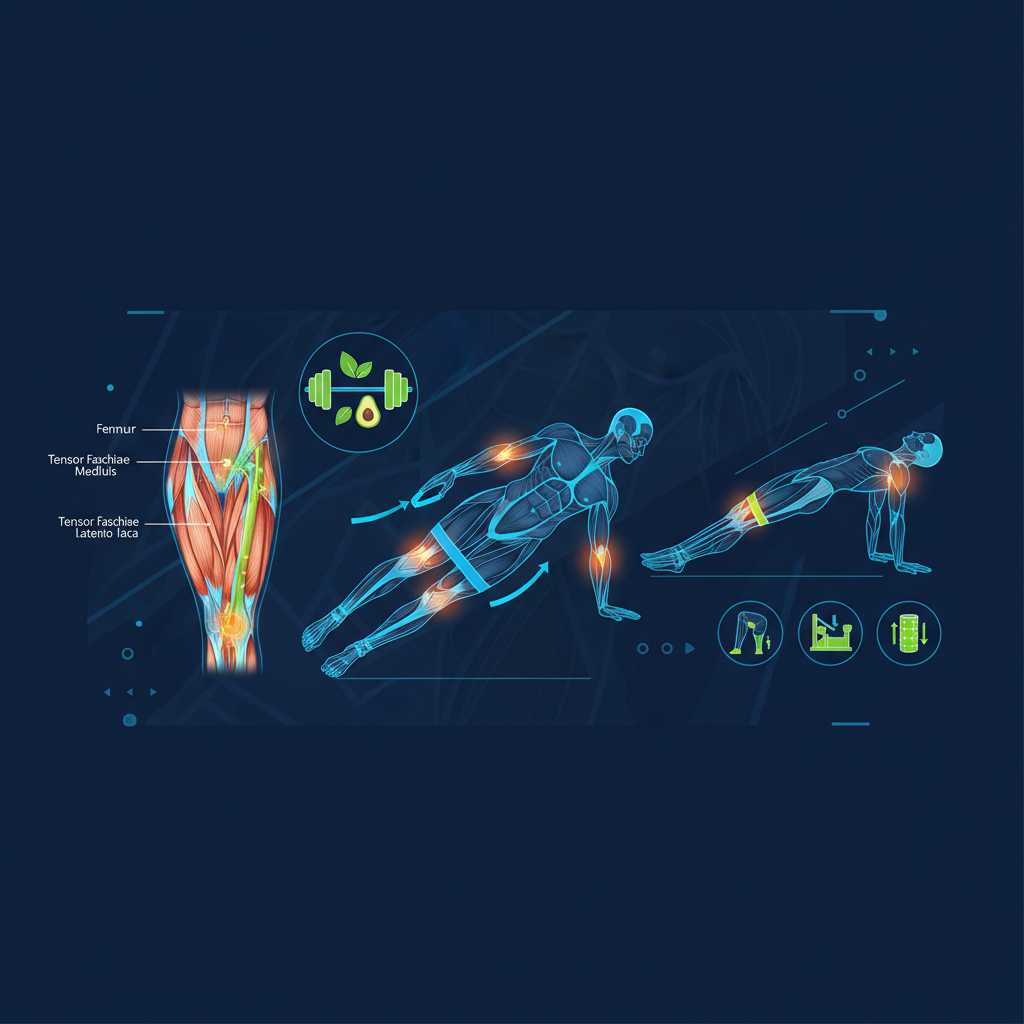
The most effective workout for IT band syndrome focuses on strengthening the hip abductors (like the gluteus medius), external rotators, and quadriceps, while also improving flexibility and mobility in the hips and hamstrings. Research shows that weak hip musculature is a primary contributor to ITBS, as it leads to compensatory movements and increased stress on the iliotibial band.
Key Takeaways:
- Strengthening hip abductors and external rotators is crucial for ITBS.
- Focus on progressive overload with exercises like side leg raises, clamshells, and bridges.
- Incorporate foam rolling and stretching for the IT band and surrounding muscles.
- Always listen to your body and consult a professional if pain persists.
Understanding IT Band Syndrome
The iliotibial (IT) band is a thick band of fibrous tissue that runs along the outside of the thigh, from the hip to just below the knee. IT band syndrome (ITBS) occurs when this band becomes inflamed or tight, typically due to overuse, muscle imbalances, or poor biomechanics. This friction can cause sharp pain, especially during activities like running, cycling, or climbing stairs. According to the American College of Sports Medicine (ACSM), ITBS is one of the most common causes of lateral knee pain in athletes.
Why Strength Training is Key
While stretching and foam rolling are important for managing ITBS, strength training is paramount for long-term relief and prevention. Strengthening the muscles that stabilize the hip and knee helps to improve overall lower body alignment and reduce the strain on the IT band. Specifically, targeting the gluteus medius and minimus, as well as the deep external rotators, is critical. Studies published in the Journal of Orthopaedic & Sports Physical Therapy have highlighted the role of hip abductor weakness in the development of ITBS.
Top Strength Exercises for IT Band Syndrome
These exercises are designed to target the key muscle groups that influence IT band health. Aim for 3 sets of 10-15 repetitions for each exercise, focusing on controlled movements and proper form.
1. Side Leg Raises (Hip Abduction)
This exercise directly targets the gluteus medius, a primary hip abductor.
- How to: Lie on your side with your legs extended and stacked. Keeping your top leg straight and your foot flexed, slowly lift it towards the ceiling, engaging your outer hip. Pause at the top, then slowly lower it back down without letting your legs touch.
- Why it helps: Strengthens the muscles that prevent the pelvis from dropping during single-leg stance activities, like walking or running.
2. Clamshells (Hip External Rotation)
This targets the hip external rotators and gluteus medius.
- How to: Lie on your side with your knees bent at a 90-degree angle and your hips stacked. Keeping your feet together, lift your top knee towards the ceiling, rotating your hip outward. Imagine opening a clamshell. Return slowly to the starting position.
- Why it helps: Improves hip stability and controls excessive internal rotation of the femur, a common issue contributing to ITBS.
3. Glute Bridges
A fundamental exercise for activating the glutes and hamstrings.
- How to: Lie on your back with your knees bent, feet flat on the floor hip-width apart, and arms by your sides. Engage your glutes and lift your hips off the floor until your body forms a straight line from your shoulders to your knees. Squeeze your glutes at the top, then slowly lower back down.
- Why it helps: Strengthens the gluteal muscles, which are essential for hip extension and support.
4. Standing Hip Abduction (Cable or Band)
This offers progressive resistance for hip abduction.
- How to: Stand tall with your feet hip-width apart. Attach a resistance band around your ankles or use a cable machine with an ankle strap. Keeping your standing leg slightly bent, slowly move your working leg out to the side, away from your body, focusing on glute activation. Return slowly.
- Why it helps: Provides a more challenging resistance than bodyweight exercises, allowing for greater strength gains.
5. Single-Leg Deadlifts (SLDL)
This exercise improves balance, hamstring flexibility, and glute strength.
Get your free Day 1 workout — no card required.
Meet Andy — get your free Day 1 workout- How to: Stand on one leg with a slight bend in your knee. Holding a dumbbell or kettlebell in the opposite hand, hinge at your hips, lowering your torso towards the floor while extending your free leg straight back behind you for counterbalance. Keep your back straight. Return to the starting position by squeezing your glutes.
- Why it helps: Enhances proprioception and strengthens the posterior chain, critical for overall lower body stability.
6. Fire Hydrants (Quadruped Hip Abduction)
Targets the gluteus medius and minimus in a quadruped position.
- How to: Start on your hands and knees, with your hands directly under your shoulders and knees under your hips. Keeping your back neutral and your core engaged, lift one leg out to the side, bending your knee (like a dog at a fire hydrant). Avoid hiking your hip. Lower slowly.
- Why it helps: Isolates the hip abductors effectively and challenges core stability.
Modifications, Rehab & Injury Prevention
Implementing modifications and preventative measures is crucial for managing and overcoming IT band syndrome. For individuals experiencing pain, starting with regressions or focusing on mobility can be beneficial.
- Regressions:
- Modified Side Leg Raises: Perform the movement lying on your back with your bottom leg bent and the top leg slightly bent as you lift. This reduces the lever arm and the demand on the hip abductors.
- Seated Clamshells: Sit on a chair with your feet flat. Keeping your feet on the floor, rotate your thigh outward to lift one foot a few inches off the ground, engaging your hip.
- Progression:
- Weighted Clamshells: Add a light ankle weight or resistance band around the thighs (above the knees) during the clamshell exercise for increased resistance.
- Adding Bands to Bridges: Place a resistance band around your thighs during glute bridges and push outward against the band as you lift your hips.
- Pain Cues & Corrective Fixes: Sharp pain on the outside of the knee during exercises like squats or lunges may indicate IT band irritation. Corrective Fix: Reduce the range of motion, ensure your knee tracks over your second toe, and pre-activate your glutes before the movement. If pain is significant or persistent, stop the exercise.
- Prehab Drills:
- Band Walks (Lateral): With a resistance band around your ankles or just above your knees, take controlled steps laterally, keeping tension on the band and maintaining a slight squat position.
- Thread the Needle: From a quadruped position, reach one arm under your torso and rotate your upper body. This improves thoracic mobility, which can indirectly affect hip mechanics.
- Ankle Mobility Exercises: Gentle ankle circles and dorsiflexion/plantarflexion exercises can improve lower body kinetic chain function.
- When to Consult a Professional: If you experience sharp, shooting pain, pain that worsens despite modifications, or pain that significantly impacts daily activities, it is essential to consult a physical therapist or physician. They can provide a diagnosis and a personalized treatment plan.
Frequently Asked Questions (FAQ)
- What is the quickest way to relieve IT band pain? Quick relief often involves rest from aggravating activities, foam rolling the IT band and surrounding muscles, and applying ice. However, long-term relief requires addressing the underlying muscular imbalances through targeted strength training.
- Can I run with IT band syndrome? It's generally advised to reduce or temporarily stop running until the pain subsides and strength improvements are made. Running with ITBS can worsen the inflammation and delay recovery.
- How long does IT band syndrome take to heal? Recovery time varies greatly depending on severity and adherence to treatment. Mild cases might improve in a few weeks with proper care, while more chronic or severe cases can take several months.
- What are the best stretches for IT band syndrome? While the IT band itself doesn't stretch well, stretches for the glutes (like the pigeon pose) and TFL (tensor fasciae latae) muscle, along with hamstring and quadriceps stretches, are beneficial.
- Should I ice or heat my IT band? Icing is generally recommended for acute inflammation and pain relief. Heat can be used for muscle tightness before stretching or foam rolling, but avoid applying heat directly to the inflamed area if it causes increased pain.
- Is yoga good for IT band syndrome? Certain yoga poses can be beneficial for strengthening the glutes and improving hip mobility, but care must be taken. Poses that put excessive strain on the outer hip or knee should be modified or avoided until strength improves.
Conclusion: Your Path to IT Band Relief
Effectively managing IT band syndrome involves a multifaceted approach that prioritizes strengthening the muscles supporting the hip and knee, improving flexibility, and addressing biomechanical inefficiencies. Consistent application of the exercises and strategies outlined above can lead to significant relief and the prevention of future flare-ups.
Ready to take control of your fitness journey and get personalized workout plans? Try FitForge AI's free 7-day trial today!
Written by Coach Voris, NASM-CPT — Certified Personal Trainer and founder of FitForge AI. Coach Voris combines evidence-based training with AI to deliver personalized coaching at scale.
Get your free Day 1 workout — no card required.
Meet Andy — get your free Day 1 workout