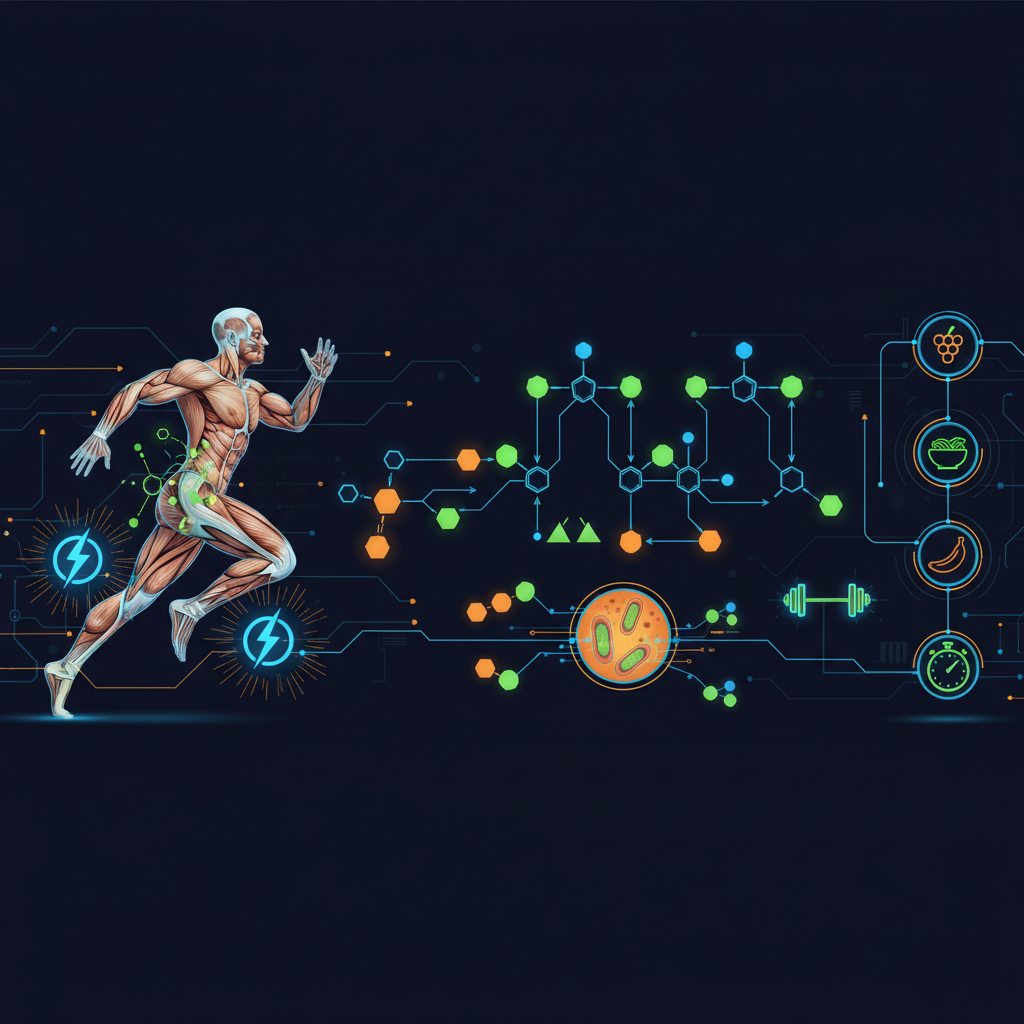
Glycolysis for Athletes: Unlock Explosive Power & Speed
Boost your athletic performance! Discover how glycolysis fuels high-intensity efforts and learn science-backed strategies to optimize energy & dominate.
By Coach Voris, NASM-CPT · Training Science · glycolysis, athlete energy metabolism, sports nutrition, high intensity training, performance optimization
Glycolysis is the fundamental process by which your body breaks down glucose to produce energy, and understanding it is crucial for athletes seeking to optimize performance. This metabolic pathway, occurring in the cytoplasm of cells, converts glucose into pyruvate, yielding a small but rapid supply of ATP (adenosine triphosphate), the primary energy currency of the cell. Glycolysis, derived from "glyco" (sugar) and "lysis" (splitting), is the initial stage of cellular respiration that doesn't require oxygen (anaerobic). It's a series of ten enzyme-catalyzed reactions that takes one molecule of glucose (a six-carbon sugar) and breaks it down into two molecules of pyruvate (a three-carbon molecule). This process nets a small amount of ATP (2 molecules) and produces NADH (nicotinamide adenine dinucleotide), an electron carrier that plays a role in later energy production stages. Research shows that glycolysis is the primary source of energy for high-intensity, short-duration activities, such as sprinting, heavy weightlifting, and jumping. The speed at which glycolysis can produce ATP makes it indispensable for explosive movements where immediate energy is paramount. Glycolysis is the…