What are Exercise Zones and How Do They Relate to Fat Oxidation?
Exercise zones, often based on heart rate, categorize exercise intensity levels. These zones help individuals train within specific physiological parameters to achieve different fitness goals. Understanding these zones is crucial for optimizing fat burning.
Heart Rate Zones Explained
- Zone 1 (Very Light): 50-60% of Maximal Heart Rate (MHR). Primarily aerobic, focuses on recovery. Low fat oxidation percentage.
- Zone 2 (Light): 60-70% of MHR. The "fat-burning zone." Moderate aerobic activity. Highest percentage of calories from fat.
- Zone 3 (Moderate): 70-80% of MHR. Aerobic, improves endurance and fitness. Moderate carbohydrate and fat utilization.
- Zone 4 (Hard): 80-90% of MHR. Anaerobic threshold. Higher carbohydrate utilization.
- Zone 5 (Maximum): 90-100% of MHR. Maximal effort. Primarily anaerobic, high carbohydrate utilization.
The "Fat-Burning Zone" Myth vs. Reality
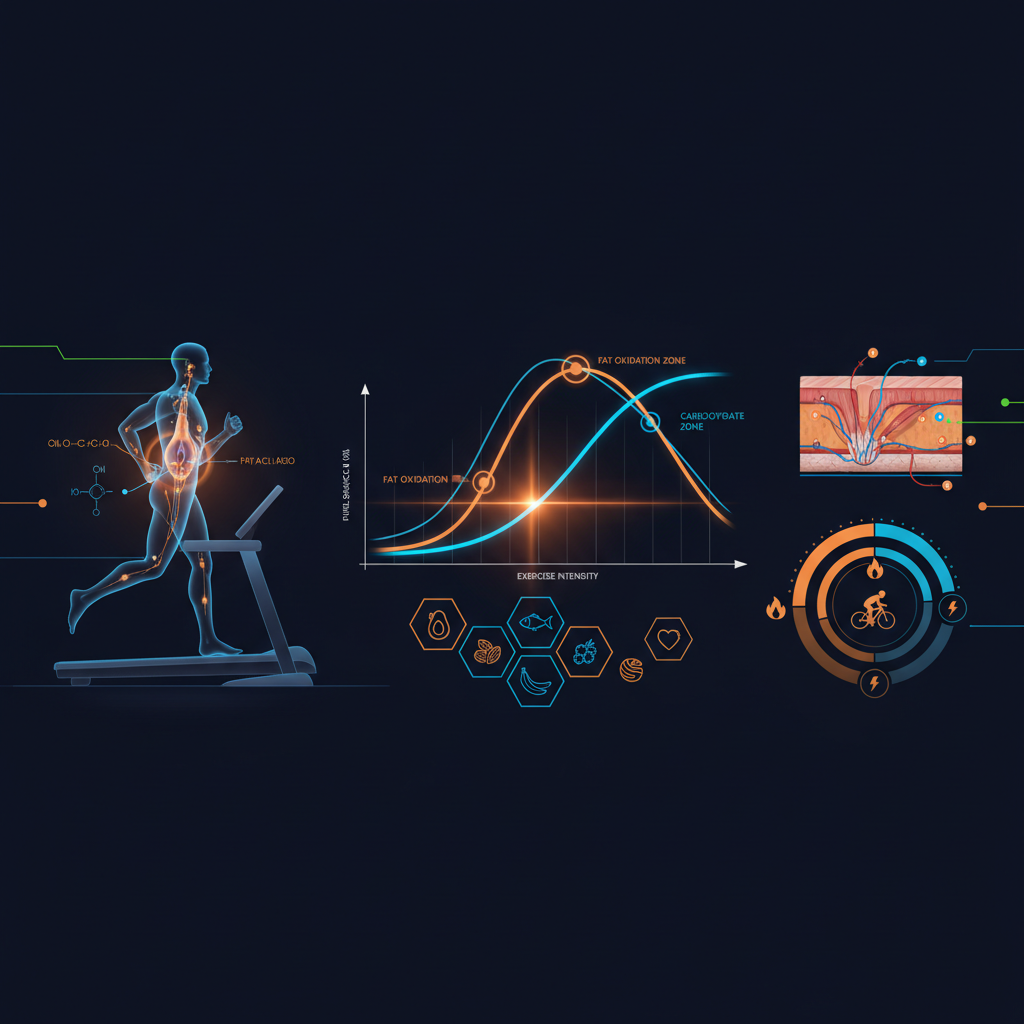
Research clearly indicates that Zone 2, often called the "fat-burning zone," burns the highest percentage of calories from fat. However, this doesn't automatically mean it leads to the greatest total fat loss. Higher intensity exercise (Zones 3-5) burns more total calories in a shorter amount of time. According to the American Council on Exercise (ACE), while a lower intensity workout burns a higher proportion of fat, a higher intensity workout burns more total calories, potentially resulting in a greater absolute amount of fat burned over time and a greater "afterburn" effect (EPOC - Excess Post-exercise Oxygen Consumption).
How Does Intensity Affect Fat Oxidation During Exercise?
The body's fuel source depends heavily on exercise intensity and duration.
Lower Intensity Exercise (Zone 2)
At lower intensities, the body has sufficient oxygen available to efficiently break down fats for energy through the aerobic system. This process is slower than carbohydrate metabolism but sustainable for longer durations. This means a higher proportion of the energy expenditure comes from stored fat.
Higher Intensity Exercise (Zones 3-5)
As intensity increases, the body's demand for energy rises rapidly. The aerobic system alone cannot meet this demand quickly enough. Therefore, the body shifts to utilizing carbohydrates more heavily, as they can be broken down more rapidly, both aerobically and anaerobically. While the percentage of fat burned decreases, the total calories burned significantly increase. This leads to a greater overall energy deficit, which is crucial for fat loss.
Optimizing Exercise for Fat Oxidation: Practical Strategies
Both low and high-intensity training have their place in a comprehensive fat loss strategy. NASM CPT protocols emphasize a balanced approach.
The Role of Duration
Longer duration, lower-intensity workouts (like steady-state cardio in Zone 2) are excellent for maximizing the percentage of fat burned during the session. An hour-long brisk walk or a steady jog can be very effective.
The Power of High-Intensity Interval Training (HIIT)
HIIT workouts involve short bursts of intense exercise (near max effort) followed by brief recovery periods. While primarily relying on carbohydrates during the intense bursts, HIIT significantly elevates EPOC. This means your body continues to burn calories, including a notable amount from fat, for hours after the workout. Research published in the Journal of Strength and Conditioning Research supports HIIT's effectiveness for improving cardiovascular fitness and body composition.
Combining Intensities for Best Results
Get your free Day 1 workout — no card required.
Meet Andy — get your free Day 1 workoutThe most effective strategy for fat loss typically involves a combination of both low- and high-intensity training.
- For Dedicated Fat Burning During Exercise: Aim for 2-3 sessions per week of lower-intensity, longer-duration cardio (45-60 minutes in Zone 2).
- For Enhanced Calorie Burn and EPOC: Incorporate 1-2 sessions of HIIT per week (20-30 minutes total, including warm-up and cool-down).
- Consider Strength Training: Building muscle mass through resistance training increases your resting metabolic rate, meaning you burn more calories (including from fat) even when you're not exercising. According to NSCA guidelines, incorporating 2-3 full-body resistance training sessions per week is optimal. Use the free workout plans as a starting point!
Frequently Asked Questions (FAQ)
Q1: What is the ideal heart rate zone for burning fat? A1: The zone that burns the highest percentage of fat is typically 60-70% of your maximal heart rate. However, higher intensities burn more total calories.
Q2: Does the "fat-burning zone" guarantee weight loss? A2: No. While this zone maximizes fat utilization during exercise, overall fat loss depends on creating a consistent calorie deficit through diet and total energy expenditure.
Q3: Is HIIT or steady-state cardio better for fat loss? A3: Both are effective. HIIT burns more total calories and boosts metabolism post-exercise (EPOC), while steady-state cardio burns a higher percentage of fat during the workout and improves aerobic endurance. A combination is often best.
Q4: How can I calculate my target heart rate zones? A4: A common method is the Karvonen formula, which uses resting heart rate for a more personalized calculation. A simpler estimate is (220 - age) for MHR, then multiply by your target intensity percentage (e.g., 0.65 for 65%). Use the online tools for accurate zone calculation.
Q5: Should I focus solely on cardio for fat oxidation? A5: No. Strength training is crucial as it builds muscle mass, which increases your resting metabolic rate and contributes significantly to long-term fat loss.
Q6: How does diet impact fat oxidation during exercise? A6: Your diet dictates your available fuel. Exercising in a fasted state may slightly increase fat oxidation initially, but it's not sustainable or necessary for most. A balanced diet provides adequate energy for all exercise intensities.
Conclusion: Finding Your Optimal Fat Oxidation Strategy
Understanding fat oxidation during exercise zones empowers you to train smarter, not just harder. While the 60-70% MHR zone offers the highest percentage of fat utilization, incorporating higher intensity training and strength work creates a more robust and efficient fat loss strategy by maximizing total calorie expenditure and boosting metabolism.
Ready to take the guesswork out of your fitness journey? Discover personalized workout plans and strategies tailored to your goals. Try FitForge AI's free 7-day trial today!
Internal Links:
Frequently Asked Questions
What is fat oxidation during exercise?
Fat oxidation is the body's process of burning fat for energy during physical activity. Understanding this mechanism allows individuals to optimize their training intensity to preferentially utilize fat stores as fuel.
What heart rate zone is best for burning fat?
The 'fat-burning zone' typically falls within 60-70% of your maximal heart rate. In this zone, a higher percentage of the calories burned come from fat, making it efficient for improving fat metabolism.
Do I burn more total fat at higher exercise intensities?
While a higher percentage of fuel comes from fat at lower intensities, higher intensity exercise burns more total calories overall. This can lead to a greater total amount of fat burned, even if carbohydrates contribute a larger percentage of the fuel.
How can I increase my body's ability to burn fat?
Improving fat oxidation involves consistent aerobic training within the optimal fat-burning zones, incorporating high-intensity interval training (HIIT) to improve metabolic flexibility, and maintaining a balanced diet. Specific programming tailored to individual fitness levels is key.
Get your free Day 1 workout — no card required.
Meet Andy — get your free Day 1 workout