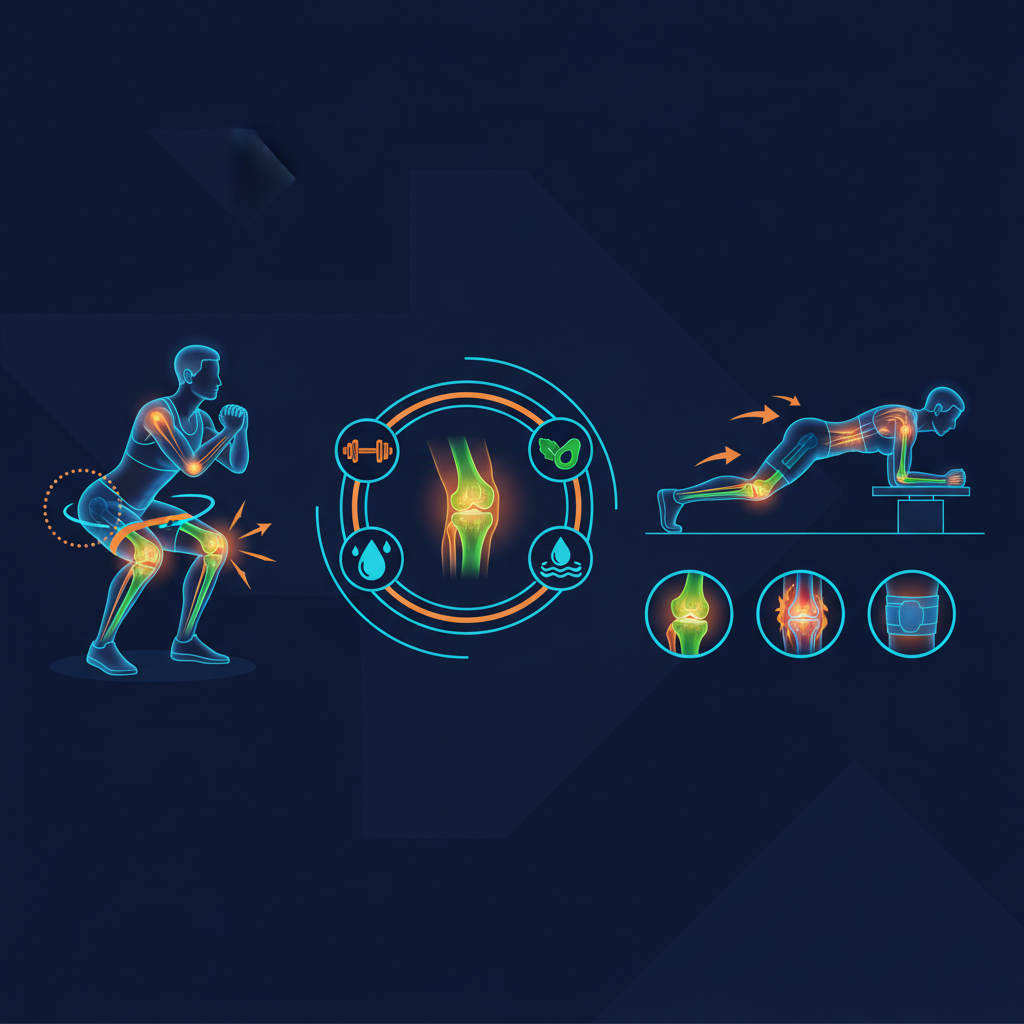
Understanding Knee Pain and Exercise
First, be clear on terms: "bad knees" is a broad term. It could mean anything from mild, intermittent discomfort from overuse, to osteoarthritis, patellofemoral pain syndrome, meniscus issues, or post-surgical recovery. While this article provides general guidance, it is crucial to consult with a healthcare professional (doctor, physical therapist) to get an accurate diagnosis for your specific knee pain. Self-diagnosing and pushing through severe pain can exacerbate the problem.
Once cleared for exercise, the goal becomes two-fold:
- Reduce stress on the knee joint during movement.
- Strengthen the surrounding musculature (quadriceps, hamstrings, glutes, calves) to provide better support and stability.
The human body is an incredible machine, designed for movement. Often, knee pain arises from imbalances, improper mechanics, or a lack of strength in the muscles that should be supporting the joint. These issues get addressed head-on.
The Pillars of Knee-Friendly Training
The approach will be grounded in NASM Optimum Performance Training (OPT) model principles, focusing on stability and muscular endurance before progressing to strength.
1. Prioritize Low-Impact Activities
High-impact exercises like running, jumping, and plyometrics can place significant compressive and shear forces on the knee joint. When dealing with pain, these are often the first to go, and for good reason. Shift your focus to activities that minimize jarring forces:
- Cycling (stationary or recumbent): Excellent for Cardiovascular training and quad development without direct impact. Adjust seat height correctly (slight bend in the knee at the bottom of the pedal stroke) to prevent hyperextension or excessive flexion.
- Swimming/Aquatic Exercise: The buoyancy of water significantly reduces gravitational forces on the joints. Water walking, jogging, and specific exercises can build strength and cardiovascular fitness.
- Elliptical Trainer: Offers a smoother motion than running, engaging the lower body and providing a cardiovascular challenge.
- Walking (on soft surfaces): While walking is generally low-impact, choosing grass, track, or treadmills with good shock absorption can be beneficial.
2. Strategic Strength Training Modifications
Strength training is paramount for building robust joints and supporting structures. The goal isn't to avoid exercises but to modify them to be knee-friendly. Principles of controlled movement, proper form, and progressive overload are leveraged here.
Lower Body Exercises: The Foundation
- Squats (Bodyweight, Goblet, Box):
- Modification 1: Depth Control: Limit the range of motion. Only squat to a depth where you feel no pain. Over time, as strength improves, you may be able to increase depth.
- Modification 2: Box Squats: Squatting to a box (or bench/chair) ensures consistent depth and can help build confidence. It also allows you to focus on sitting back rather than just down, which can spare the knees.
- Modification 3: Goblet Squats: Holding a dumbbell or kettlebell at your chest helps keep your torso upright, promoting a more vertical shin angle and less knee travel forward.
- Form Focus: Maintain a neutral spine, drive through the heels, and ensure knees track over the middle of the foot (not collapsing inwards).
- Lunges (Static, Reverse, Split Squats):
- Modification 1: Static Lunges: Keep your feet in place for the duration of the set, removing the dynamic component of walking lunges.
- Modification 2: Reverse Lunges: Stepping back into a lunge often places less stress on the front knee compared to stepping forward.
- Modification 3: Split Squats (Elevated Rear Foot): While adding intensity, the stability of keeping the front foot planted can be beneficial. Start with a low elevation.
- Modification 4: Range of Motion Control: Similar to squats, only lunge as deep as comfortable. Don't let the back knee slam into the ground.
- Leg Press: A good alternative to squats for some individuals, as allows for back support and controlled range of motion. Ensure your knees don't lock out at the top or track inward. Keep the movement smooth and controlled.
- Hip Hinges (Romanian Deadlifts, Glute Bridges): These movements are fantastic for strengthening the posterior chain (hamstrings and glutes), which are crucial for knee stability.
- Romanian Deadlifts (RDLs): Focus on pushing the hips back, maintaining a slight bend in the knees, and a neutral spine. The movement is about hip flexion, not spinal flexion.
- Glute Bridges/Hip Thrusts: Excellent for isolating the glutes without direct knee loading. Progress from bodyweight to weighted variations.
- Calf Raises: Strong calves contribute to ankle and knee stability. Perform seated or standing, controlling the eccentric (lowering) phase.
- Leg Extensions/Leg Curls (Machines): Use with caution. While they isolate quadriceps and hamstrings, the fixed plane of motion and shear forces can sometimes aggravate knee issues. If you use them, start with very light weight and focus on strict, controlled movement. Listen to your body meticulously.
Exercise Tempo and Super Slow Training
For individuals with knee pain, adopting a slower, more controlled tempo is incredibly beneficial. This aligns perfectly with the principles of Super Slow training, often popularized by figures like Tim Ferriss and the "Occam Protocol." By slowing down the concentric (lifting) and eccentric (lowering) phases of an exercise (e.g., 5 seconds up, 5 seconds down), you:
- Increase time under tension: This is a powerful stimulus for muscle growth and strength, often with lighter loads.
- Improve mind-muscle connection: You're forced to focus on the working muscle, enhancing proprioception around the knee.
- Reduce momentum: Less momentum means less reliance on elastic recoil and more on muscular effort, lowering stress on joints.
- Enhance control: Slower movements allow for greater control over technique, reducing the risk of improper form leading to pain.
Get your free Day 1 workout — no card required.
Meet Andy — get your free Day 1 workoutApplying a 3-5 second eccentric phase to squats, lunges, or leg presses can drastically improve their safety and effectiveness for compromised knees.
3. Focus on Glute Activation and Core Stability
Often, knee pain stems from weak glutes (gluteus medius and maximus) and a lack of core stability. These muscle groups are vital for controlling hip and knee movement.
- Glute Activation: Incorporate exercises like clamshells, band walks (lateral, monster), and bird-dog variations as part of your warm-up. These prime the glutes to fire correctly during larger movements.
- Core Stability: Planks, side planks, anti-rotation presses (pallof press), and dead bugs all contribute to a strong, stable core, which, in turn, helps control movement throughout the kinetic chain, including the knees.
Advanced Strategies: Nutrition, Recovery, and Tracking
Proper Protein Intake for Joint Health and Recovery
Coach Voris — a Precision Nutrition coach — cannot overstate the importance of adequate protein. Protein is not just for muscle growth; it's crucial for the repair and maintenance of all body tissues, including cartilage, ligaments, and tendons. Aim for 1.6-2.2 grams of protein per kilogram of body weight daily, distributed throughout your meals. This supports recovery from training and provides the building blocks for resilient joints.
Glucose Monitoring (CGM) and Inflammation
While not directly a modification, understanding your metabolic health through tools like Continuous Glucose Monitors (CGM) can indirectly impact joint health. Spikes and sustained high blood sugar levels can contribute to systemic inflammation, which can exacerbate joint pain. Monitoring your glucose response to foods and making dietary adjustments for more stable levels can be a supportive strategy for overall health and managing inflammatory conditions.
Leveraging Technology: Garmin/Apple Health Data and AI Coaching
Modern fitness wearables and apps offer invaluable data. Tracking your activity levels, sleep patterns, and even heart rate variability (HRV) through devices like Garmin or Apple Watch can provide insights into recovery and readiness. When integrated with AI coaching platforms like FitForge AI, this data can be used to intelligently adjust your training plan, ensuring you're not overtraining or under-recovering, especially critical when managing joint issues.
Sample Knee-Friendly Workout (Modified for Pain)
Here's an example workout structure. Remember to adjust weights, reps, and range of motion based on your pain level and current fitness.
Warm-up (5-10 minutes):
- Light cardio (stationary bike or elliptical): 3-5 minutes
- Dynamic stretches: Leg swings (front-to-back, side-to-side), cat-cow, bird-dog, glute bridges, band walks (lateral).
Workout (3-4 sets of 8-15 reps, 60-90 seconds rest):
- Goblet Squat (to box if needed): Focus on a 3-second eccentric phase.
- Reverse Lunges: Slow and controlled, ensuring front knee tracks properly.
- Glute Bridges/Hip Thrusts: Squeeze glutes at the top.
- Romanian Deadlifts (Dumbbells/Kettlebell): Emphasis on hip hinge, slight knee bend.
- Side Planks: Hold 30-60 seconds per side for core stability.
- Calf Raises (Standing or Seated): Focus on controlled eccentric.
Cool-down (5-10 minutes):
- Static stretches, holding each for 30 seconds: Hamstring stretch, quad stretch (standing or lying), calf stretch, figure-four stretch.
Important Considerations
- Listen to Your Body: This is the most crucial piece of advice. A little discomfort is different from sharp, unbearable pain. If an exercise causes sharp pain, stop immediately and find an alternative.
- Progression is Key: Don't expect miracles overnight. Start with conservative weights and ranges of motion. Gradually increase intensity (weight), volume (sets/reps), or decrease rest periods as your strength and comfort improve. Adherence to progressive overload, even with lighter loads and deliberate tempo, is critical for adaptation. (ACSM, NSCA)
- Footwear: Ensure you have supportive, well-cushioned footwear appropriate for your activity.
- Consistency: Consistent, smart training will yield far better results than sporadic, high-intensity bursts.
FAQ: Your "Bad Knees" Questions Answered
Q1: Can I still run with "bad knees"?
A1: It depends on the root cause and severity of your knee pain. For many, high-impact activities like running can exacerbate symptoms. It's best to consult with a physical therapist to assess if running is appropriate and to get guidance on proper running mechanics and gait analysis. Often, strengthening surrounding muscles and progressing slowly can help, but low-impact alternatives are usually recommended first.
Q2: Are knee sleeves or braces helpful?
A2: Knee sleeves can provide proprioceptive feedback (a sense of stability) and may offer warmth, which some find comforting. Braces are typically recommended for more specific injuries or instabilities, often under the guidance of a medical professional. They are not a substitute for strengthening the muscles around the knee.
Q3: How often should I train if I have knee pain?
A3: Start with 2-3 full-body or lower-body focused strength training sessions per week, allowing for a day of rest between sessions. On rest days, you can incorporate light, low-impact cardio or flexibility work. Consistency and adequate recovery are paramount, especially when joint health is a concern.
Q4: Should I avoid deep squats altogether?
A4: Not necessarily. If your knee pain is due to poor form or muscle imbalances, improving these can often allow for deeper squats over time. However, if deep squats cause sharp pain, limit your range of motion to a pain-free level. Box squats can help you control depth and ensure proper form. Always prioritize pain-free movement over arbitrary depth.
Q5: What's the biggest mistake people make when exercising with knee pain?
A5: The biggest mistake is either avoiding exercise entirely (leading to muscle atrophy and further joint degradation) or pushing through sharp pain. Neither approach is sustainable or effective. The key is finding modifications that allow for pain-free movement, consistently strengthening the supporting structures, and progressing intelligently.
Beyond the Pain: Reclaim Your Fitness
Living with knee pain doesn't mean sidelining your fitness goals. It means approaching them intelligently, with a focus on form, modification, and progressive adaptation. By following these evidence-based principles and integrating smart training strategies, you can not only manage your knee pain but dramatically improve your overall strength, mobility, and quality of life.
Remember, the goal is long-term sustainable fitness. This journey requires patience, consistency, and the right tools.
Ready to take control of your fitness journey, even with "bad knees"? Let FitForge AI be your guide. FitForge AI leverages AI-driven coaching, integrating your Garmin or Apple Health data, and emphasizing effective, results-oriented training principles like those discussed here.
Download FitForge AI today – it's 100% free, no trial, no paywall – and get your personalized plan to forge a stronger, healthier you.
Get your free Day 1 workout — no card required.
Meet Andy — get your free Day 1 workout