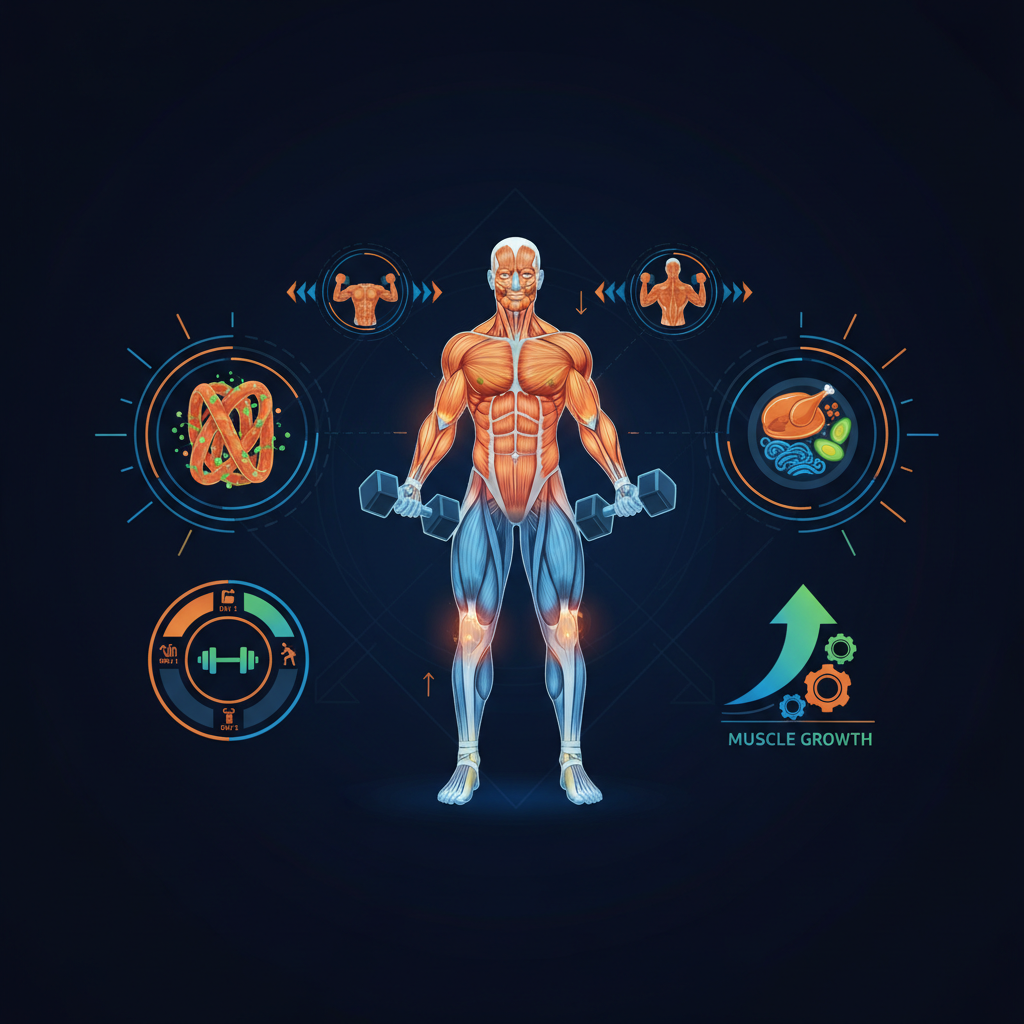
The Power of the Dumbbell: Why 3 Days is All You Need for Growth
Forget the elaborate gym setups and intimidating machines. For serious muscle growth, you don't need a sprawling commercial gym. All you need are a few dumbbells, a dedicated mindset, and a smart, science-backed plan. Coach Voris — a NASM-certified personal trainer and Precision Nutrition coach — will tell you that a well-designed 3-day dumbbell workout plan is not just effective, it's incredibly efficient for building significant muscle, whether you're a beginner or an experienced lifter.
This isn't some quick-fix gimmick. This is a foundational, progressive overload-based program designed to challenge your muscles, stimulate growth, and fit seamlessly into your busy schedule. Dumbbell versatility is leveraged here to hit every major muscle group, ensuring balanced development and preventing plateaus.
For a man over 40 seeking a structured dumbbell routine, this plan trains the full body on three non-consecutive days, such as Monday, Wednesday, and Friday. General guidelines call for 3-4 sets per exercise, usually 8-12 repetitions, and 60-90 seconds of rest. Tracking weights and clean repetitions supports progressive overload, while rest days and 7-9 hours of sleep support recovery.
Why Dumbbells? The Unilateral Advantage and Beyond
Dumbbells offer unique advantages that often get overlooked:
- Unilateral Training: Each side of your body works independently, exposing and correcting muscular imbalances. This translates to better overall stability, strength, and injury prevention, a key principle emphasized by organizations like the National Strength and Conditioning Association (NSCA).
- Greater Range of Motion: Unlike some fixed-path machines, dumbbells allow for a more natural, expansive range of motion, which can lead to greater muscle activation and hypertrophy.
- Stabilization: Free weights, especially dumbbells, force your stabilizing muscles to work harder, improving core strength and overall body control.
- Versatility: A single pair of dumbbells can be used for hundreds of exercises, making them incredibly space-efficient and cost-effective, perfect for a home gym setup.
- Accessibility: No gym membership required. Grab your dumbbells, find some space, and get to work.
The Science Behind 3-Day Splits for Muscle Growth
The American College of Sports Medicine (ACSM) recommends training major muscle groups 2-3 times per week for optimal hypertrophy. A 3-day split fits perfectly within this guideline, allowing for adequate muscle protein synthesis and recovery between sessions.
This plan follows a full-body approach spread across three non-consecutive days, such as Monday, Wednesday, and Friday. This provides ample recovery time for muscles to repair and grow, a critical component of any effective hypertrophy program. Overtraining is a common mistake, and this schedule minimizes that risk while maximizing your growth potential.
Progressive Overload: Your Key to Continuous Gains
Muscle growth, or hypertrophy, is a direct response to progressive overload. Simply put, you must continually challenge your muscles to do more than they're accustomed to. This can be achieved by:
- Increasing Weight: The most obvious method.
- Increasing Reps: Staying within a hypertrophy-focused rep range (typically 6-12 reps).
- Increasing Sets: Adding more volume over time.
- Decreasing Rest Time: Challenging your muscular endurance.
- Improving Form: Ensuring each rep is executed perfectly.
- Increasing Time Under Tension: Slowing down the eccentric (lowering) phase of an exercise.
This plan is built on the principle of progressive overload. Track your weights and reps religiously. Aim to lift slightly heavier, or perform one more clean rep, than you did in your previous session. Consistency here is paramount.
How should a 3-day dumbbell workout plan be structured?
General Guidelines:
- Warm-up (5-10 minutes before each workout): Light cardio (jumping jacks, high knees) followed by dynamic stretches (arm circles, leg swings, torso twists).
- Cool-down (5-10 minutes after each workout): Static stretches, holding each for 20-30 seconds. Focus on the muscles worked.
- Rep Range: Aim for 8-12 repetitions per set, reaching near muscular failure in the last few reps. If you can easily do more than 12 reps, increase the weight. If you can't reach 8 reps with good form, decrease the weight.
- Sets: 3-4 sets per exercise.
- Rest: 60-90 seconds between sets.
- Tempo: Control the movement. Aim for a 2-second concentric (lifting) phase, a brief pause, and a 2-3 second eccentric (lowering) phase.
- Frequency: Perform these workouts on non-consecutive days (e.g., Monday, Wednesday, Friday).
- Nutrition: Support your efforts with a high-protein diet, adequate carbohydrates for energy, and healthy fats. Hydration is also crucial. (Coach Voris — a Precision Nutrition coach — can't stress this enough – you can't out-train a bad diet!)
Day 1: Full Body Power & Push Focus
This day targets your major pushing muscles (chest, shoulders, triceps) along with compound lower body movements.
- Dumbbell Goblet Squat: 3-4 sets of 8-12 reps
- Why: Excellent compound lower body exercise, hitting quads, glutes, and core. Dumbbells provide a front-loaded challenge.
- Dumbbell Bench Press (on floor or bench): 3-4 sets of 8-12 reps
- Why: Fundamental chest builder. If you don't have a bench, performing this on the floor limits range of motion slightly but still effectively targets the chest and triceps.
- Dumbbell Bent-Over Row: 3-4 sets of 8-12 reps
- Why: Essential for back thickness and strength, balancing out the pressing movements. Focus on squeezing shoulder blades together.
- Dumbbell Overhead Press (Standing or Seated): 3-4 sets of 8-12 reps
- Why: Builds powerful shoulders. Standing engages more core stability.
- Dumbbell RDL (Romanian Deadlift): 3-4 sets of 8-12 reps
- Why: Targets hamstrings and glutes, crucial for posterior chain development. Focus on a hip hinge movement, keeping a slight bend in the knees.
- Dumbbell Triceps Extensions (Overhead or Lying): 3-4 sets of 10-15 reps
- Why: Isolates the triceps for added arm size.
- Plank: 3 sets, hold for 30-60 seconds
- Why: Core stability and endurance.
Day 2: Full Body Pull & Leg Focus
Get your free Day 1 workout — no card required.
Meet Andy — get your free Day 1 workoutThis day emphasizes your pulling muscles (back, biceps) and provides another intense leg workout.
- Dumbbell Deadlift (conventional or sumo): 3-4 sets of 6-10 reps
- Why: The king of all exercises for full-body strength, primarily targeting glutes, hamstrings, and lower back. Use controlled form.
- Single-Arm Dumbbell Row: 3-4 sets of 8-12 reps per arm
- Why: Excellent for hitting the lats and improving unilateral back strength, addressing imbalances.
- Dumbbell Lunges (Alternating or Static): 3-4 sets of 8-12 reps per leg
- Why: Builds strong, balanced legs and glutes. Great for unilateral leg development.
- Dumbbell Bicep Curls: 3-4 sets of 10-15 reps
- Why: Classic bicep builder. Focus on a full contraction and controlled eccentric.
- Dumbbell Farmer's Carry: 3-4 sets, walk for 30-60 seconds or distance
- Why: Builds incredible grip strength, traps, and core stability. Load up heavy!
- Dumbbell Lateral Raises: 3-4 sets of 12-15 reps
- Why: Targets the side deltoids for wider, more aesthetic shoulders. Use lighter weight and strict form.
- Calf Raises (Holding Dumbbells): 3-4 sets of 15-20 reps
- Why: For complete leg development, don't neglect the calves.
Day 3: Full Body Hybrid & Conditioning
This session combines elements from the previous days with a focus on overall conditioning and hitting any muscle groups that might need extra attention.
- Dumbbell Thrusters: 3-4 sets of 8-12 reps
- Why: A powerful full-body exercise combining a squat and an overhead press, great for conditioning and strength.
- Renegade Row: 3-4 sets of 8-12 reps per arm
- Why: Challenges core stability while working the back and arms. Keep hips stable.
- Dumbbell Step-Ups (on a sturdy bench or box): 3-4 sets of 8-12 reps per leg
- Why: Builds explosive leg power and glute strength.
- Dumbbell Push-Ups (hands on dumbbells): 3-4 sets of maximal reps
- Why: Adds depth to the push-up and challenges wrist stability. If too difficult, perform regular push-ups.
- Face Pulls (with resistance band anchored low, if no cables): 3-4 sets of 12-15 reps (Or use a light dumbbell for reverse flyes bent over)
- Why: Excellent for shoulder health, posture, and targeting neglected upper back muscles.
- Hammer Curls: 3-4 sets of 10-15 reps
- Why: Targets both biceps and brachialis for overall arm thickness.
- Russian Twists (weighted): 3-4 sets of 15-20 reps per side
- Why: Oblique and core strength.
How do nutrition and recovery support dumbbell muscle growth?
Nutrition is Non-Negotiable
Coach Voris — a Precision Nutrition coach — can't stress this enough. Your hard work in the gym will be wasted without proper fuel.
- Protein: Aim for 0.7-1 gram of protein per pound of body weight daily (e.g., 180 lbs person needs 126-180g protein). Prioritize lean sources like chicken, fish, lean beef, eggs, dairy, and plant-based options.
- Carbohydrates: Provide energy for your workouts and help replenish glycogen stores for recovery. Focus on complex carbs like oats, quinoa, brown rice, sweet potatoes, and fruits.
- Healthy Fats: Essential for hormone production and overall health. Include avocados, nuts, seeds, and olive oil.
- Hydration: Drink plenty of water throughout the day. Dehydration impairs performance and recovery.
Prioritize Sleep and Recovery
Muscle growth happens outside the gym. Aim for 7-9 hours of quality sleep per night. During deep sleep, your body releases growth hormone, essential for muscle repair and synthesis. Active recovery, like light walking or foam rolling, can also aid in reducing muscle soreness and improving blood flow.
Consistency and Patience
Building muscle takes time and unwavering effort. Don't fall for quick fixes. Stick to the plan, track your progress, practice progressive overload diligently, and trust the process. You'll see results.
Additional training questions
Q1: I don't have heavy dumbbells. Can I still make progress with lighter ones?
A: Absolutely! While heavier weights are ideal for maximizing progressive overload, you can still challenge your muscles with lighter dumbbells. Focus on increasing reps (up to 15-20), slowing down the tempo to increase time under tension, performing more sets, or decreasing rest periods. Unilateral exercises (one arm/leg at a time) also make lighter weights feel heavier.
Q2: How long should I stick with this program before switching it up?
A: Aim to stick with this program for 6-12 weeks. This gives your body enough time to adapt and respond to the training stimulus. After this period, you can consider altering exercise variations, changing rep ranges, or introducing new training techniques to keep challenging your muscles and prevent plateaus.
Q3: Can I do cardio on my rest days?
A: Yes, light to moderate cardio on rest days is perfectly fine and can even aid recovery by improving blood flow. Just ensure it's not so intense that it interferes with your muscle recovery or depletes energy needed for your next lifting session. Think brisk walking, cycling, or light jogging.
Q4: My muscles are really sore after these workouts. Is that normal?
A: Delayed Onset Muscle Soreness (DOMS) is common, especially when starting a new program or increasing intensity. It's a natural response to muscle damage and subsequent repair. To manage DOMS, ensure adequate protein intake, stay hydrated, get enough sleep, and consider light active recovery or foam rolling. As you become accustomed to the workouts, the soreness should decrease.
Q5: What if I miss a workout?
A: Life happens! If you miss a workout, don't panic or try to cram two workouts into one day. Simply pick up where you left off. If you miss a Day 1 workout on Monday, do it on Tuesday, then resume the schedule from there. Consistency over perfection is key.
How can FitForge AI support dumbbell training?
This 3-day dumbbell workout plan is a potent tool for muscle growth, but it's just one piece of the puzzle. For personalized programming, nutrition guidance, and advanced tracking that adapts to your progress, FitForge AI is your ultimate training partner. Imagine having a NASM CPT and Precision Nutrition coach in your pocket, guiding every rep and calorie. That's FitForge AI.
Ready to sculpt your physique and unleash your full potential? Click here to start your FREE trial with FitForge AI today and experience intelligent fitness coaching firsthand!
Frequently Asked Questions
Can you build significant muscle with only dumbbells?
Absolutely. Dumbbells offer a versatile and effective way to build significant muscle. When combined with progressive overload principles and a well-structured 3-day plan, they can target all major muscle groups for comprehensive development.
How does progressive overload work with dumbbells for muscle growth?
Progressive overload with dumbbells involves gradually increasing the challenge to your muscles. This can be achieved by using heavier dumbbells, performing more repetitions or sets, reducing rest times, or improving exercise form and time under tension over time, compelling your muscles to adapt and grow stronger.
Is a 3-day dumbbell split enough to see results?
Yes, a properly designed 3-day dumbbell split is highly effective for muscle growth. It allows for sufficient training frequency to stimulate muscle protein synthesis while also providing adequate recovery time between sessions, which is crucial for muscle repair and growth.
What are the common mistakes to avoid when following a dumbbell-only workout plan?
Common mistakes include neglecting form for heavier weights, not consistently applying progressive overload, failing to warm up properly, and inadequate nutrition or recovery. To maximize results, focus on controlled movements, consistent challenge, and supporting your training with proper diet and rest.
Get your free Day 1 workout — no card required.
Meet Andy — get your free Day 1 workout