Boost Your Heart Health: Cardiac Adaptation to Exercise Explained
Uncover how your heart transforms with exercise, leading to improved endurance and health. Learn about VO2 max, stroke volume, and more. Enhance your cardiac fitness
By Coach Voris, NASM-CPT · Workouts · cardiac adaptation, exercise physiology, cardiovascular health, aerobic training, heart health
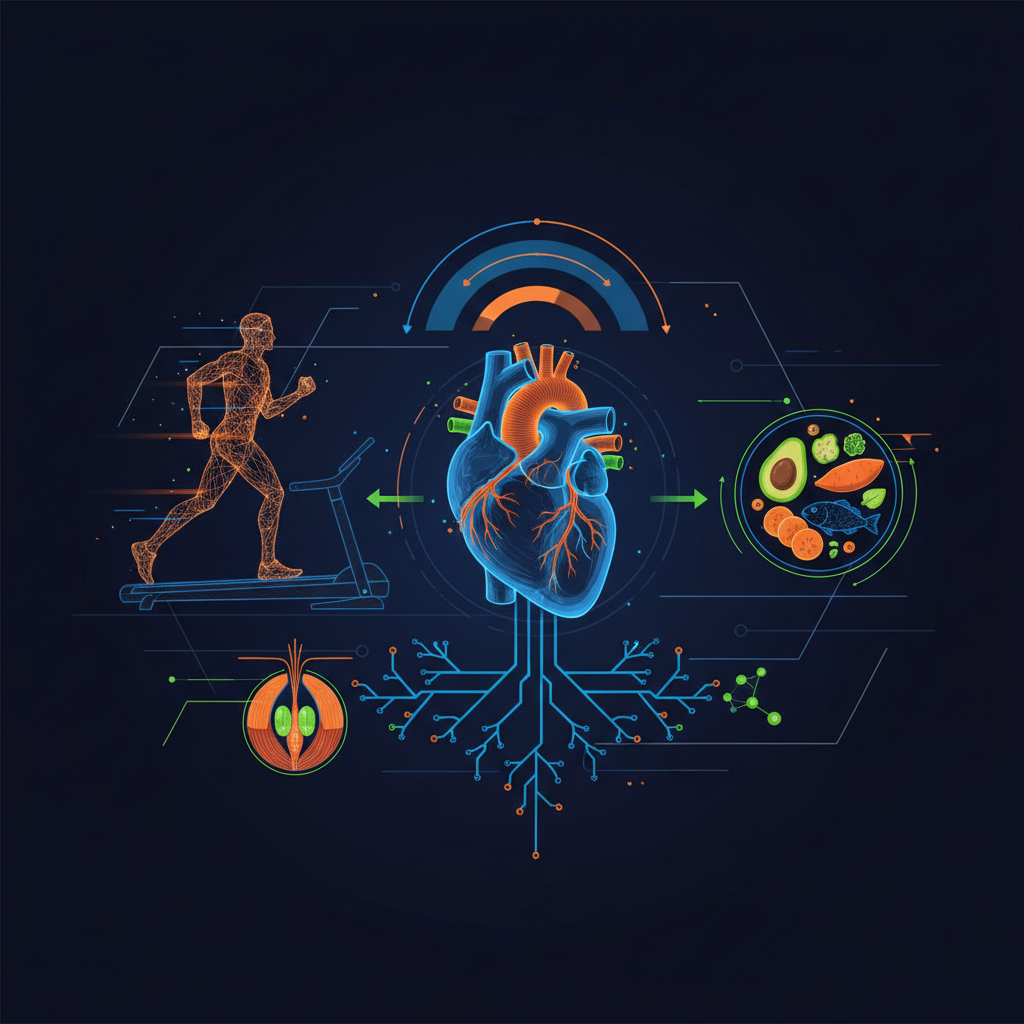
The human heart undergoes remarkable adaptations in response to regular aerobic exercise, leading to improved cardiovascular efficiency. Cardiac adaptation to exercise refers to the physiological changes that occur in the heart and circulatory system as a result of consistent physical training, enabling the body to deliver oxygen and nutrients more effectively. Key Takeaways: Regular aerobic exercise strengthens the heart muscle, increasing its capacity to pump blood. This leads to a lower resting heart rate and improved stroke volume. The body becomes more efficient at oxygen utilization, enhancing [endurance](https://fitforgeai.net/blog/yoga-vs-pilates-for-strength). These adaptations reduce the risk of cardiovascular diseases. Cardiac adaptation to exercise encompasses the series of beneficial changes within the cardiovascular system that occur due to routine physical activity. These adaptations are primarily driven by the increased demand placed on the heart during sustained aerobic workouts. The cardiovascular system responds by becoming more robust and efficient. Research shows that the heart, like any other muscle, hypertrophies (grows stronger and larger) with consistent tr…