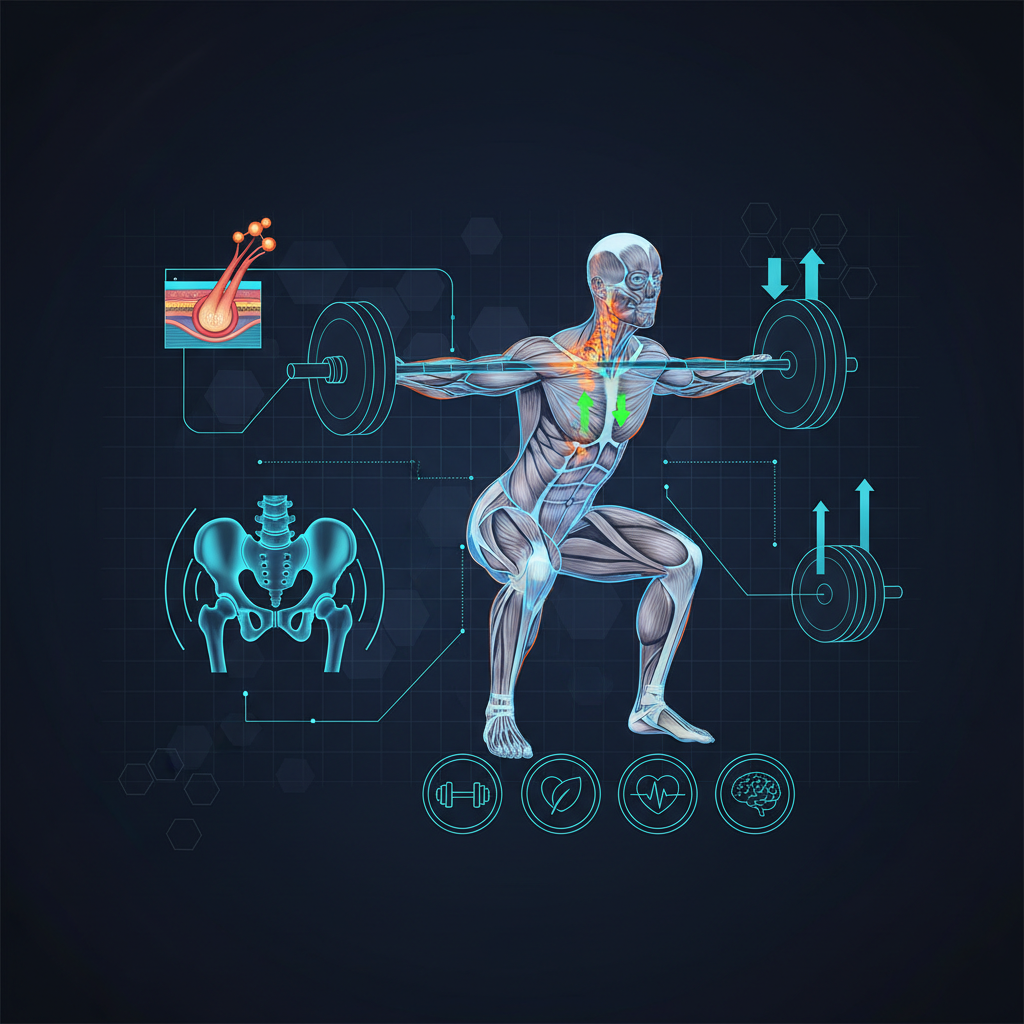
Deadlift Biomechanics: Master Form, Prevent Injury & Lift More
Unlock the secrets to a perfect deadlift! Learn hip hinge mechanics, optimal bar path, and 5 common form fixes to protect your spine and add serious.
By Coach Voris, NASM-CPT · Training Science · deadlift, form guide, biomechanics, strength training, nasmi cpt
The deadlift is a compound [exercise](https://fitforgeai.net/blog/intermittent-fasting-workout-schedule) that involves lifting a weight off the floor to hip height. Understanding the biomechanics of proper deadlift form is crucial for maximizing strength and minimizing injury risk. This guide breaks down the movement, covering technique, programming, and common mistakes to avoid. The deadlift is a full-body exercise that primarily targets the posterior chain, including the hamstrings, glutes, and erector spinae, while also engaging the quadriceps, core, and upper back musculature. Biomechanically, it's a hinge movement that requires coordinating multiple joints and muscle groups to lift a load from the ground to a standing position. Research shows that proper deadlift form relies on maintaining a neutral spine throughout the lift. This involves creating tension in the core and engaging the lats to keep the bar close to the body. The primary force generation comes from extending the hips and knees simultaneously. Form is Paramount: The deadlift is a hinge movement emphasizing a neutral spine, core tension, and coordinated hip/knee extension. Posterior Chain Dominance: Glutes, hamstr…